Gillis Blue Humanities Forum: Jack Bouchard
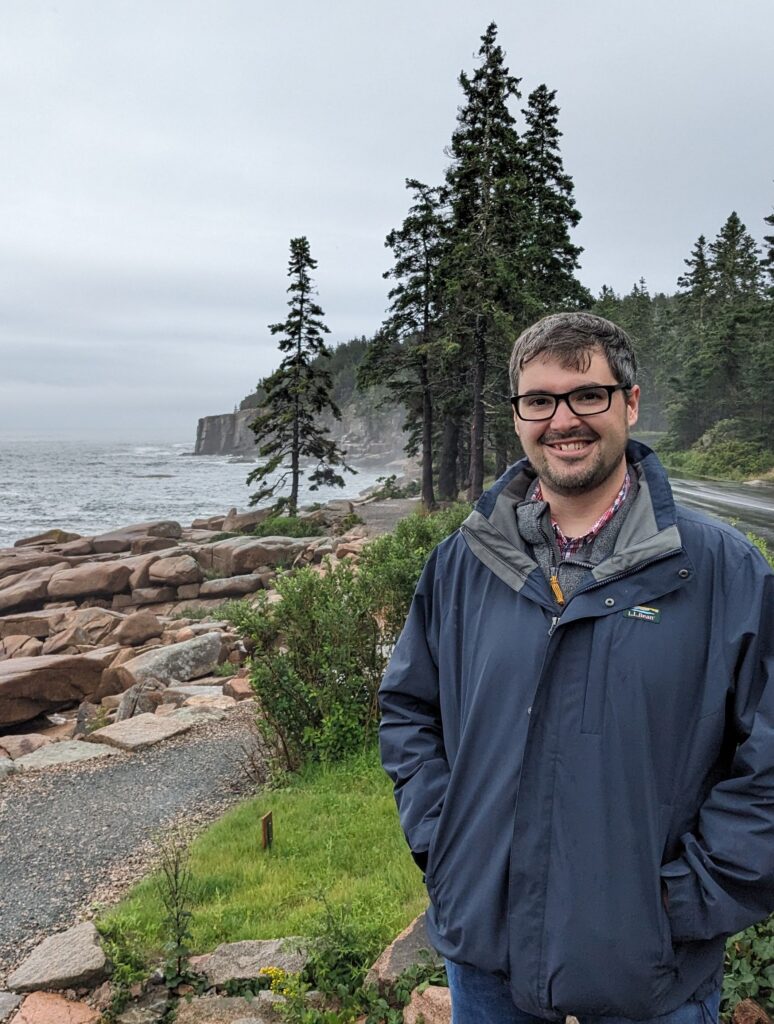
Historian Jack Bouchard presents Envisioning Terra Nova: Reconstructing the North Atlantic’s Past Environments.
This talk explores how we can reconstruct what the environment was like on the fringes of the northwest Atlantic in the sixteenth and seventeenth centuries just the the region’s cod fishing and whaling boom took place. Newfoundland and Labrador were together referred to as “Terra Nova” by fishermen from Spain, France, Holland, and Britain, and this talk explores how we can understand the region’s environmental history from the few surviving sources to understand marine abundance and what lived on land and the sea. This includes fish, seabirds, and many other species as well as the way that fishermen exploited the sea.
Jack Bouchard is an assistant professor of history at Rutgers University. He is a historian of maritime environments, food, and island geographies in the late medieval and early modern Atlantic world. His main research has been on the sixteenth-century fisheries at Newfoundland, but I am more broadly interested in the earliest years of European expansion into the Atlantic basin during the fifteenth and sixteenth centuries. In addition to the history of fishwork he is interested in the study of global foodways in the premodern world. His influential book Terra Nova: Food, Water and Work in an Early Atlantic World (Yale, 2025) is a study of the earliest years of European fishing and colonization in the northwest Atlantic. His work spans the histories of places like Greenland, Hispaniola in the Caribbean and Rio Oro on the Saharan coast of Africa to Terra Nova. He is currently working on a history of seabirds in the fifteenth and sixteenth century Atlantic Basin.
The Gillis Blue Humanities Forum is an interdisciplinary exploration of oceans, waterways, and aquatic life as central forces shaping culture, history, and environmental thought. Bringing together scholars, artists, and activists, the series invites audiences to rethink human relationships with water in an era of climate change and ecological urgency. This series was created in honor of John Gillis by his wife, Tina.