Learning to lead from the ground up: COA launches Farm & Garden Fellows Program
The Thoreau Foundation-funded pilot integrates classroom study, experiential work, and mentorship to prepare students to lead the transition toward just and resilient food systems.

On a misty morning at College of the Atlantic Beech Hill Farm, students move between rows of late-season greens, trading ideas about soil health, food access, and the future of farming. It’s not just a work shift—it’s the classroom in motion.

At COA, where human ecology is both a philosophy and a practice, the new Thoreau Farm & Garden Fellows Program brings together coursework, fieldwork, and community engagement to cultivate the next generation of food system innovators.
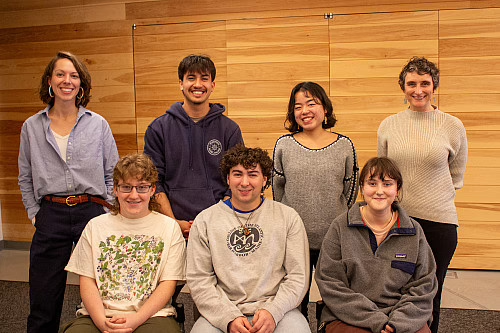
The first cohort of Farm & Garden Fellows includes nine students who, through coursework, work-study positions, and mentorship, will deepen their understanding of agriculture and food systems while developing practical skills in collaboration and communication. The program will also engage students and community members in workshops, discussions, and regional learning opportunities on topics from soil ecology to food justice.
“The Thoreau Farm & Garden Fellows Program is the kind of learning I’m most excited about—getting my hands dirty in the fields and gardens, but also having space to connect that work to bigger questions about food systems and community,” said fellow Rutherford Zollmann ’27.
In an era marked by climate uncertainty and growing inequities in global food systems, COA’s faculty and students have long explored the relationship between people, plants, and place. The Fellows Program carries that work forward, connecting existing opportunities in farming and food systems into a more intentional pathway for learning and practice.
“Our students are hungry for immersive opportunities to engage with food systems in all their complexity, from production to policy,” says Partridge Chair in Food & Sustainable Agriculture Systems Kourtney Collum. “This fellowship is designed to cultivate knowledge, hard and soft skills, and initiative.”
Fellows will:
- Work and learn on COA’s farms and gardens, gaining experience in ecological agriculture, food production, and land stewardship.
- Collaborate in a learning cohort, meeting regularly with peer advisors and other mentors for reflection, project development, and shared growth.
- Plan, host, and participate in public workshops that build practical skills in farming and food production while connecting to broader topics of climate and justice.
- Complete funded internships focused on food systems, sustainable agriculture, or food access initiatives.
Each fellow’s journey will be unique, but all share a commitment to advancing sustainable, equitable, and resilient food systems.
The Farm & Garden Fellows Program is the first pilot learning pathway outlined in the COA 2030 Strategic Plan—a model that integrates coursework, practice, and mentorship to help students translate their education into meaningful impact. The initiative also fulfills a goal of the COA Farms & Garden Strategic Plan, ensuring that the college’s agricultural work continues to serve as a living laboratory for sustainability and community connection.
“This is about creating meaningful continuity between what students learn in the classroom and how they apply that learning in the world,” says Kerri Sands, COA Program Manager for Sustainable Business, Food Systems, and Academic Initiatives, who is helping coordinate the pilot program. “It’s both deeply human ecological and deeply COA.”
The pilot program, funded by a $40,000 grant from the Henry David Thoreau Foundation, aims to graduate students ready to shape the future of food, whether managing farms, influencing food policy, starting nonprofits, or reimagining local economies.
“Our goal is to help students grow their leadership skills and gain confidence in their ability to join the collaborative work of building stronger food systems, even before they graduate,” says Collum.
As the first cohort of Farm & Garden Fellows takes root, the program stands as a living example of COA’s commitment to education through experience and to the belief that lasting change grows from the ground up.