Rozalia project launches marine debris cleanup mission
Lydia Burnet ’25 leads an effort to remove washed up lobster traps and other discarded resources from Great Duck Island, home to COA’s Alice Eno Field Research Station and a key nesting ground for Leach’s storm-petrels.

The Rozalia Project, a leading nonprofit dedicated to protecting and restoring the ocean through cleanup, research, and education, is proud to announce the results of their cleanup expedition on Great Duck Island, a critical seabird habitat off the coast of Maine.
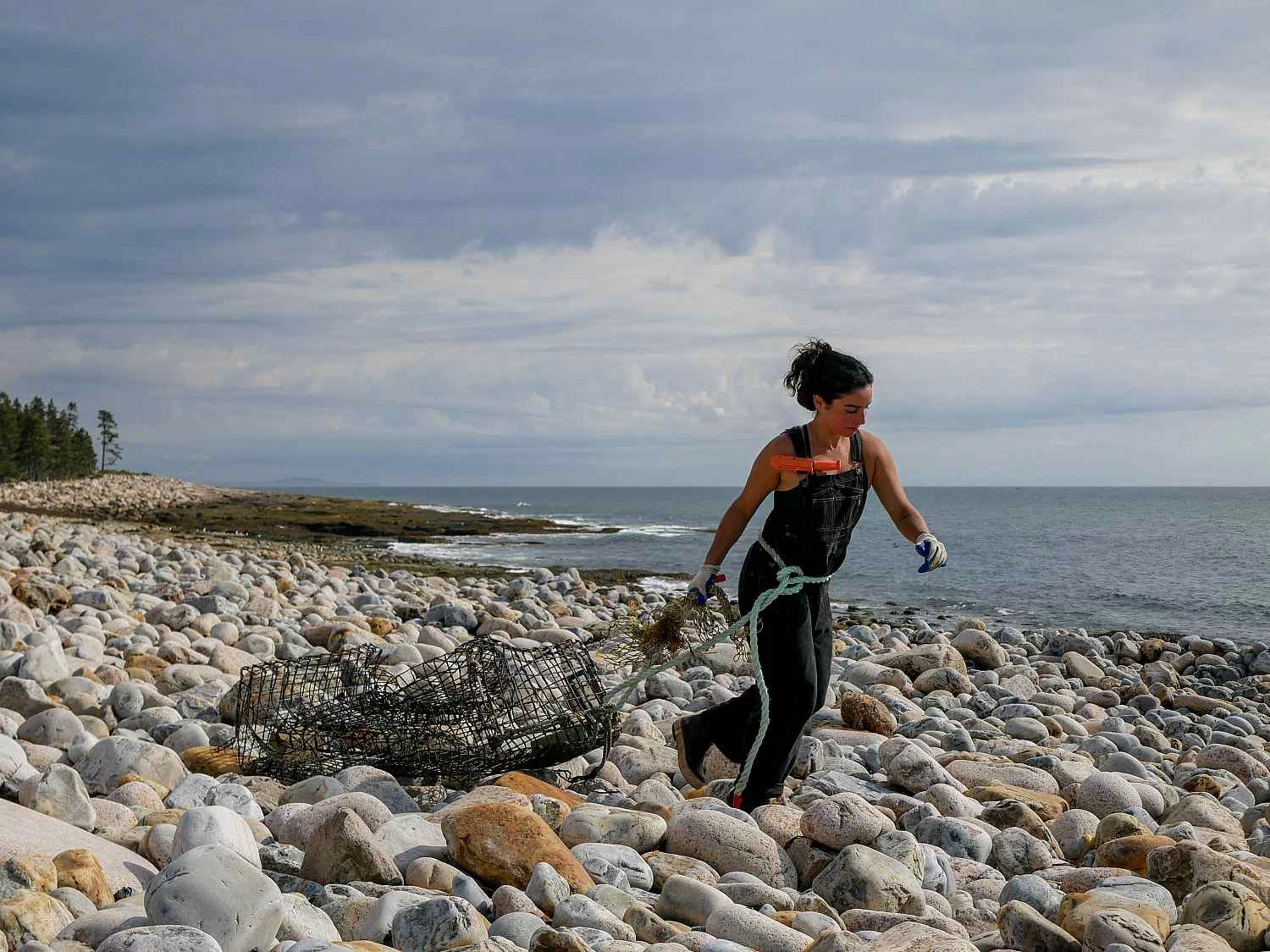
For a year, the Rozalia Project, in partnership with The Nature Conservancy and College of the Atlantic, planned and coordinated this cleanup with consideration of the island’s unique habitat. This island is home to nesting populations of Leach’s storm-petrels and other sensitive bird species. Consultation with island researchers assured that no sensitive nesting areas were disrupted during the removal efforts. This cleanup is part of broader, ongoing expeditions by the Rozalia Project, who has been working on removal of derelict fishing gear and coastal debris throughout the Gulf of Maine since 2012.
“This is a unique and important mission for us,” said Rozalia Project Executive Director Ashley Sullivan. “Great Duck Island is not just a beautiful place—it’s ecologically vital. We’re honored to assist in removing harmful debris including plastics and contribute to ongoing conservation and research efforts.”

The cleanup effort took place in late August over the course of three days, targeting pre-identified shoreline zones called rocky berms, where plastic waste and fishing gear often accumulate, posing threats to wildlife. With five Rozalia Project staff and six volunteers, the cleanup team and collaborators removed a total of 10,686 pounds (over five tons) of debris. Of that, 6,437 pounds were lobster trap metal, which was recycled. The group cataloged the debris types to inform broader solutions to marine pollution in the Gulf of Maine.
“My senior project at College of the Atlantic focused on microplastic ingestion in nesting gulls on Great Duck Island. During my summer at the station, I also surveyed marine debris accumulation across the island,” Burnet said. “It had long been a dream of mine to organize a large-scale cleanup effort, and this year, thanks to the Rozalia Project, that dream became a reality.”
The cleanup effort was made possible through partnerships with College of the Atlantic, The Nature Conservancy, Department of Marine Resources, and McEnroe Transportation.