Ethical Research Review Board

College of the Atlantic
Ethics as a foundation for research
The Ethical Research Review Board (ERRB) reviews research proposals involving human subjects at College of the Atlantic. Before starting any project with human participants, you must obtain ERRB approval in compliance with federal law and institutional policy.
Do you need ERRB approval?
You likely need ERRB approval if:
- You collect information systematically to answer a research question or analyze identifiable data (e.g., for a senior project).
- Your project involves direct interaction with people (interviews, focus groups, questionnaires, participant observation), experiments, interventions, or accessing private, identifiable information.
- Your research results will circulate outside of a single class (for example, as a senior thesis, conference presentation, or publication).
If you answer “yes” to all three, you must secure ERRB approval before beginning your research. If unsure, consult your project director or email a summary to [email protected] for guidance.
- Download and complete the ERRB proposal form, including your project director’s signature.
- Prepare your oral and/or written consent forms using the provided template.
- Submit your signed proposal and consent forms electronically to [email protected].
Incomplete proposals will not be reviewed.
You can submit proposals anytime during the academic year. Proposals are not reviewed in July or August. Please allow up to three weeks for review during the academic year, and keep in mind that approval cannot be granted retroactively—research may not begin until official ERRB approval has been received. To ensure adequate time for review and any needed revisions, submit your proposal at least six weeks before your planned research start date.
Ethical research means identifying and minimizing potential risks to participants, especially when privacy, reputation, or sensitive information is involved.
Questions to consider:
- Could someone be harmed, embarrassed, or put at risk if information is disclosed?
- Are there power imbalances or vulnerable populations involved?
- How will you distinguish between personal relationships and research roles?
- Are you aware of your own privilege and the ethical orientation of your project?
- How will you inform participants of any risks through consent forms?
If your work involves activism, intervention, or research in sensitive communities, you must demonstrate knowledge of the context and thoughtful consideration of potential effects.
Use clear, thorough consent forms to inform participants of any potential risks, and develop concrete plans for maintaining privacy and confidentiality throughout your work. As you prepare for your project, take time to reflect on your own safety, your moral commitments, and the ways your actions may impact others. If any concerns arise, discuss them with your project director or the ERRB for additional support.
Web resources for ethics in research:
- American Anthropological Association ethics statement
- University of Maine IRB training and resources
- Society of Professional Journalists ethics code
- Carleton College Institutional Review Board
- Carleton consent form guidance
- Beyond Intractability conflict resolution resources
Recommended books:
- Booth et al., The Craft of Research. University of Chicago Press, 2008.
- Boellstorff et al., Ethnography in Virtual Worlds: A Handbook of Method. Princeton University Press, 2012.
- Fisher et al., Getting to Yes (on conflict resolution).
2025–2026 members:
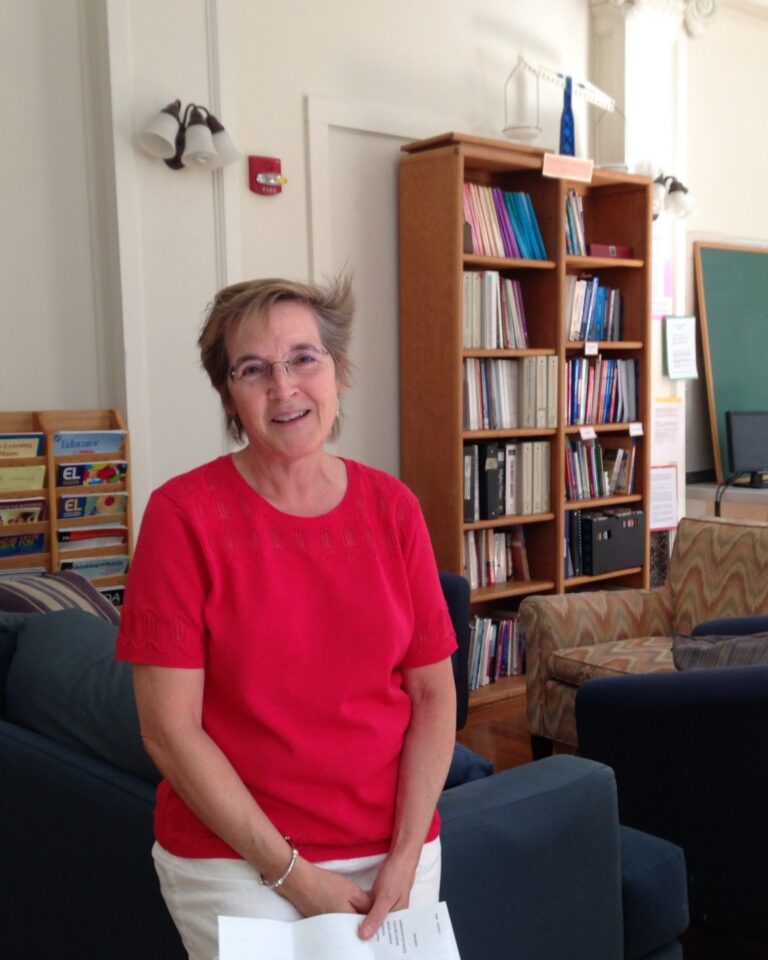
Linda Fuller
Teacher Certification Officer
ABOUT
Before COA
Linda served Maine’s public schools for 28 years, including teaching middle school students in one of Maine’s last three room schools and teaching government and English at the high school level. She also enjoyed twelve years as a secondary school counselor.
Course Areas
education
COURSES
EDUCATION
- Ed.M. Counselor Education, University of Maine, 1999
- B.S. Education (elementary, secondary social studies), University of Maine, 1983
INTERESTS
Linda Fuller serves as the Associate Director of Educational Studies, working closely with certification candidates through advising, teaching, and supervising student interns. Linda is currently working on her doctoral dissertation exploring teacher-learner relationships in virtual high schools. She is very interested in policy changes and developments in educator preparation.

Su Yin Khor
Director of the Writing Program
ABOUT
I spend a lot of time painting, cooking, baking, reading cozy mysteries, gardening, and doing some form of physical activity, such as hiking, walking, and running. I also picked up knitting again! During my final years at Penn State, I took pottery classes, which were incredibly fun and something I hope to continue here in Bar Harbor. I also started making my own watercolor paint for fun, so if you ever want to chat about painting, food, cozy mysteries, and gardening, you can find me in the Writing Center, at TAB, or the red bricks with a cup of tea reading a book or doing some work in the sun.
Before COA
My academic journey is non-traditional. In high school and as an undergrad, I worked as a chef for several years in Sweden where I grew up. The restaurant business was fast paced and physically and mentally demanding. I loved it but I knew after a while that I couldn’t do it for the rest of my life.
I grew up in a working class immigrant community, and I wanted to understand more about multilingualism and second language learning, so I returned to grad school to study TESOL and Applied Linguistics at ISU. That’s where I learned more about second language writing, writing studies, and rhetoric and composition. I pursued my doctorate at Penn State where I studied Applied Linguistics and primarily taught academic writing and literacy courses to multilingual and international students.
Course Areas
Writing/literacy education, applied linguistics, TESOL, second language learning and teaching, qualitative research methods, discourse studies, interactional analysis, multilingualism, migration
COURSES
More Information about my Courses
My courses are activity and discussion based. They focus on develop practices. I create space for students to pursue what they are interested in, while critically examining various topics. A core aspect of my courses is that we examine current social issues through the lens of language and discourse. For instance, how do pervasive ideas and beliefs about “correct” English overlook the variations within the language? How do the complexities of a language shape the writing we do? These are the types of questions that are addressed in my writing/literacy courses to learn about the links between language, writing, literacy, culture, and society.
EDUCATION
- B.A., History, Uppsala University, Sweden
- M.Ed., English and History Education, Uppsala University, Sweden
- M.A., English Studies, specialization in TESOL/Applied Linguistics, Illinois State University, USA
- Ph.D., Applied Linguistics, Pennsylvania State University, USA
HONORS & AWARDS
INTERESTS
My research lies in the intersection of writing, literacy, discourse studies, and multilingual/second language studies. I’m primarily trained as an applied linguist and a social scientist. Applied linguistics is shaped by research in many other fields that deal with language and discourse, such as education, linguistic anthropology, psychology, adult literacy, migration studies, and so on.
People tend to think that I teach creative writing, but this is not the expertise I have. Instead, my expertise lies in understanding writing education and literacy development. The types of questions that guide my work include: how do people learn how to write? What do people’s literacy practices look like and how might these evolve and shift as they learn another language? In what ways does someone’s life experiences shape their language and literacy learning? What social, cultural, political, and historical factors shape how we use language (and writing)?
As a social scientist, I’m specifically trained as a qualitative researcher. I analyze written, spoken, and multimodal discourse. I have primarily used interviews and observations to collect data when conducting research, but I have explored other methods, such as autoethnography. My most recent research project examined how (im)migrant women learned how to write and develop their literacy in a community-based English literacy program. Other projects I’ve worked on address multimodality and classroom discourse. I have also done work in Conversation Analysis (CA) and specifically examined the organization of talk in classroom discourse.
In my work, language, writing, and literacy are oriented to as a social practice and social action. This means that language is not merely a tool for communication, i.e., sharing information, but to accomplish actions. For instance, when having dinner, asking someone if they “can pass the salt?” doesn’t typically ask for their ability to do it, rather, it asks them to bring the salt to you so you can use it. That’s an action. Briefly put, then, my work focuses on the role of language and literacy and what we do with them in various everyday, academic, and professional contexts, as well as how people learn and teach language and literacy.
ADVOCACY
I was recently joined the Academic Advisory Board for Hancock County Technical Center (HCTC). As a member, I provide resources and support for the writing and literacy components of the academic program. I’ve been a member since September 2025.
PUBLICATIONS
Special Issues
Sánchez-Martín, C, & Khor, S.Y. (2024). Surviving, thriving, and resisting: Reimagining the ordinary lives of TESOLers. TESOL Journal (15)S1, 1-12. https://doi.org/10.1002/tesj.853
Journal articles, peer-reviewed
Khor, S. Y. (In preparation). Developing rhetorically savvy writers: (Im)migrant women’s literacy learning through genre-based instruction in a community-based English program.
Wang, T., He, Y., Liu, S., Wang, Y., Hall, J.K., & Khor, S.Y. (2025). Building affiliation in the L2 classroom: The role of side sequences. Classroom Discourse.
Khor, S. Y., & Canagarajah, S. (2024). (Im)migrant women’s translingual literacy practices as problem-solving and learning resources: Perspectives from a community-based English literacy program. International Journal of Bilingual Education and Bilingualism, 1-16. https://doi.org/10.1080/13670050.2024.235270
Hall, J. K., Wang, T., & Khor, S. Y. (2020). The links between the linguistic designs of L2 teacher questions and the student responses they engender. Iranian Journal of Language Teaching Research, 8(3), 25-40.
Books
Hall, J. K., He, Y., & Khor, S.Y. (2023). The practical nature of L2 teaching: A conversation analytic perspective. Routledge.
Book chapters
Khor, S. Y., & Sánchez-Martín, C. (2024). Redefining leadership in TESOL through multimodal collaborative autoethnographic inquiry: Perspectives from transnational women. In D. Rashed & D. Suarez. Female leadership identity in English language teaching: Autoethnographies of global perspectives. Brill.
Khor, S. Y., Sánchez-Martín, C., Seloni, L., Rahman, M., & Yigitbilek, D. (2024). Multilingual writing teacher identities and institutional ecologies: A collaborative narrative inquiry. In M. Tseptsura & T. Ruecker (Eds.), Nonnative English speaking teachers of U.S. College Composition: Exploring identities and negotiating difference. The WAC Clearinghouse/University Press of Colorado.
Khor, S. Y., & Sánchez-Martín, C. (2021). Multimodality and writing for international multilingual students: Connecting theory and practice. In S. B. Pandey & S. Khadka (Eds.), Multimodal composition: Faculty development programs and institutional change. Routledge.
Other, non-reviewed articles
Khor, S.Y. (In preparation). Pineapple tarts.
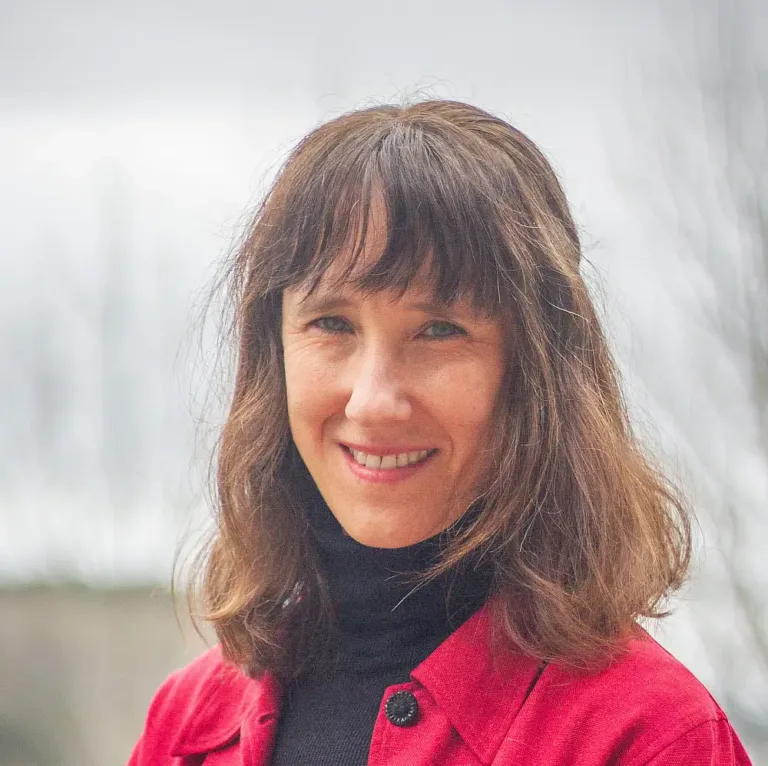
Heather Lakey ’00, M.Phil ’05
McNally Family Chair in Human Ecology and Philosophy
ABOUT
Course Areas
Philosophy, ethics
COURSES
EDUCATION
- PhD, Interdisciplinary in Philosophy and Women’s, Gender, and Sexuality Studies, University of Maine, 2015
- MA, Philosophy, University of Oregon, 2008
- MPhil, Human Ecology, College of the Atlantic, 2005
- BA, Human Ecology, College of the Atlantic, 2000
PUBLICATIONS
Spring 2020. “The Many, the Wise, and the Marginalized: The Endoxic Method and The Second Sex.” Hypatia: A Journal of Feminist Philosophy. 35(2): 317-335.
Spring 2018. “Appropriations of Informed Consent: Abortion, Medical Decision Making, And Antiabortion Rhetoric.” International Journal of Feminist Approaches to Bioethics 11 (1): 44-75.

Jamie McKown
Associate Dean for Academic Affairs, James Russell Wiggins Chair in Government and Polity
ABOUT
Before COA
Before coming to COA Jamie was formerly a professor at the College of Charleston where he taught classes in rhetoric, political communication, and American campaign history. He has also previously taught classes at Northwestern University and Loyola University in Chicago. He spent a number of years as a coach for the Emory University debate team. While there, Jamie successfully coached three different teams to national intercollegiate championship titles. Based on these efforts he was awarded the Warren Aiken Outstanding Alumni Award by Emory in 2000. Thanks to a generous grant from the Davis family, he is currently working with a group of COA students to examine ways to bring more debate activities to our campus.
Course Areas
Political science, rhetoric, critical theory, American history
COURSES
EDUCATION
- PhD in Rhetoric from Northwestern University
- MA, Political Communication from Georgia State University
- BA, Political Science from Emory University
INTERESTS
Jamie’s teaching and research interests lie at the intersection between political science, rhetorical criticism, critical theory, and American political history. He is currently wrapping up a project on Lincoln’s use of conspiracy rhetoric in the years before his election to the presidency. In addition he has recently begun a new long term project to recover the works of influential Michigan women’s suffrage activist and Republican operative Adelle Hazlett.
ADVOCACY
In addition to his academic work, Jamie brings to COA many years of grounded experience working in politics and on various electoral campaigns. While he no longer actively consults on campaigns, he continues to remain connected to the community. He regularly serves as a judge for the American Association of Political Consultants annual Pollie Awards. In a similar capacity he has worked with various media organizations both as a political commentator and as a producer/adviser for televised political debates. This has included televised appearances on ABC News Nightline, CNN, and ITN as well as references to his work in numerous print publications including The Christian Science Monitor, The Los Angeles Times, USA Today, The Washington Post, PR Week, Agence France Presse, etc.
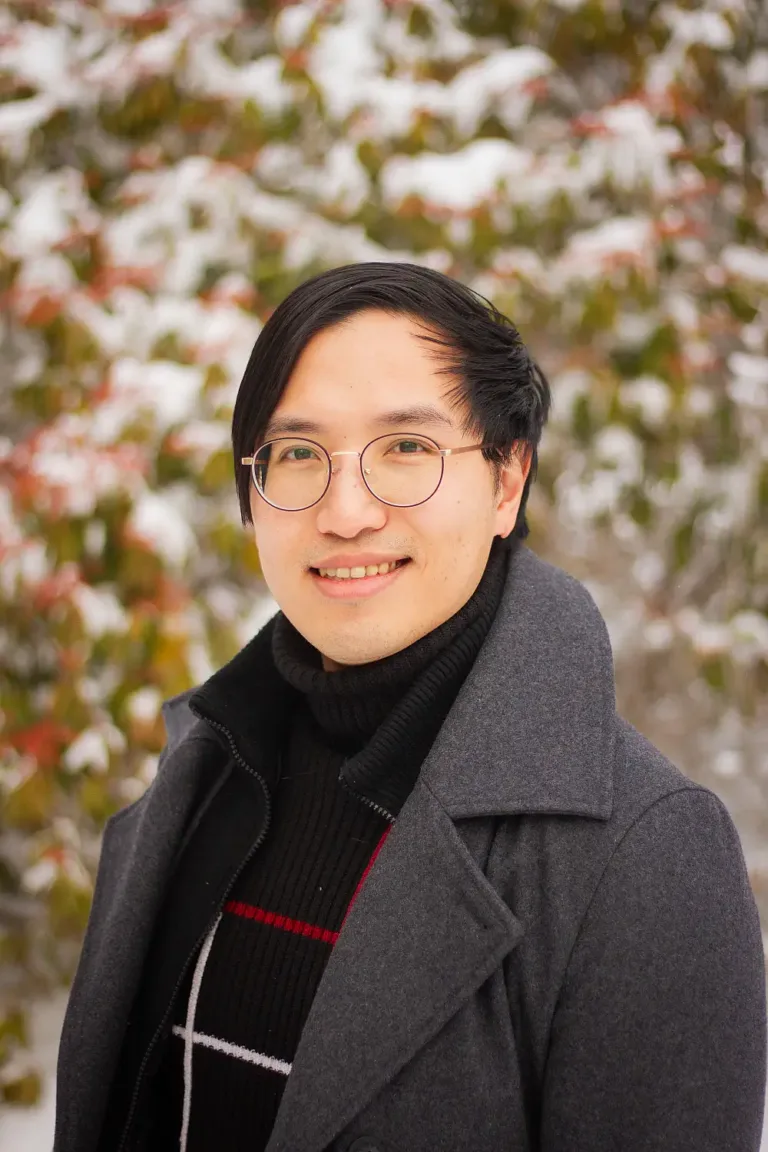
Hien Nguyen
Cody van Heerden Chair in Economics & Quantitative Social Sciences
ABOUT
“My scholarship is informed by the belief that sex and gender are material relations integrally connected to labor, production, consumption, and the accumulation and circulation of capital. The establishment and naturalization of binary cisgender and compulsive heterosexuality – alongside racialized violence, slavery, and genocidal dispossession of Indigenous people – was foundational to the development of capitalism and the modern nation-state.
Far from being historical, these forces continue to be key institutions contributing to social and economic conditions of our present moment – a deeply unequal present where ordinary people find it nearly impossible to thrive and to transform their lives for the better, let alone sexual and gender minorities whose life is often drowned in cycles of precarity and crisis. Through my research, I hope to contribute to the collective effort of progressive activists and thinkers, whose relentless pushing is our hope for changes in this overwhelming and increasingly unliveable world.”
Personal Website
Course Areas
Microeconomics, macroeconomics, Marxist political economy, feminist economics
COURSES
EDUCATION
- Ph.D., Economics, University of Massachusetts Amherst, 2024
- M.A., Economics, University of Toronto, 2016
- B.A. (Hon.), Economics, Trent University, 2015
HONORS & AWARDS
INTERESTS
- Political economy of gender and sexuality
- LGBTQ+ Economic discrimination and inequality
- Feminist, queer, and trans Marxism
- Political economy of platform capitalism and generative AI
- Interdisciplinary research methods in Economics
PUBLICATIONS
- “Gender‑Based Discrimination in Care Service Occupations: Result from an Online Experiment.” 2024. Journal of Economics, Race, and Policy.
- “Access to Gender-Affirming Care and Transgender Mental Health: Evidence from Medicaid Coverage.” 2024. American Journal of Health Economics, 10 (2): 162-181. (Co-authored with Samuel Mann and Travis Campbell)
- “Access to Gender-Affirming Care and Transgender Mental Health: Evidence from Medicaid Coverage.” 2024. American Journal of Health Economics, 10 (2): 162-181. (Co-authored with Samuel Mann and Travis Campbell)
- “Hormone Therapy, Suicidal Risk, and Transgender Youth in the U.S.” 2023. American Economic Review Papers and Proceedings, 113: 551–555. (Co-authored with Samuel Mann, Travis Campbell, and Yana van der Muelen Rodgers)
- “The Political Economy of Heteronormativity.” 2023. Review of Radical Political Economics, 55 (1): 112-131.

Contact and support
Email the ERRB at [email protected] with questions or for guidance or meet with your project director for advice on your research proposal.