
Success After COA
Success after COA
Lives shaped by purpose
A COA education is a launchpad for meaningful careers spanning science, policy, art, music, education, and beyond. Our alumni follow diverse and intentional paths—building businesses, stewarding the environment, creating cultural impact, and driving change in communities worldwide.
Where our alumni go
Experiential in every field

COA graduates pursue work that reflects their values, curiosity, and drive. You’ll find them advocating for environmental justice, publishing books, performing molecular research, designing public spaces, and shaping the future through law, education, and medicine.
COA alumni work as:
- Environmental scientists and marine biologists
- Public policy analysts and attorneys
- Composers, authors, and museum curators
- Entrepreneurs and nonprofit directors
- Teachers, professors, and education innovators
- Veterinarians, doctors, and geneticists
- Farmers, architects, designers, and more
Quick stat: Within one year of graduation, 97% of COA alumni are employed or enrolled in graduate or professional programs.
Before Graduation
Experiential learning with real-world impact

Every COA student completes two major experiences that prepare them for meaningful careers:
- A term-long internship in their chosen field—at home or abroad
- A capstone senior project designed and implemented by the student
These experiences build professional networks, deepen expertise, and give students the confidence to lead.
What they do
Our alumni are solving problems, shifting narratives, and leading change.
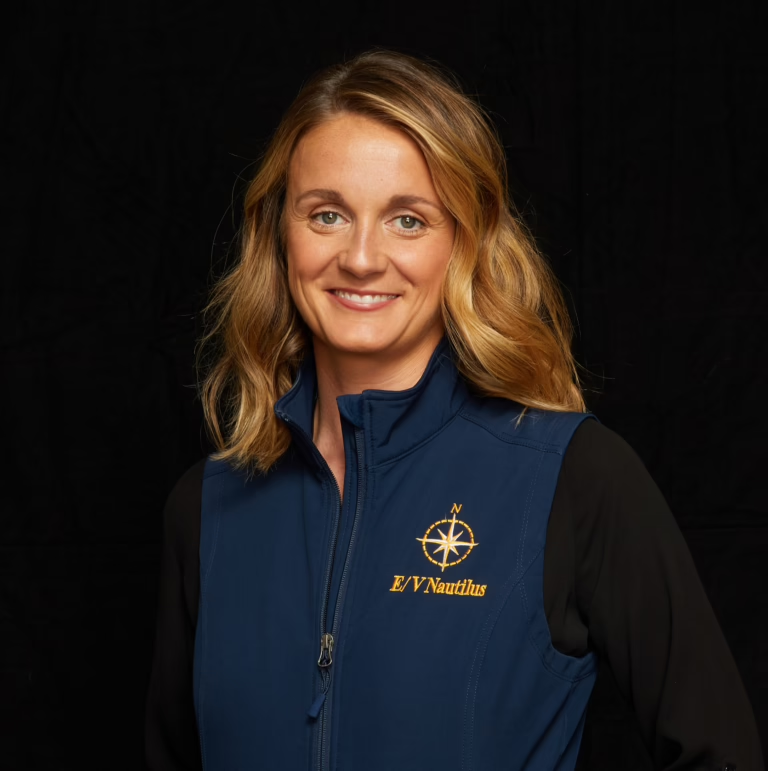
Allison Fundis
COA is a place that truly encourages you to find your own path and make a meaningful impact. It’s not just about getting a degree; it’s about discovering who you are and what you’re passionate about, surrounded by a community that supports and challenges you every step of the way.
COA’s small class sizes allowed me to build strong relationships with my professors, who became mentors and were genuinely invested in my success. They knew me well and challenged me to think deeper and push my boundaries. The interdisciplinary and impact-focused approach encouraged me to combine my interests in marine science and education with a strong emphasis on finding innovative solutions to environmental challenges—exactly what I do now with Ocean Exploration Trust.
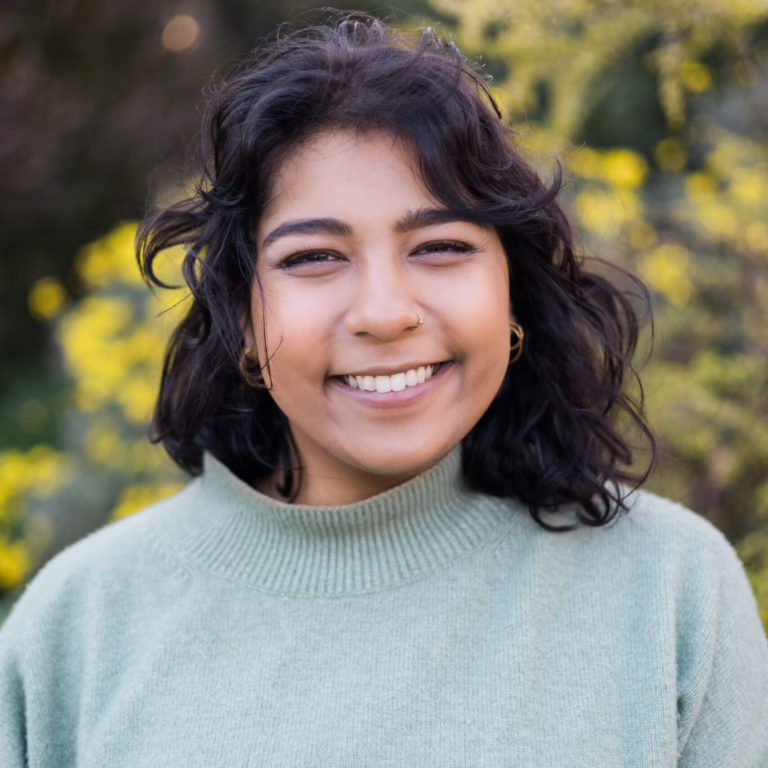
Aneesa Khan
COA made me independent, curious, confident, and unashamed to state my views and push for justice in the world. The truly interdisciplinary experience helped me become a problem-solver who could look at the world from many different angles.
I was seeking a small college with a strong sense of community. As someone deeply involved in learning how to combat environmental and climate injustice while attending United World College [an international baccalaureate high school], I also wanted to be at a college that allowed me to continue this work while practicing the values that it taught and preached. I stepped into a community that was passionate, warm, supportive, politically active, and genuinely welcoming of everyone. COA allowed everyone to thrive in their personalities and interests, and it created space for people of all backgrounds to feel cared for and seen.
It was at COA that I began to attend United Nations climate conferences and gain the skills to become a successful climate justice organizer and storyteller. That is what led me to working in Washington DC for The Wilderness Society to stop oil and gas drilling on public lands, and then later to continue working with young people on our international fight for climate justice at the UN as executive director of SustainUS.
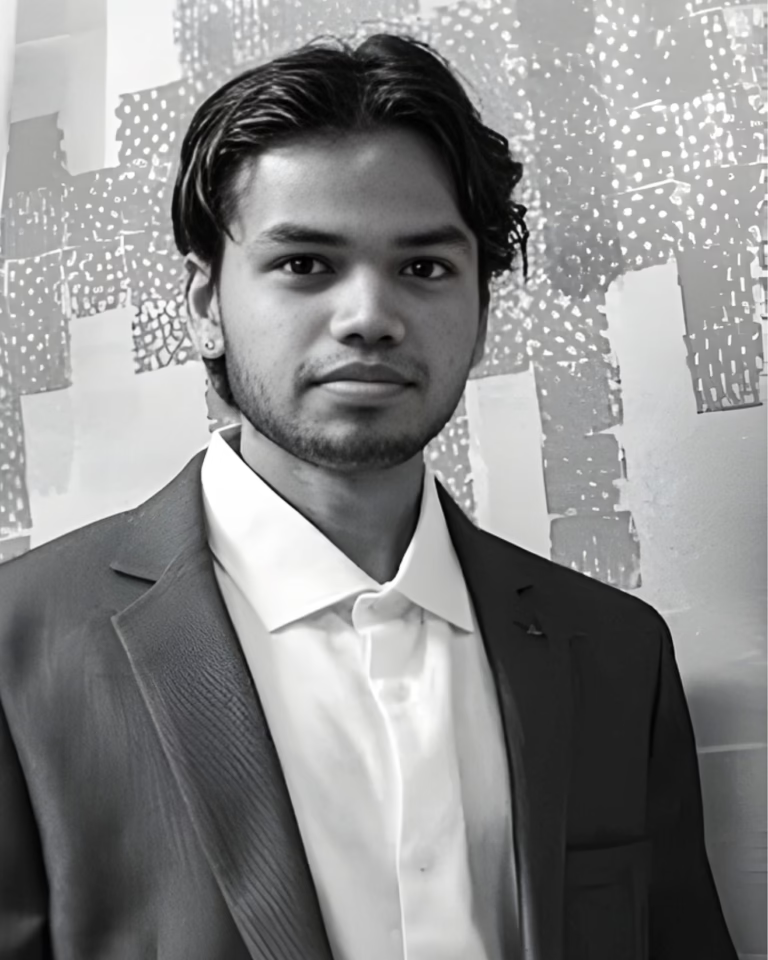
Aniruddha “AJ” Jaydeokar
The Hatchery is the epitome of learning about sustainable business… students taking interest in entrepreneurship to drive innovative solutions.
Aniruddha Jaydeokar’s education came into focus around the COA Diana Davis Spencer Hatchery sustainable business incubator, which provides eligible students academic credit, professional services and access to seed funding to develop their for-profit or nonprofit business ideas. The Hatchery allows students to walk the entrepreneurial high wire with a safety net and support.
While in his third year at COA, Jaydeokar was the co-recipient of a 2022 Projects for Peace grant. The project, “Empower Women Entrepreneurs for Peace in Niger,” centers on collaboration with the Fara’a women, 10 female entrepreneurs who came together to combat issues farmers and their families face in Niger, including poverty, food insecurity, low housing quality, and an inability to access affordable doctors and education.
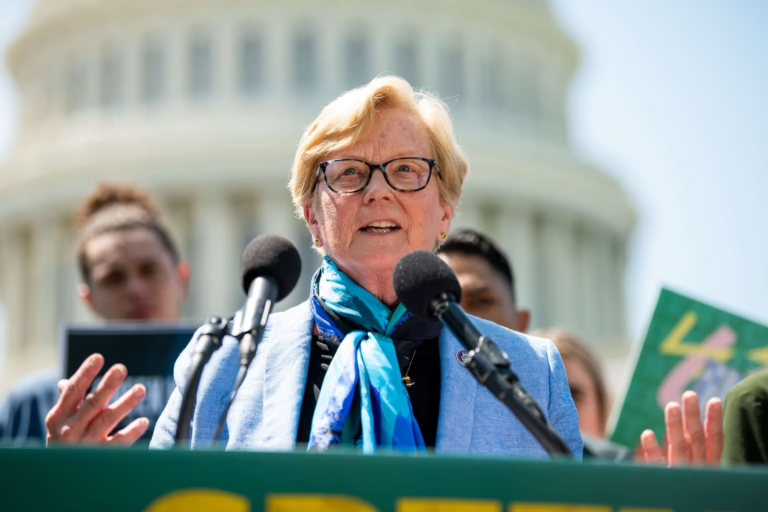
Chellie Pingree
COA provided a good generalist education; one of the great things was that I was learning a little bit about a lot of different things… and politics is the same way.
When you’re an elected official, you have to vote on a variety of topics. It could be foreign affairs, it could be cryptocurrency. It could be something about science, or biology, or healthcare systems; and in a way, you just have to be experienced at learning things and educating yourself. The way that education was structured at COA gave me an opportunity to learn how to seek out knowledge. Student governance opportunities provided me the fundamentals for starting out in local politics; I’m so lucky to have gone to school there.
At COA, you have so much right at your fingertips. It’s unique. It’s not for everybody, but it’s an authentic community. You will find yourself surrounded by students who are really passionate about their education.
Christie Anastasia
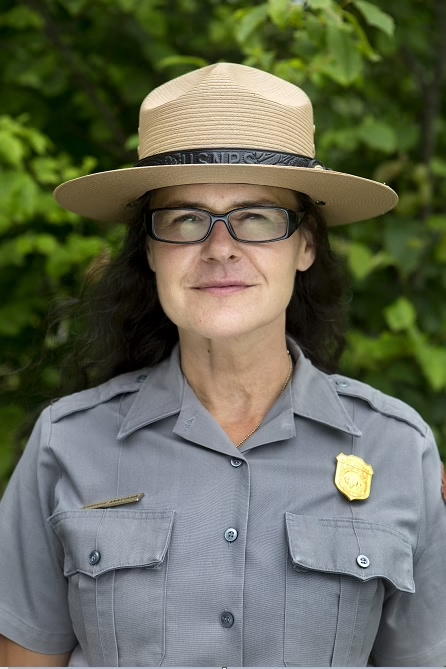
COA was a transformative experience for me. I grew up in a concrete city and always longed for wide-open spaces. Finding COA was a gift; the school, the community, the landscape, and the atmosphere were perfect fits for what I needed to hone in on my passions and construct my future.
I very frequently used the setting of Acadia National Park as a place to contemplate, think, and rethink whatever I was experiencing in my COA courses. If I had a paper to write, and I had to craft my response, a long bike ride or hike in the park cleared my mind and provided focus. The healing power of nature was a necessary complement to my learning to think like a human ecologist.
The heart of COA’s educational approach is learning how to process so many disconnected pieces into a connected whole. As a partnership coordinator for the National Park Service, I am constantly strategizing the broader system. I very frequently get calls from the parks I oversee and I am perceived as a problem solver within the context of complex partnerships that follow the law and the policies. Nudging something to the right or the left can take something technically unallowable and push it to be hugely successful. I enjoy the mental challenge, but I enjoy the outcomes of people being more connected to their national parks even more. I learned and absorbed that way of thinking at COA.
Elsie Flemings
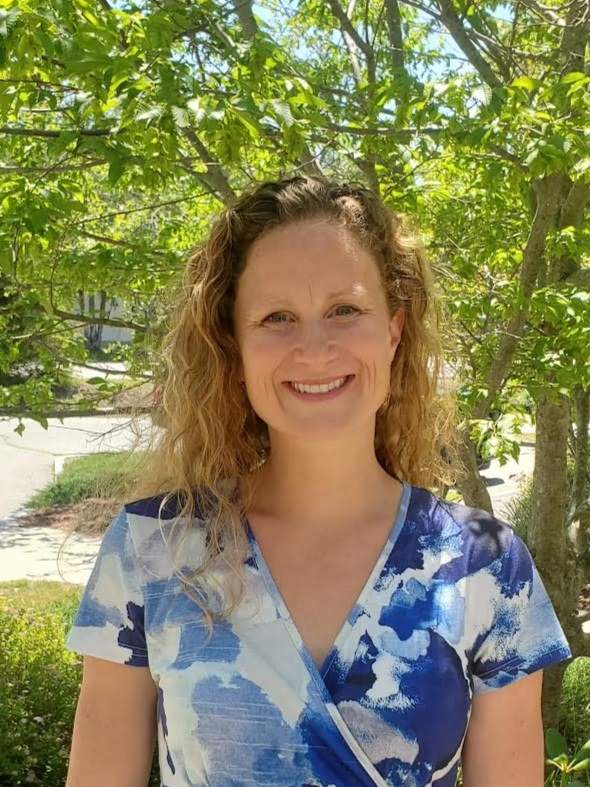
My education at COA supported and cultivated my passion for community and environment, and for making a positive difference in our world.
College of the Atlantic also gave me the skills, tools, knowledge, and confidence to take action in creative, collaborative, interdisciplinary ways to address challenges we face and build stronger, healthier communities. It has also given me a lifelong community of friends, teachers, mentors, and more.
Helena Shilomboleni
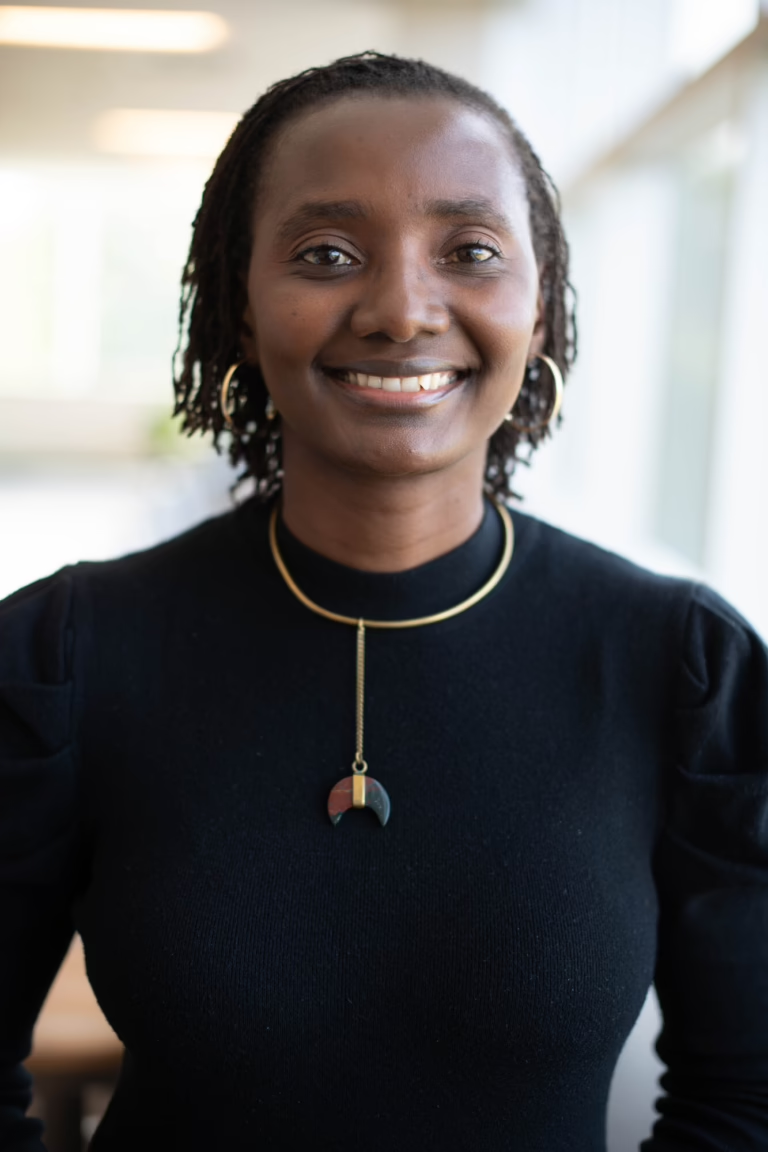
COA is a place where you will feel seen and appreciated. It’s a place where you will discover some of your greatest strengths as a student and as a person.
My COA education gave me freedom to explore and develop my interests in multiple disciplines. Today, I am doing research on climate-resilient agriculture and food security, and teaching courses focused on international development and political ecology. My education at COA prepared me for that.
Jessica Bonilla
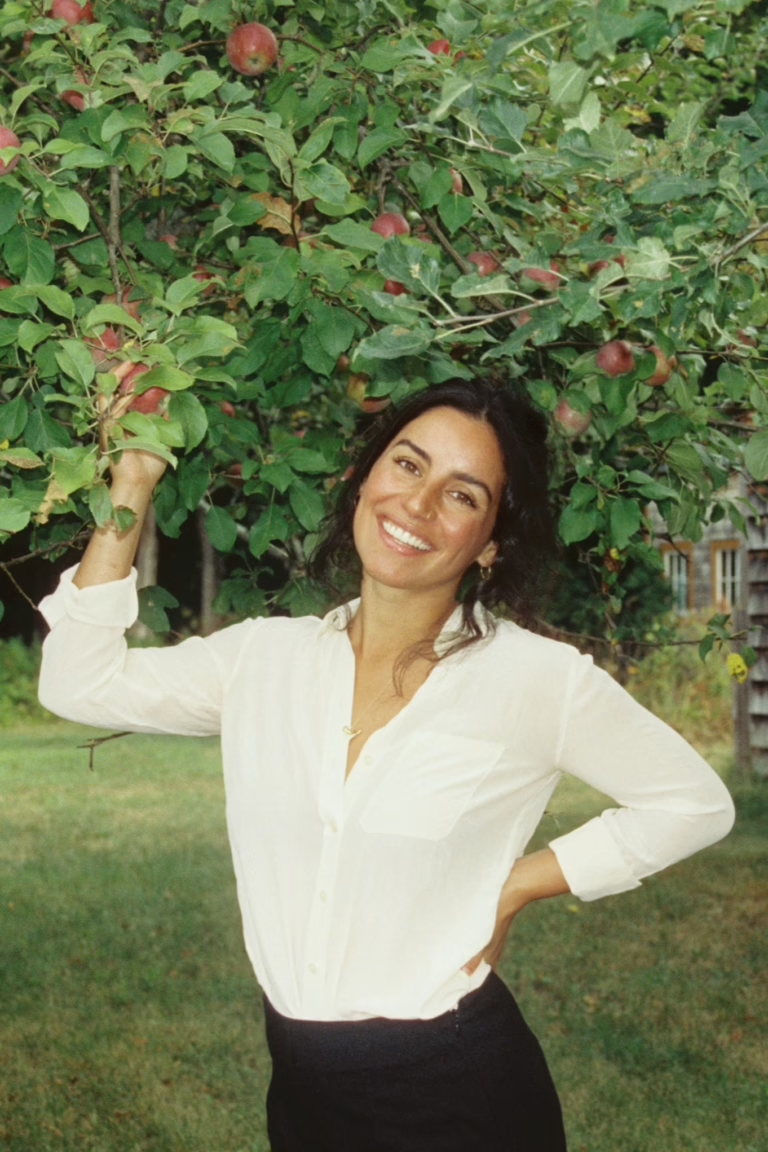
My experience at COA nurtured many parts of my life that went beyond traditional academics. Through fisheries focused courses and with the encouragement of my friends Ella and Rocky, I had the opportunity to work as a sternman in Corea, Maine.
With support from my mentors, I was able to explore and build relationships with coastal communities and form friendships that continue to shape my life and work. That support allowed me to pursue research grounded in my time on the water and my connections within the industry. Currently, I am working on a master’s degree in marine policy at the University of Maine, where my thesis focuses on how women in the lobster industry are adapting to change. None of this would have happened without the academic and personal support I received at COA.
What I appreciate most about COA is the space to be creative. I was able to pursue many passions at once, which made that time in my life truly special. When you’re living in such a beautiful place alongside passionate people, it’s hard not to feel inspired. There is room to explore, change direction, and build an education that feels honest to who you are becoming. The small classes and close relationships made learning feel relational rather than transactional, and that continues to shape how I approach research and community work today.
To prospective students, especially those who don’t come from families with a background in higher education, who are older or considered unconventional, or who have struggled to find a place to call home, I encourage you to try this place. I guarantee the ocean will change you. Always for the better.

Mihnea Tănăsescu
I have always enjoyed having the space and time to really think about the issues that interest me deeply. COA cultivated that passion by giving it a very practical expression through small seminar classes, self-directed studies, and continuous mentorship. It prepared me very well for an academic life by giving me the basic training of dealing with primary sources and, above all, not being afraid to poke and prod and create new problems.
COA stands out due to the vibrancy of the intellectual community. The class material continued into lunch conversations and into evening debates. I am surely not alone in having felt the COA educational experience as a continuous one. This also taught me that the border between learning and ‘living in the real world’ is what you make of it. Being continuously passionate about what you do is a strength, and COA did a lot to make this practically true for me. It’s a place where ideas can live and indeed show themselves to be alive. Being part of an intellectual and ethical community like this is a real pleasure!

Natasha Krell
Project-based classes, especially those that required teamwork were huge preparation for what I’m doing now as a project manager and researcher. There is a lot of value in working collaboratively on a team, figuring out how to motivate others, delegate tasks, and work on deliverables together.
The classes I took at COA also taught me a lot about public speaking and giving presentations, whether it was reading and summarizing research articles or presenting my research findings to a wider audience at the end of the term. These skills gave me a leg up in both graduate school and in my professional life in getting comfortable speaking in front of others.
I also appreciate how much time I was able to spend outdoors, whether it was in classes that involved fieldwork, hikes in Acadia [National Park], paddling on the water, or exploring frozen ponds and lakes in the winter.
The access to professors at COA is pretty much unmatched. For anyone who thinks they might want to go to graduate school, be sure to take advantage of the many opportunities to be mentored by your professors. I was driven at COA to take on independent research projects, such as assisting a Boston University PhD student with plant phenology research in Acadia. This forced me to manage my time really well and juggle a lot of extracurriculars, which put me in a strong position when applying to a PhD program because it showed that I was self-motivated and could work independently without too much direction.
I also recommend using the summers to gain experience through internships and research positions. You have to be proactive during the school year to put together applications for these but it is 100% worth it to figure out during your college experience what your interests are so that you can chart your future before graduation day. It’ll be there before you know it!
Nicholas Urban
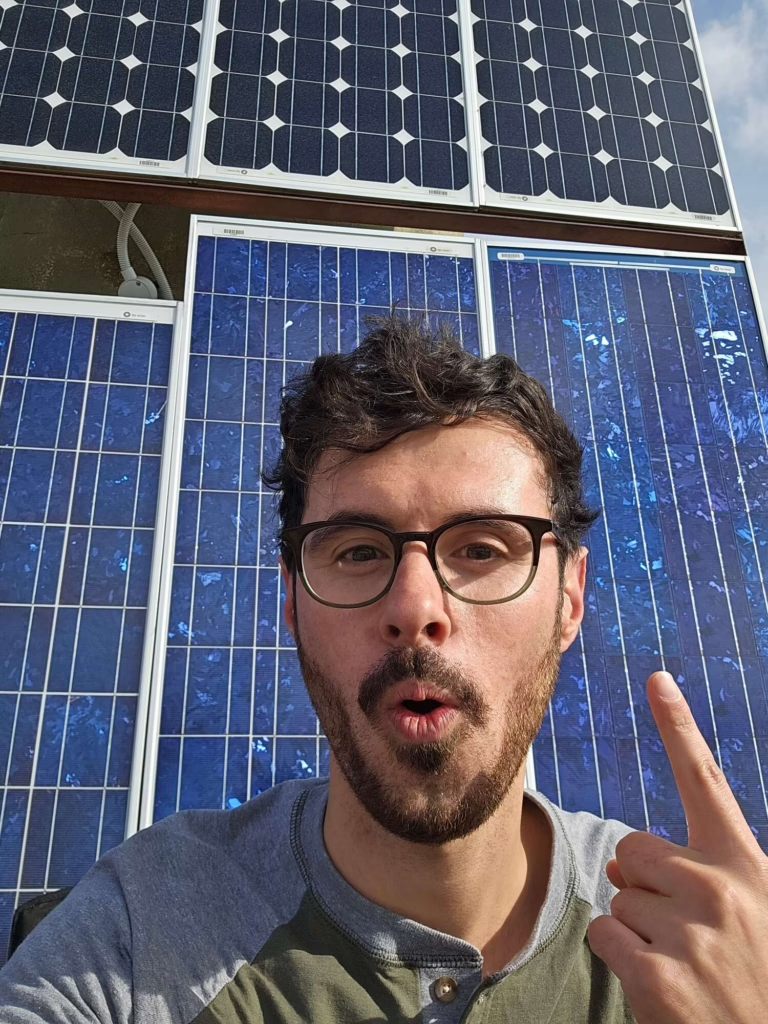
The close relationships that I was able to build with individual professors, staff, and other students on campus is really what set me up for where I am today.
I came from a mainstream public school in Connecticut that didn’t really teach anything at all about sustainability or energy systems. I was pushed through the traditional take-physics-when-you’re-a-senior kind of pathway. COA was the first time that I was really able to learn about energy systems, and it really opened my mind to what was possible.
I worked for the sustainability coordinator during my time at COA; I was the energy kid, and everybody knew me that way. I got to work on real projects, like our solar net metering system, and that gave me real world experience. That’s where I cut my teeth. I helped found Ampion, a community solar company, during my senior year of college, and now here I am—a direct translation of what I did at COA.
With the self-directed curriculum you learn things that you maybe weren’t fully aware you were interested in, and you change your path as you’re going along. It necessitates having a clear vision of what you’re trying to achieve and knowing in yourself what you want.
Noah Rosenberg
My ability to think critically, compassionately, and creatively flourished thanks to the incredible professors and courses offered at COA.
My education has helped me tremendously as a nonprofit leader, life long learner, and new dad. I constantly draw upon the lessons and skills I learned from the faculty. I feel fortunate to say that they were all not only incredible teachers but role models.
I really appreciate having been able to take a wide variety of courses, learn things deeply and critically, and apply my learnings to real world scenarios. On top of that I think the overall academic rigor of COA is truly remarkable. I’ve kept all of my notebooks and love going back and reading them.
Philéas Dazeley-Gaist
The type of education you get at COA forces you to constantly question the things you’re learning, and to relate them to other things in your life and in your educational journey. And that’s something I really value because it means you’re never taking anything for granted.
Your views are constantly open to changing and to growing. And that means you yourself are open to changing and growing. I had really encouraging teachers who cared about making sure that I actually understood what was going on more than they cared about me doing things a certain way.
There are all sorts of amazing classes, but in your first couple of years, you have to be open to picking a bunch of things that you had no idea you might be interested in. My advice is, let yourself experience these things and engage with them, because it turns out that they can be really transformative, and I think it’s by design… it’s imposing interdisciplinarity on you.
I wasn’t really interested in maths at all when I got to COA. Classes like Chaos and Fractals, Math and Physics of Sustainable Energy, and Biostatistics oriented me in that direction. When I learned about complexity science and complex systems from [professor] Dave Feldman, I just fell into that world and decided that this is exactly what appeals to me.
I totally drank the human ecology Kool-Aid at COA… Human ecology is a wonderful discipline. It’s fantastic what we do. We need more people and more settings where we’re confronting the way that human beings become intertwined with their environments and the way that we’re all part of a network of ecological interactions.
Ryan T. Higgins
My education at COA was exactly what I needed to help prepare me for my career. I was not just one of many students who had gone through a cookie cutter program. I came out more focused on my passions. COA made me more ME.
COA gave me four years to explore who I was and where I wanted to go in life. Every other college I looked at wanted me to pick a category and fit myself into it. COA was where I could mix and match my studies in a way that most benefited me. Unique classes, extra time with professors, and the push to think more individually with the help of engaged and invested mentors blended together to give me the skills and desire to follow my dreams of being a cartoonist. I truly believe I wouldn’t be where I am if it weren’t for COA.
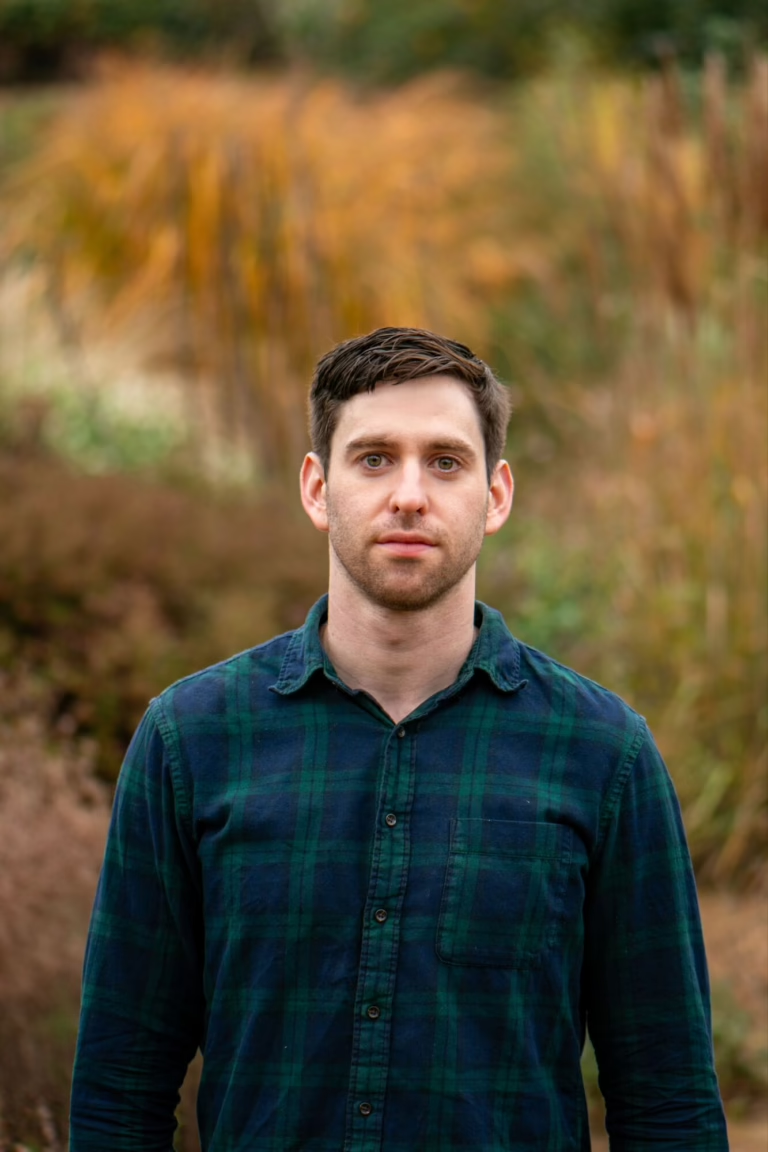
Yaniv Korman
COA taught me that the most meaningful learning happens through direct engagement with the world.
My first archaeological excavation wasn’t at Pompeii. It was in the Beatrix Farrand Garden, digging holes for roses, where I unearthed a 1920s porcelain doll buried when campus was still summer estates. My senior project required interviewing Ken Riddell, son of the Emery family’s head gardener, and studying Claire Verdier’s 1978 restoration project. Through this work, I discovered that archival documents alone cannot fully animate a place’s past. One must also seek out living voices, the people who carry memory in their bodies and stories. This methodology has shaped every research paper I’ve published in academic journals and newspapers.
COA taught me how to fail, fail, fail again, and eventually succeed. When Barbara Meyers warned that many students had already tried to restore the Sunken Garden, it wasn’t discouragement. It was an invitation to think differently. When my GoFundMe raised only $300 instead of $3,000, when the Historic Preservation Fund rejected us, when a back injury forced me to rely on others, I learned the importance of persistence.
COA also taught me how to become part of a community. When the Sun Shrine faced demolition, I drafted a petition to preserve it. When cruise ships proposed a new pier, I volunteered my newly acquired Photoshop skills to visualize how these titans would dominate the waterfront. I joined Climate to Thrive and committed to swimming Monday and Wednesday mornings with Rev. Rob Benson, Pastor of Bar Harbor Congregational Church. These weren’t resume builders. They were investments in a place and people I’d come to care about. Through these commitments, I felt like I had found home.
The campus is filled with so many beguiling surprises if one just has a little sense of adventure. Seaside Garden walls are loaded with delicious kiwis in late autumn, the monk circle offers a celestial perch right on the ocean, the woods behind Davis Center hide a marvelous fountain head, and frogs across from Peach House sing the most enchanting songs every spring.
Do take advantage of the free shuttle buses and explore the island. There are ample magical hiking trails and swimming holes, glorious orange moons that rise from Sand Beach, orchards buzzing with fireflies at Indian Point during summer dusk, community dinners by the Village Green, and snowy slides down the Bluenose’s slope in winter. Most importantly, take advantage of the opportunity to play, get lost, and fall in love with the island and your classmates. They all have so much to offer, and so do you!
Graduate school pathways
Academic curiosity that doesn’t stop at COA
More than 60% of COA alumni pursue graduate or professional study within five years of graduating. Our interdisciplinary, research-rich foundation gives students the skills and confidence to thrive in rigorous academic settings.
Frequently attended graduate institutions include:
- Harvard University
- Columbia University
- Yale University
- Cornell University
- Duke University
- University of California system
- University of Copenhagen
- Lund University
- Boston University
- American University
- Tufts University
- University of Maine
- University of Southern Maine
- College of the Atlantic
Stories from the Field

A road trip through Maine in search of America’s rarest apples [Wall Street Journal]
College of the Atlantic history professor Todd Little-Siebold and fourth-generation orchardist Polly McAdam ’14 inform the author’s search for coveted, historic specimens along Maine’s 3,500-mile coastline. Read More
A whale of a legacy: Maine Beer Company and COA Allied Whale
From a modest gift to a soaring skeleton, decades of partnership continue to protect Maine’s majestic marine creatures. Read More
Habitat for Aviation: Learning by doing [General Aviation News]
Beth White ’00 is founder and director of Habitat for Aviation, a first-of-its kind apprenticeship program for young airplane mechanics and pilots, with a focus on getting young women into the male-dominated field. Read MoreReady to build your own path?
Apply Now
Join a close-knit community built for curiosity, collaboration, and purpose.

connect with admissions
Talk with an admission counselor about your interests, questions, and goals.

Plan a Visit
Attend a class, meet students, and experience learning rooted in place.