People Directory
College of the Atlantic
Meet the people of COA
College of the Atlantic is powered by an extraordinary community of staff, faculty, and administrators. Our People Directory provides a comprehensive view of the individuals who shape life at COA—from academics to operations, student support to leadership.
Faculty
Staff

John G.T. Anderson
W.H. Drury Professor of Ecology/Natural History
ABOUT
Before COA
My mother was a scientist, my father was a historian. Both loved birds, wildflowers, and the out-of-doors. I was raised as a Human Ecologist long before i ever heard the term. I am a New Zealander by nationality, British by upbringing, and have spent time in the UK, Europe, and the American West. I am fascinated by ideas of Wilderness, Wildness, Aesthetics, and our belief in the Holy. I find much of the post-1914 world in extremely bad taste, and deeply resent having missed Charles Darwin by less than a century.
May 1986 to August 1987: Research Assistant, University of Rhode Island Environmental Data Center.
Course Areas
zoology, anatomy, ecology, pre-med/pre-vet studies, behavior
COURSES
More Information about my Courses
I believe strongly in the mixture of “hands on” and theoretical work, and if I were to lean one way, it would be towards that magical place that we call “The Field”, as in Field Trips, Field Studies, Field Work. many of the mistakes in modern Ecology, Conservation, Public Policy, etc. have come from relying overly much on theory without regard for facts on the ground. To this end, Ken Cline and I teach Great West, an 8 week immersion in traveling through the Western states, listening to people Not Like Us in places Not Like Maine. Offsetting this, in Summers I take students to Great Duck to listen to species Not Like Us and immerse ourselves in this land that we come to call home. I have a deep and abiding interest in both History and Geography, and all my classes are informed by both -sometimes to the annoyance of my students! At the same time I think it critically important if we are to be in truth “Life Changing/World Changing” (silly motto) we need to know When and Where and Who. Then maybe we can talk about What and Why. I also have a deep and abiding love of poetry & that works its way into most of my classes also.
EDUCATION
- B.A. University of California, Berkeley, 1979
- M.A. Ecology and Systematic Biology, San Francisco State University, 1982
- Ph.D. Biological Sciences, University of Rhode Island, 1987
HONORS & AWARDS
INTERESTS
The current focus of my research is on colonial nesting seabirds and island ecology. I am also interested in the application of G.I.S.and remote-sensing technology to landscape ecology and conservation.
At present, my field research centers around Great Duck Island in eastern Maine. This island supports one of the largest colonies of Leach’s Storm Petrels in the continental United States, it may also be the largest breeding colony of Black Guillemots in the Lower 48. My students and I are looking at habitat utilization by Herring and Black-backed Gulls, Guillemots, and Petrels. In addition, we are examining territoriality and foraging behaviors by gulls and chick survival/mortality in relation to parental investment.We are also examining the impact of bald Eagles and other predators on colonial nesting seabirds.
Working in collaboration with Acadia National Park we have examined the effects of rising sea-level on nesting islands. We also investigate the impact of introduced and native herbivores on island vegetation, and the impact of vegetation change on nesting habitat.
In addition to work at Great Duck I am interested in the intersection between Natural History and Human History, in relation to long-term ecological processes.
ADVOCACY
Co-Archivist for the Waterbird Society
Councillor for Waterbird Society
past President of the Society for Human Ecology
1990-1996 Commission Member, State of Maine Governor’s Commission on Oil Spill Preparedness
PUBLICATIONS
Anderson, J.G.T. K. R. Shlepr, A.L. Bond, and R.A. Ronconi. 2016. A Historical Perspective on Trends in Some Gulls in Eastern North America, with Reference to Other Regions. Waterbirds 29(sp1):1-9.
Anderson, J. 2015. The potential impact of sea level rise on seabird nesting islands in Acadia National Park. Natural Resource Report NPS/ACAD/NRR—2015/1055. National Park Service, Fort Collins, Colorado.
Anderson, J.G.T. 2014. Forms most beautiful and most wonderful. GNSI Journal of Natural Science Illustration – 2014 no.2:1-5.
Tewksbury, J. J.G.T. Anderson, R.E. Ley and C. Martinez del Rio et al.. 2014. Natural History’s place in science and society. BioScience 64 (4):300-310
Anderson, J. G. T. and K Anderson. 2005. An analysis of band returns of the American White Pelican, 1922 to. 1981. Waterbirds 28:55-60.
Szewczyk, R. J. Polastre, A. Mainwaring, J. Anderson, and D. Culler. 2004. An Analysis of a Large Scale Habitat Monitoring Application. Pp. 214-226 Proc. Second ACM Conference on Embedded Networked Sensor Systems
Polastre, J. R. Szewczyk, A. Mainwaring, D. Culler, J. Anderson 2004. Analysis of wireless sensor networks for habitat monitoring p.329-423 Ci S. Raghavendra, K M. Sivalingam, and T. Znati (eds.) Wireless sensor Networks. Springer Science Media. New York.
Anderson, J.G.T. and C.M. Devlin . 1999. Restoration of a multi-species seabird colony. Biol. Conservation 90:175-181
Anderson, J.G.T. 1992. Management and long-term monitoring of a mixed-species tern colony. Dev. in Landscape Management and Urban Planning 7:261-265. Elsevier, Amsterdam.
Anderson, J.G.T. 1991. Foraging Behavior of the American White Pelican in western Nevada. Col. Waterbirds 14:166-172.
Anderson, J.G.T. and J.K. Anderson. 1975. A lost city rediscovered? Calif. Publications in Classical Antiquity Univ. of Calif Press.
Mancinelli, I. K. Cline, and J.G.T. Anderson. 1993. Computer assisted community planning and decision-making. pp 330-335 in S.D. Wright, T. Dietz, R. Borden, G. Young, and G. Guagnano eds. Human Ecology: Crossing Boundaries. Soc. Hum. Eco. Ft. Collins, Colorado.
Anderson, J.G.T. R.J. Borden, I. Mancinelli, and K. Cline. (1994). Applied Human Ecology: College-community cooperation through computer-assisted regional planning and decision making. In H. Ernste (ed.) Pathways to Human Ecology/Wege zur Humanökologie Springer Verlag.
Borden, R. and J.G.T. Anderson (1994) Computer assisted regional planning and decision-making: GIS as a tool for collaboration. Sustainable Development: Challenges for the future Proc. IV World Academic Conference on Human Ecology. Merida, Mexico.
August, P.V., S.A. Avazian, and J.G.T. Anderson. 1989. Evidence for use of magnetodetection by homing field mice. J. Mammalogy 70:1-9.
August, P.V. and J.G.T. Anderson. 1987. Mammal sounds and motivational/structural rules: a test of the hypothesis. J. Mammalogy 68:1-9.
Heppner, F. and J.G.T.Anderson. 1985. Leg thrust important in takeoff of domestic pigeon. J. Exp. Biol. 114, 285-288.
Heppner, F., J.L. Convissar, D.E. Moonan, and J.G.T. Anderson. 1985. Visual angle and formation flight Canada Geese (Branta canadensis). Auk 102, 195-198.
Heppner, F.H., J.G.T. Anderson, A.E. Farstrup, and N.H. Weiderman. 1985. Reading performance on a standardized test is better from print than from computer display. J. Reading. Jan. 1985, 321-325.
Books and Book Chapters
Anderson, J.G.T. A. L. Bond, K. R. Shlepr and R. A. Ronconi (eds) 2015. Gulls in Two Worlds: the decline of Herring and Great Black-backed Gulls in the Western North Atlantic. Special Edition, Waterbirds.
Anderson, J.G.T. 2012 Deep Things Out of Darkness: A History of Natural History. (Univ. of Calif. Press)
Anderson J.G.T. 2011 Sauntering Towards Bethlehem. Chapter 5 in The Way of Natural History. T. Fleischner (ed.) Trinity Univ. Press.
Drury, W.H. 1998. Chance and Change: Ecology for Conservationists. (J.G.T. Anderson ed.) Univ. of California Press.
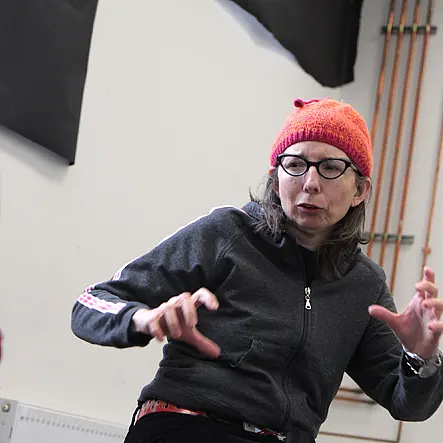
Nancy Evelyn Andrews
ABOUT
Course Areas
video, animation, performance
Personal Websites
http://www.nancyandrews.net/
http://artandscienceofdelirium.wordpress.com/
COURSES
EDUCATION
- MFA, School of the Art Institute of Chicago, 1995
- BFA, Maryland Institute, College of Art, 1983
INTERESTS
Nancy Evelyn Andrews lives on the coast of Maine, where she makes films, drawings, props and objects. She works in hybrid filmic forms combining storytelling, documentary, puppetry, and research. Her characters and narratives are synthesized from various sources, including history, movies, popular educational materials and autobiography.
PUBLICATIONS
Publications
Her work has been presented by the Museum of Modern Art, Pacific Film Archive, Ann Arbor Film Festival, Anthology Film Archives, Jerusalem Film Festival, Flaherty Seminar, Nova Cinema Bioscoop, Brussels, Belgium, and Taiwan International Animation Festival, among others; and is in the film collection of the School of the Art Institute of Chicago and six of her films are in the collection of the Museum of Modern Art.
She has been the recipient of grants and fellowships from the John Simon Guggenheim Foundation, LEF New England Moving Image Fund, Illinois State Arts Council, The Franklin Furnace Fund for Performance Art (supported by the Jerome Foundation and New York State Council on the Arts), and National Endowment for the Arts.
Exhibitions and Performances
http://www.gf.org/fellows/357-nancy-evelyn-andrews
http://supanickblog.blogspot.com/2010/08/nancy-andrewss-on-phantom-limb.html
http://blogs.citypaper.com/index.php/2010/04/transmodern-festival-2010-transmodern-films/
http://www.chicagoreader.com/chicago/on-a-phantom-limb-new-films-by-nancy-andrews/Film?oid=3583906
http://larecord.com/interviews/2011/03/07/nancy-andrews-life-without-mystery-is-boring

Jodi Baker
Joanne Woodward & Paul Newman Chair in Performing Arts
ABOUT
Before COA
Originally from Utah, Jodi began her career with the Denver Center Theatre Company and subsequently worked as an actor in New York, Los Angeles and regional theaters across the country. She has performed, trained and taught in Europe, Japan and the U.S.
Course Areas
theatre, movement training
COURSES
EDUCATION
- B.A., Theatre, California State University, Fresno, CA
- M.F.A., Acting, National Theatre Conservatory, Denver, CO
INTERESTS
Jodi has strong interests in documentary theatre, street theatre and stranger studies. She’s produced unconventional plays in unconventional locations and developed new approaches for teaching performance skills to non-traditional students in a variety of trans-disciplinary contexts. She has long-standing collaborative relationships with the novelist Kio Stark and Double Edge Theatre. Guest artists in Jodi’s classes have included Andrew Schneider, Linda Montano, Mark Hosler, Der Vorführeffekt Theatre, Rohina Malik and others. COA theatre and movement courses frequently travel to New York, Boston and elsewhere for research, performance and discussion. Shared conversations with Brother Arnold Hadd, Kate Valk, Ariana Reines, Alison S.M.Kobayashi, members of the Belarus Free Theatre and Complex Movements have had an enormous impact on the evolution of the COA theatre curriculum.
ABOUT
Course Areas
psychology, human relations, community planning, and the history and philosophy of human ecology
EDUCATION
- B.A. University of Texas, 1968
- Ph.D., M.A., Psychology, Kent State University, 1972
- University Post-Doctoral Fellow, Animal/Behavioral Ecology, Ohio State University, 1973-74
- Academy for Educational Development (AED), Harvard University, 1992
- M. Phil. (Hon.), College of the Atlantic, 2020
INTERESTS
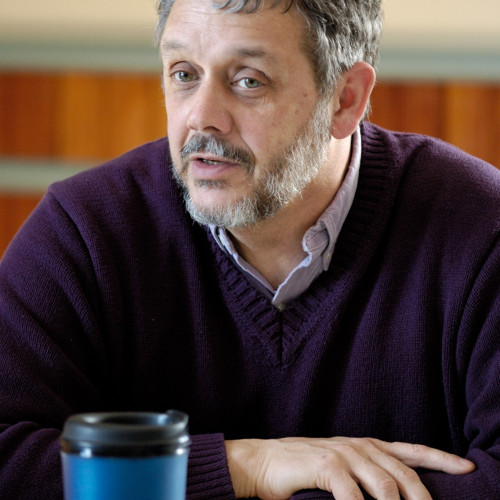
Richard J. Borden – recently retired – is an emeritus faculty member.He served as the COA’s Academic Dean for twenty years, held the Rachel Carson Chair in Human Ecology, and taught courses in psychology, human relations, community planning, and the history and philosophy of human ecology. Before COA, he was on the faculty at Purdue University and The Ohio State University.
He is a past-president and former executive director of the Society for Human Ecology (SHE), and a founding member of the human ecology section of the Ecological Society of America (ESA).
Rich has authored and co-authored several books – as well as numerous book chapters, research reports, journal articles, and essays. His Ecology and Experience: Reflections from a Human Ecological Perspective received the G. L Young Book Award “exemplifying the highest standards of scholarly work in the field of human ecology”.He has served as a USIA academic specialist in the area of human ecology, and as an interdisciplinary program consultant in China, Russia, elsewhere in Europe, and in North and South America.
In addition to his passion for networking human ecology worldwide, Rich also enjoys the domestic pleasures of cooking, carpentry, traditional music and sailing on the Maine coast.
Colin Capers ’95, MPhil ’09
ABOUT
Course Areas
film, video, screenwriting
COURSES
EDUCATION
- M.Phil. College of the Atlantic, 2008
- B.A. College of the Atlantic, 1995
INTERESTS
Colin focuses on the historical, theoretical and cultural contexts of moving picture imagery in all mediums.
They divide their time between teaching and their work as a film projectionist and programmer outside of the college. They have been experimenting in video since 1992, have exhibited recently as an installation artist, and won the emerging filmmaker award at the 2009 Lumina festival in Waterville, Maine.

ABOUT
Bill’s escapes from the written word are mainly aboard the 30-foot sloop “Northern Light,” which he sails with his family out of Castine, Maine.
Before COA
Bill Carpenter, full-time faculty member in Literature and Writing, grew up in central Maine. He was Assistant Professor of English & Humanities, and the Inland Steel Postdoctoral Fellow at the University of Chicago until 1972, when he saw the startup announcement from College of the Atlantic and decided to change his life.
He became the first faculty member at COA and has been teaching here ever since with a short stint as faculty dean in the eighties.
Course Areas
creative writing, Maine, mythology
Personal Website
EDUCATION
- B.A. Dartmouth College, 1962
- Ph.D. English, University of Minnesota, 1967
INTERESTS
His intellectual interests are in modernism and psychoanalysis; his literary and teaching styles tend toward comic exaggeration. He has been an NEA Fellow and a Fellow of the Society for Human Ecology.
PUBLICATIONS
Bill’s most recent novel, Silence (2021), examines the bitter legacy of 9/11, terrorism, and the nature of conflict and loss as Iraq War veteran Nick Colonna finds solace on a Maine island that young Julia Fletcher is passionately trying to preserve. Silence received the 2021 Independent Publishers Gold Medal in Military Fiction and was a finalist for the MWPA Maine Fiction award.
His first book of poetry, The Hours of Morning (1980), won the AWP award, followed by Rain (1985) which won the S.F. Morse award, and a collaboration with the artist Robert Shetterley, Speaking Fire at Stones. His novel A Keeper of Sheep was nominated for the ALA gay/lesbian award in 1995. The Wooden Nickel (Little-Brown 2002) is a lobster- and whale-oriented novel of which the New York Times said, “Melville would have approved.” His work is widely represented in periodicals and anthologies, including The Maine Poets (2003).
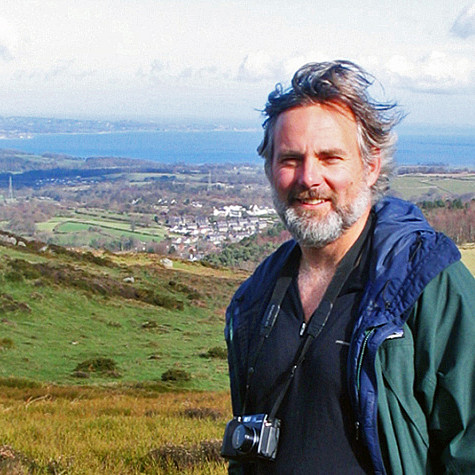
Ken Cline
David Rockefeller Family Chair in Ecosystem Management and Protection
ABOUT
Before COA
Before joining the faculty, Ken served as a Judicial Clerk for Federal Judge Gus J. Solomon in Portland, Oregon; as a Staff Attorney for the U.S. Court of Appeals for the 9th Circuit in San Francisco; and as an attorney specializing in municipal, environmental, and land use litigation for Calfee Halter & Griswold in Cleveland, Ohio.
His other interests include whitewater canoeing and kayaking, politics, and wilderness camping.
Course Areas
environmental law, land & water conservation, parks and protected areas
COURSES
- Acadia: Exploring the National Park Idea
- Advanced International Environmental Law Seminar
- Environmental Law and Policy
- History of the American Conservation Movement
- International Wildlife Policy and Protected Areas
- Introduction to the Legal Process
- Native American Law
- Our Public Lands: Past, Present, and Future
- Reading the West
- Rights of Nature
- Whitewater/Whitepaper: River Conservation and Recreation
- Wilderness in the West: Promise and Problems
EDUCATION
- B.A. Hiram College, 1980
- J.D. Case Western Reserve University, 1983
More Information about my Courses
Most of Ken’s courses are underlain by a pedagogical commitment to the principle that classes that enable students to apply knowledge to real problems can provide superior training for the students and a real benefit for people faced with those problems. Therefore, Ken uses neighboring Acadia National Park, a local watershed, and surrounding communities as the focus of class work and projects. Students in Ken’s courses have developed watershed conservation plans, filed legal documents to protect endangered species, lobbied state and national legislatures, attended United Nations conferences, testified at hearings, changed local zoning ordinances, prepared a plan to revitalize a local waterfront, organized local citizens, and routinely work with local leaders, agencies and citizens.
INTERESTS
Ken joined the faculty in 1989 where he teaches a broad range of courses in environmental law and policy. In addition to legal studies and pre-law courses, Ken teaches several interdisciplinary courses that focus on conservation policy within the United States and internationally. These classes include courses on public lands and parks, wildlife protection, wilderness, the history of the conservation movement, land conservation, land use planning, and river and watershed protection. Ken’s international courses focus on wildlife, environmental treaties, protected areas, and water management.
ADVOCACY
Ken has been recently appointed by the US Secretary of the Interior to the Acadia National Park Advisory Commission.
He is a Volunteer Leader for the Sierra Club in Maine and nationally. In this capacity, he has served on numerous state and national committees and stakeholder groups.
Ken is on the board of the Frenchman Bay Conservancy a regional land trust covering the watersheds of the Union River and Frenchman Bay.
PUBLICATIONS
Publications
Newlin, W., K. Cline, R. Briggs, A. Namnoum, and B. Ciccotelli The College of the Atlantic Guide to the Lakes & Ponds of Mt. Desert, North Atlantic Books. Berkeley CA 2013.
Ken has done extensive work with local and national river and watershed conservation groups. He has worked on river conservation issues in Maine, Ohio, Oregon, Pennsylvania, and Chile. He presently serves on the national rivers committee of the Sierra Club and has presented at national river conferences. Ken is director of the College of the Atlantic’s Watershed Project a collaborative, community-based curriculum and outreach project. The watershed project recently received a $360,000 grant from the US Department of Education to develop a model for interdisciplinary experiential teaching that utilizes the watersheds in Hancock County and addresses the issues facing the gateway communities surrounding Acadia National Park. Through this grant the College has helped to found a local stakeholder group to protect the nearby Union River and has worked closely with citizen groups, agencies, and local governments to monitor and educate the public about the Union River Watershed.
Presentations
March 2015, Oakland, California George Wright Society “Re- Envisioning the Application of the National Environmental Policy Act (NEPA) Within Land Management Agencies” with Chris Buczko from the National Park Service
November 2014, Sydney, Australia6th World Parks Congress “Parks Across the Curriculum: A Multidisciplinary Approach to Protected Area Education”
October 2014, Bar Harbor, Maine Society for Human Ecology Conference “Human Ecology as an Educational Foundation for Protected Area Managers”
Oct. 2013, Bar Harbor, Maine Moderator for Impacts of Climate Change on Acadia National Park Presentation
Oct. 2012, Hallowell, Maine. Keynote Address at the Maine Groundwater Summit “The Right to Water.”
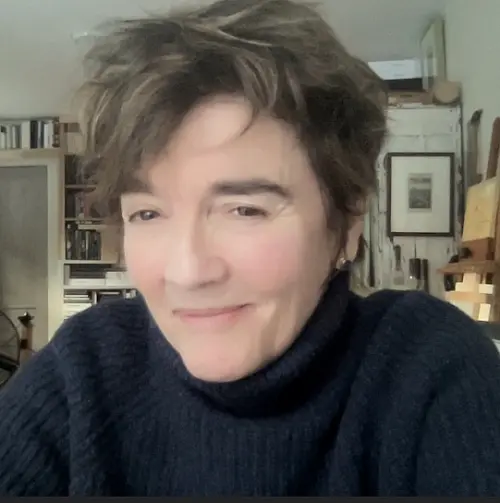
Catherine Clinger
The Allan Stone Chair in the Visual Arts
ABOUT
We study and live in the homeland of the Wabanaki, the People of the Dawn. We extend our respect and gratitude to the many Indigenous people and their ancestors whose rich histories and vibrant communities include the Houlton Band of Maliseet Indians, Mi’kmaq Nation, Passamaquoddy Tribe, and Penobscot Nation. We aim to help ensure that they are not forgotten and acknowledge relationships and claims to this area that are maintained to the present day by these people and communities, whether recognized by federal or state governments or living unseen in plain sight and throughout the world.
Before COA
Catherine taught at McGill University, University of New Mexico, University College London, Kent Institute of Art and Design, and New Mexico Highlands University. She is a Master Printmaker of Intaglio and Relief and Founder of Hexenspuk Press, New Mexico.
Personal Websites
http://www.historiesdrawingsprints.com/
Course Areas
art history, printmaking, drawing, philosophy, visual and critical theory
COURSES
EDUCATION
- Ph.D. Art History, University of London
- M.Phil. History of Art, University College London
- M.A. History of Art, University of New Mexico
- B.F.A. University of Kansas
INTERESTS
Catherine is an artist, art historian, writer and devoted teacher. She embodies our ideals for the Allan Stone Chair as “an art historian with a studio practice, an established body of work, and a track record of teaching excellence.”
Catherine comes to us with a rich knowledge of Art from the eighteenth through twentieth centuries, Romanticism and critical theory; print culture in the transnational fields of science and technology; and, Contemporary Art. She is a painter and is a Master Printer of Intaglio.
ADVOCACY
Throughout her career as an artist and scholar, Catherine has demonstrated a commitment to developing, piloting, and participating in efforts to bring a wider range of human ecological awareness and action in the communities where she has taught.
During time as a graduate student at the University of New Mexico, Catherine joined in the Sanctuary Movement, working to stem the restrictive immigration policies that targeted Central American asylum seekers. She participated in various actions of civil disobedience including ones to protest the Waste Isolation Pilot Project (WIPP) to store transuranic radioactive waste at Carlsbad, New Mexico.
Before leaving New Mexico to teach and study abroad, Catherine served for 12 years in the El Pueblo Fire Department. Trained as an arson investigator and wildland firefighter, she worked in small villages, on public lands, and led an annual Head Start workshop for children to give them the tools needed to educate their own families about fire prevention and safety.
Catherine co-founded Los Amigos del Rio, a public advocacy group formed to protect the Upper Pecos River Valley from a proposed uranium and thorium processing facility on its banks. She served as Board President of the Theater Residency Project founded by Cookie Jordan in Santa Fe and co-produced Left-Handed, a play performed in secondary schools to educate faculty and students about the variability of sexual orientation and gender identity in youth populations.
Since arriving on Mount Desert Island in 2010, she has chosen to document its biotic diversity through her art. The range of experiences in political, social, cultural, and natural worlds honed her eye and her heart as an artist, scholar, and activist.
PUBLICATIONS
A recipient of various grants and fellowships, Catherine is currently working on a book related to German Romanticism and Mining Practices.
Selected Publications:
‘Speleological Interiority – The Mindfulness of a Spelunking Anatomist,’ in Discovering the Human Life Science and the Arts in the Eighteenth and Early Nineteenth Centuries, Ralf Haekel, Sabine Blackmore (Hg.), Humboldt-Universität zu Berlin Institut für Anglistik und Amerikanistik, (Vandenhoeck & Ruprecht GmbH & Co. KG, 2013).
‘Painted Nature -19th century landscape,’ Encyclopedia of World History, The Age of Revolutions, 1750-1914, Ed. James Overfield, (Oxford and Santa Barbara: ABC-CLIO), 2012.
I know the Voices Dying with a Dying Fall, Exhibition Catalogue Essay for artist Robin Ward, Published by Omphalos Press, San Francisco, 2011.
‘Theory of the Ridiculous: Max Beckmann, Jean Paul, and Dostoevsky’s Donkey,’ Art History, Vol. 33, Issue 3, 2010.
‘Emanation and Return: Archive as Liberator,’ Afterimage: a journal of media arts and cultural criticism, vol. 35, no. 3, (November, 2008).
‘Notes on an Indulgence,’ Vertigo Magazine, volume 3, no. 6 (Summer 2007).
‘Retrieval and Transmittal in a Fictive Photographic Experience,’ in Johnson and the 33 Confessors, Los Angeles and London, 2007.
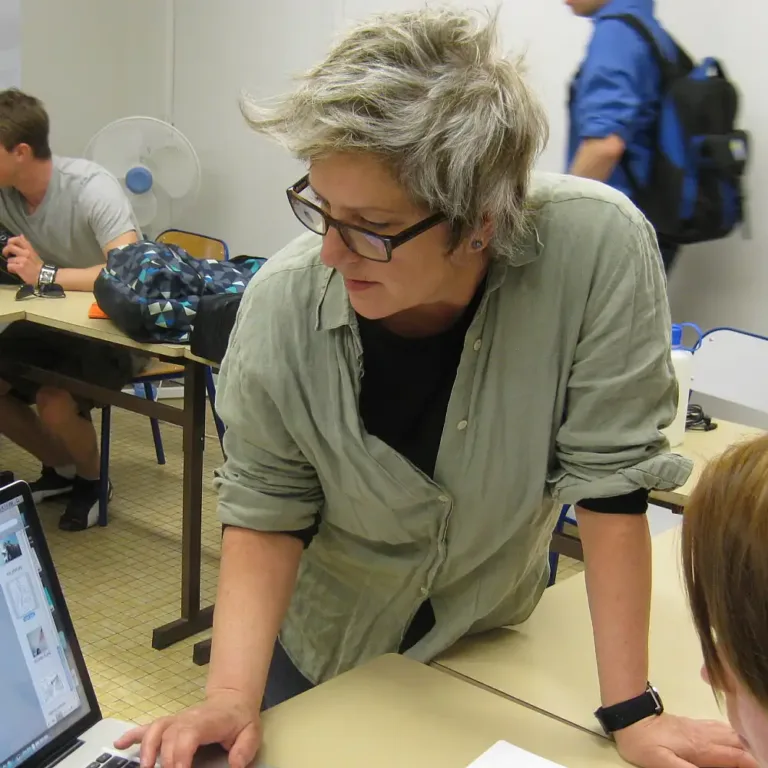
ABOUT
At the College of the Atlantic, Dru helps students find ways to work with the National Park Service in Acadia on interpretation projects. She teaches the National Park Service Practicum with Steve Ressell – a course that focuses on projects with the National Park Service in Acadia National Park.
At the College of the Atlantic, Dru has worked with students on a variety of interpretive projects that are presented in the George B. Dorr Museum of Natural History and often travel to venues beyond the campus.
Before COA
Dru received a Master of Fine Arts degree from The School of the Art Institute of Chicago in 1997, where she subsequently taught courses in installation art, museum exhibition design, and two and three dimensional visual communication. In addition, she has taught special courses as a visiting artist in graphic design at Auburn University and the University of Maryland.
Personal Website
Course Areas
studio practice, 2d and 3d design, visual communication, museums
COURSES
No courses assigned.
More Information about my Courses
What my courses have in common is a focus on how we tell our stories as humans in visual, spatial and experiential terms. They explore how we can expand the depth and breadth of how we “look” at this world, how meaning is created between things, how we envision future worlds, and how we manifest those visions through the things we make.
EDUCATION
- M.F.A. The School of the Art Institute of Chicago, 1997
- B.F.A. Auburn University, Auburn, AL, 1980
INTERESTS
Dru Colbert is an artist, designer and teacher. As a two and three dimensional designer, Dru works primarily for not-for-profit organizations on design projects that focus on social or environmental issues. She has designed major museum installation/exhibits like “A More Perfect Union” for the Smithsonian Institution (that focus on cultural issues such as Japanese American internment during WW II), and developed exhibitions presenting complex environmental topics such as the geologic, historic, social, and ecological landscapes of the Florida Everglades for the National Park Service.
As an installation artist, sculptor and painter, she combines curiosities, fragments of history, the documentary and the fantastic into stage settings for mysterious and personal narratives to unfold. She pursues opportunities to analyze, and utilize cultural objects and the American landscape as symbols and repositories of meaning and memory.
PUBLICATIONS
Her clients and collaborators include the Smithsonian Institution, the Maine State Museum, the Abbe Museum, the National Geographic Society, and the National Park Service. Dru has received various awards in recognition of her work from The National Endowment for the Humanities, The American Association of Museums, The New York Art Director’s Club, The Smithsonian Institution, Print Magazine and others.
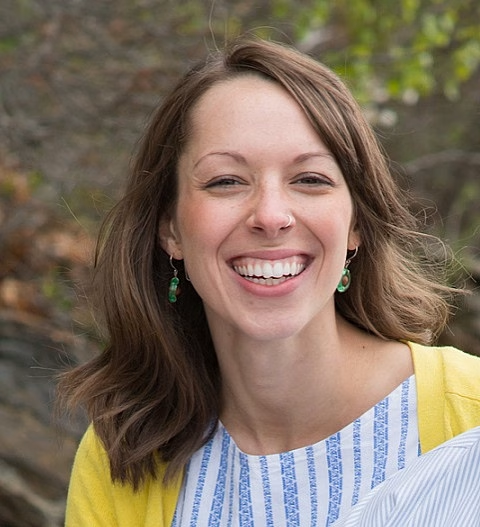
Kourtney Collum
Partridge Chair in Food & Sustainable Agriculture Systems
ABOUT
Outside of campus, I try to spend as much time as possible gardening, baking, and exploring the beautiful mountains and waters of Maine with my husband, son, and our semi-feral dog, Bruce. Our cat has no interest in joining.
Course Areas
Farm & Food Policy, Food Sovereignty and Justice
COURSES
EDUCATION
- PhD, Anthropology and Environmental Policy, University of Maine
- MS, Forest Resources, University of Maine
- BS, Anthropology and Environmental Studies, Western Michigan University
HONORS & AWARDS
INTERESTS
My scholarship focuses on food systems, particularly the ways in which political and economic conditions shape possibilities for farmers, eaters, and food systems workers. I’m interested in the power of collectives to envision and bring to fruition just and sustainable futures. My doctoral dissertation examined farmers’ adoption of pollinator conservation practices in the lowbush blueberry industries of Maine and Prince Edward Island (PEI). In collaboration with a team of interdisciplinary researchers, I examined how farmers adapt their pollination management practices in the face of declining bee populations. My current work focuses on student and community food insecurity, food sovereignty, and prison food systems.
ADVOCACY
- Vice Chair, Bar Harbor Food Pantry, 2022-present
- Member, Hancock County Food Security Network, 2022-present
- Advisory Council Member, Downeast Restorative Harvest Project, 2022-present
- Secretary-Treasurer, Culture & Agriculture section of the American Anthropological Association, 2017–2019
- Technical Committee Member, Northeast SARE, 2016–2021
- Volunteer, Master Gardener Program, 2011–2020
PUBLICATIONS
Peer-Reviewed Journal Articles
- Velardi, S., Leahy, J., Collum, K., McGuire, J., and Ladenheim, M. (2023) Size and Scope Decisions of Maine Maple Syrup Producers: A Qualitative Application of Theory of Planned Behavior. Trees, Forests, and People.
- Collum, Kourtney, Samuel Hanes, Francis Drummond, and Jessica Leahy. (2023) “We’re Farmers, Not Beekeepers:” A Cultural Model of Pollination Management among Lowbush Blueberry Growers in the United States and Canada. Human Organization 82(2).
- Velardi, S., Leahy, J., Collum, K., Ladenheim, M., and McGuire, J. (2021) “You Treat Them Right, They’ll Treat You Right:” Understanding Beekeepers’ Scale Management Decisions within the Context of Bee Values. Journal of Rural Studies 81.
- Velardi, S., Leahy, J., Collum, K., Ladenheim, M., and McGuire, J. (2020) Adult learning theory principles in knowledge exchange networks among maple syrup producers and beekeepers in Maine. The Journal of Agricultural Education and Extension DOI: 10.1080/1389224X.2020.1773283.
- Hanes, Samuel P., Kourtney K. Collum, Aaron K. Hoshide & Francis Drummond. (2018) Assessing Wild Pollinators in Conventional Agriculture: A Case Study from Maine, USA’s Blueberry Industry. Human Ecology Review 24(1).
- Collum, Kourtney K. & John J. Daigle. (2015). Combining Attitude Theory and Segmentation Analysis to Understand Travel Mode Choice at a National Park. Journal of Outdoor Recreation and Tourism 9:17-25.
- Boston, P. Qasimah, M. Miaisha Mitchell, Kourtney K. Collum & Lance Gravelee. (2015). Community Engagement and Health Equity. Practicing Anthropology 37(4):28-32.
- Jessee, Nathan, Kourtney K. Collum, & Richard D. Schulterbrandt Gragg. (2015). Community-based Participatory Research: Challenging ‘Lone Ethnographer’ Anthropology in the Community and the Classroom. Practicing Anthropology 37(4):9-13.
- Hanes, Samuel, Kourtney K. Collum, Aaron Hoshide, & Eric Asare. (2013). Grower Perceptions of Native Pollinators and Pollination Strategies in the Lowbush Blueberry Industry. Renewable Agriculture and Food Systems 28(4):1-8.
Book Chapters
- Collum, Kourtney K. & John J. Daigle. (2015). The Shift from Automobiles to Alternatives: The Role of Intelligent Transportation Systems. In Sustainable Transportation in Natural and Protected Areas. Routledge: Taylor & Francis Group. Edited by Francesco Orsi.
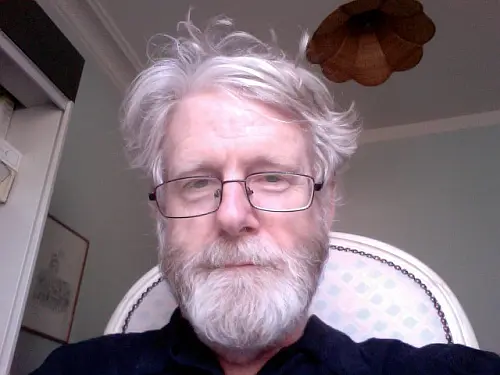
Gray Cox
ABOUT
Gray is a cofounder and current clerk of the Quaker Institute for the Future, a non-profit organization promoting research on social and environmental concerns out of the spiritual tradition of the Religious Society of Friends. (www.quakerinstitute.org). Gray has collaborated in a variety of projects in community organizing, peace work, election observation and sustainable development. These have included, for example, serving as the Principal Investigator on an NSF grant studying cultural aspects of residential heating behaviour in Maine and serving as a translator for a community based ecological film project in San Crisanto, Yucatan. He is a singer-songwriter who has put out three CDs with songs dealing with love, peace, social justice and lullabies that put babies to sleep with visions of a world transformed. They are available at: https://graycox.bandcamp.com/.
Before COA
Gray taught previously at Middle Tennessee State University and Earlham College before joining COA full-time in 1994. He grew up on MDI and was a guinea pig student in COA’s first experimental classes in the summer of 1971. He also served at COA as an admissions officer for COA from 1974-76.
Personal Websites
www.smarterplanetorwiserearth.com
http://graycoxhomepage.wordpress.com
Course Areas
ethics, artificial intelligence, strategies for social change, peace & conflict, language learning, linguistics, history of philosophy, human ecology
COURSES
More Information about my Courses
Gray’s teaching has ranged widely over the last 30 years with philosophically grounded courses designed to prepare students to collaborate effectively in interdisciplinary projects dealing with human ecological problems in a wide variety of complex contexts and cross-cultural settings. He continues to do research on ethics, artificial intelligence, strategies for social changemetaphysics, epistemology, peace studies, language learning, and futures studies. He uses Spanish, French and German in teaching, research and music and has led programs abroad in Mexico and France.
EDUCATION
- B.A. Wesleyan University, 1974
- M.A., Ph.D. Philosophy, Vanderbilt University, 1981
PUBLICATIONS
Gray’s publications include four books. The most recent is Smarter Planet or Wiser Earth? Dialogue and Collaboration in the Era of Artificial Intelligence (Quaker Institute for the Future, 2023). The others are: The Will at the Crossroads: A Reconstruction of Kant’s Moral Philosophy (University Press of America, 1983), The Ways of Peace: A Philosophy of Peace as Action (Paulist Press, 1986) and A Quaker Approach To Research: Collaborative Practice and Communal Discernment (Quaker Institute for the Future 2014). He has also published a wide variety of articles and book chapters on a on social theory, ethics, philosophy, peace studies and artificial intelligence, including, for example: Reframing Ethical Theory, Pedagogy, and Legislation to Bias Open Source AGI Towards Friendliness and Wisdom (Journal of Evolution and Technology, November, 2015) and “Gandhi’s Dialogical Truth Force: Applying Satyagraha Models of Practical Rational Inquiry to the Crises of Ecology, Global Governance, and Technology” (Contemporary Studies in Gandhian Philosophy, Routledge Press, 2023).
Exhibitions and Performances
At the Hope Festival in Orono, Maine, and at College of the Atlantic, In April of 2017, he and and a diverse team presented “sing throughs” of his draft work in progress, “Fire in the Commons”. It is a full length musical in the tradition of old time Camp Fire Shows with lots of community collaboration and sing alongs envisioning a dramatically better future.
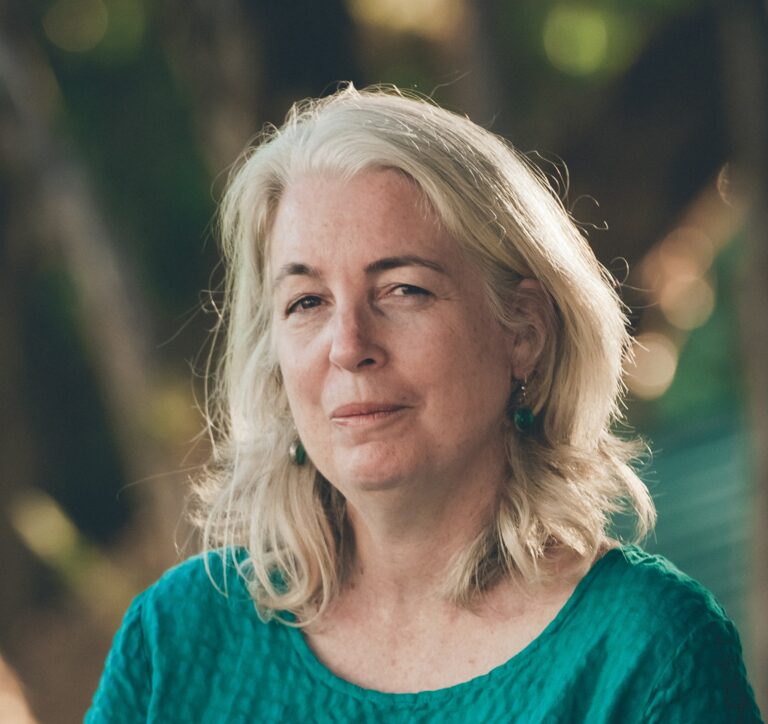
ABOUT
Before COA
- English Teacher, Noble and Greenough School, Dedham, Massachusetts
(Second semester 2016, Interim Position): Three sections of 10th Grade American
Literature, one section of Poetry (senior elective), and advisor to the literary and art
magazine (for winter and spring issues of Calliope) - English Teacher, Gilford High School, Gilford, New Hampshire
(Spring Trimester 2015, Long-term Substitute Teacher): Two sections of 9th Grade and
two sections of 11th grade Honors American Literature - Adjunct Instructor of English, Phillips Academy, Andover, Massachusetts
(Fall Trimester 2014, Interim Position): Two sections of “Introduction to Literature”
(Juniors/9th grade) and one section of “Writing to Read, Reading to Write”
(Lowers/10th grade) - Professor of Writing, New England College, Henniker, New Hampshire
(1998-2014): First Year Writing Program, First Year General Education, and Creative
Arts courses; extensive advising and committee work - English Teacher, Pingree School, South Hamilton, Massachusetts (1981-1997):
Grades 10-12, including American and British Literature, Creative Writing, and
Women’s Literature; advisor to Pegasus, an award-winning literary and art magazine; extensive advising, committee, and co-curricular service
COURSES
EDUCATION
- BA, Williams College, American Civilization, 1980
- MA, Middlebury College, Bread Loaf School of English, 1989
HONORS & AWARDS
PUBLICATIONS
Publications
- Dress Her in Silk (Finishing Line Press 2009)
- Essays and poems published in numerous journals including English Journal, Green
Mountains Review, Harvard Review, Hayden’s Ferry Review, Marlboro Review, NH Writer - Poems anthologized in The Breath of Parted Lips: Voices from the Robert Frost Place, Volume 2, The 2010 Poets’ Guide to New Hampshire: More Places, More Poets, Shadow and Light: A Literary Anthology on Memory, Poet Showcase: An Anthology of New Hampshire Poets
- Feature articles “Harpswell Notes” published in Maine Boats, Homes & Harbors (2006,
2009) - Afterword to Lethal Rejection: Stories on Crime and Punishment (Carolina Academic Press
2009)
• Image+Text musings at One Writer’s Excavation: Narrating a Life, Piece by Piece at:
http://madonovan.wordpress.com/
Presentations
- “Family, Memory, and Place: Writing Family Stories” workshop, with Maura MacNeil,
Olive G. Pettis Library, Goshen, New Hampshire, 2015 - Guest Speaker on “Literary Mothers & The Creative Process” for “The Psychology of
Women” course at New England College, 2015 - “Family, Memory, and Place: Telling Family Stories” Humanities to Go workshop, with
Maura MacNeil, at Belknap Mill Society, Laconia, New Hampshire, 2013 - “Orphaned Images & Imagined Narratives” Mind Stretch presentation with
Maura MacNeil at the A Room of Her Own Foundation Women Writers’ Retreat,
Ghost Ranch, Abiquiu, New Mexico, 2013 - “Dangerous Archaeology: Photographs, Artifacts, and Ephemera in Visual/Textual
Narratives,” New England Narrative Conference, New England College, Henniker,
New Hampshire, 2012 - NEC Gallery Exhibit of Dangerous Archaeology: A Daughter’s Search for Her Mother
(and Others) – a memoir in fragments, with photographer Autumn E. Monsees, 2012 - Guest Writer, Gilford Public High School, Gilford, New Hampshire, 2012
- Stone Bridge Poetry Project Reading, Concord Public Library, Concord,
New Hampshire, 2010 - Poetry Reading, Bass Harbor Memorial Library, Mt. Desert Island, Maine, 2009
- Featured speaker (with Martha Carlson-Bradley) on Literary Friendships for the
Monadnock Writers’ Group, Peterborough, New Hampshire, 2008 - Collecting the Pieces: Three Generations of Witter Women in India presentation, Bass Harbor Memorial Library, Mt. Desert Island, Maine, 2007
- Guest Poet, Pingree School, South Hamilton, Massachusetts, 2007
- Literary Magazine Workshop for high school teachers, New Hampshire Young Writers’
Conference, 2006 - Breath of Parted Lips reading, Dartmouth College, 2005
- Poetry as Palimpsest: Uncovering the Layers of Grief workshop (with Maura MacNeil)
for the New Hampshire Writers’ Project, Concord, New Hampshire, 2004
Profe
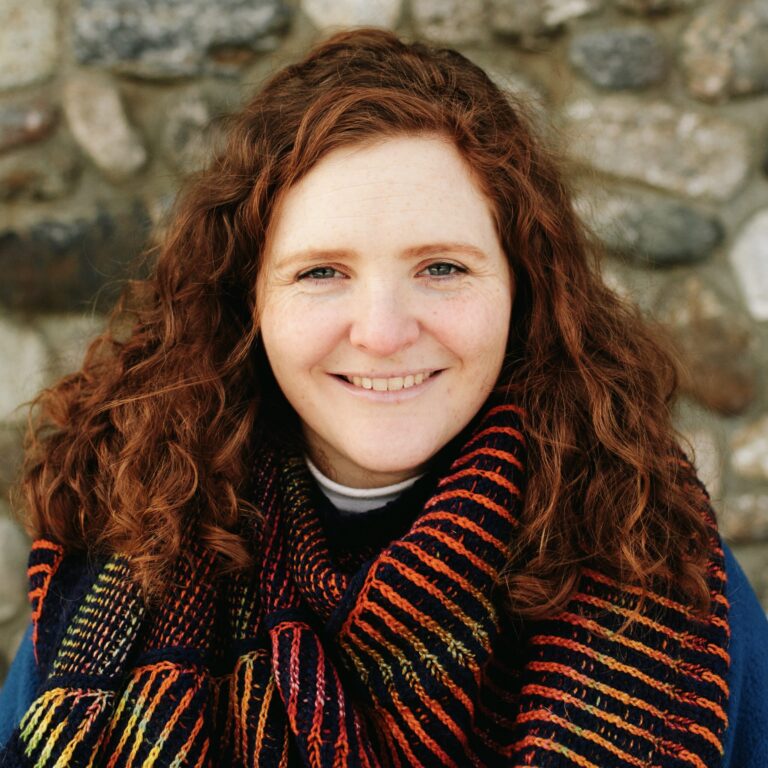
Victoria Edwards
ABOUT
When Victoria is not working with robots, you can find her knitting, hiking by the ocean, or baking new sweet treats.
Before COA
From 2020-2025 Victoria was a PhD student at the University of Pennsylvania working on coordinating multi robot teams to perform tasks in dynamic environments. As a graduate student Victoria was the co-recipient of the John A Goff prize for outstanding research in mechanical engineering, along with different teaching and service awards. Victoria was funded by the National Defense Science and Engineering Graduate Fellowship (NDSEG). Victoria has worked with a wide range of robots including ground vehicles, aerial vehicles, robot arms, and unmanned surface vehicles.
Course Areas
robotics, computer science
Personal Website
EDUCATION
- PhD, Mechanical Engineering and Applied Mathematics, University of Pennsylvania (2025)
- MS, Robotics, University of Michigan Rackham Graduate School, Robotics Institute (2017)
- BA, Computer Science and Mathematics, Colby College (2016)
INTERESTS
Victoria is an experimental roboticist working at the intersection of Robotics, Complex Systems Theory and Dynamical Systems Theory. She has interests in the full range of multi robot systems, including robot teams with sophisticated capabilities and coordinated task strategies, as well as large scale collectives demonstrating emergent behavior.
Her research objective is to combine environment models with models from Complex Systems theory to control robot teams monitoring dynamic environments. Throughout her dissertation, she made contributions to solving the multi robot task allocation problem for robot teams deployed in dynamic environments. Her results demonstrate the power of complex systems theory for analyzing robotic systems to enable increased scalability and flexibility for operating in uncertain and dynamic environments. Overall, two themes emerge in her research.
1) How do we design and coordinate multi robot systems to perform missions in uncertain and dynamic environments? and
2) How do we use robot teams to help understand natural phenomena, e.g., changing water temperatures.
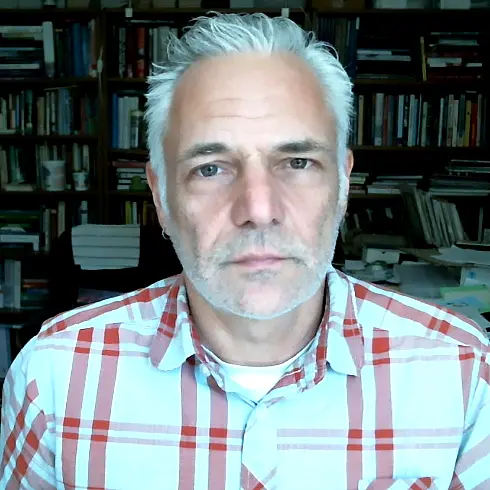
David Feldman
Dean, Academic Affairs
ABOUT
Before COA
From 1991-1993, Dave was a teacher of 9th and 10th grade physics and mathematics at The McCallie School in Chattanooga, TN. As a graduate student at UC Davis, Dave received several awards in recognition of both teaching and scholarship: The Dissertation Year Fellowship; The Chancellor’s Teaching Fellowship; and he was nominated for the Outstanding Graduate Student Teaching Award.
His other interests include ultimate frisbee, hockey, cooking, travel, and gardening. He is married to Doreen Stabinsky; they have three excellent cats.
Personal Website
Course Areas
physics, mathematics
COURSES
More Information about my Courses
At COA Dave has taught over twenty different courses in physics, mathematics, and computer science.
Together with several other colleagues, in 2016 Dave launched the Thoreau Environmental Leaders Initiative, a project that supports participatory learning in food systems, renewable energy, and climate change politics, and helps give students skills in community organizing and activism. The project has been supported by several grants from the Henry David Thoreau Foundation totaling $155,000.
EDUCATION
- B.A, Physics, Carleton College, 1991
- Ph.D., Physics, University of California, Davis, 1998
HONORS & AWARDS
INTERESTS
Dave’s research interests lie in the fields of statistical mechanics and nonlinear dynamics. In particular, his research has examined how one might measure “complexity” or pattern in a mathematical system, and how such complexity is related to disorder. Dave has authored research papers in journals including Physical Review E, Chaos, and Advances in Complex Systems. Two of his papers have been cited over 400 times. In his research, Dave uses both analytic and computational techniques.
Dave is also interested in the teaching and learning of chaos and dynamical systems. He has authored two books on these topics: Chaos and Fractals: An Elementary Introduction (Oxford University Press, 2012), a textbook for non-math/science majors; and Chaos and Dynamical Systems (Princeton University Press, 2019), a contribution to the Primers in Complex Systems series. Dave has developed two MOOCs, one on Chaos and Dynamical Systems and one on Fractals and Scaling. These free, online classes are part of the Santa Fe Institute’s Complexity Explorer project and have been taken by thousands of students.
Dave has recently become interested in teaching about renewable energy and energy conservation. With Anna E. Demeo, then a lecturer at COA in engineering, he developed an introductory course on the physics and mathematics of sustainable energy. Anna and Dave received a $95,000 grant from the Maine Space Grant Consortium Research and Higher Education Program to support the development of the class. He is currently working on a textbook based on this class. Anna and Dave also received an $18,000 grant from the Environmental Education Program of the Environmental Protection Agency to develop and teach a workshop on sustainable energy for area elementary school teachers.
From 2004-2008, Dave gave a week-long series of lectures at the China Complex Systems Summer School (CSSS), co-sponsored by the Santa Fe Institute and the Institute of Theoretical Physics at the Chinese Academy of Sciences in Beijing. His lectures provided students with a broad introduction to complex systems, including dynamical systems, information theory, and computation theory. From 2006-2008 he was co-director of the China CSSS. He was PI on a $116,000 grant from the U.S. National Science Foundation that partially supported the CSSS. Since 2017 he has served as director of the annual CSSS in Santa Fe. From December 2018 to August 2019 he served as the Santa Fe Institute’s Interim Vice-President for Education.
ADVOCACY
Dave is on the steering committee of Indivisible Mount Desert Island. He spoke at the 2017 Climate Change March, the 2018 Waves of Love rally on the one-year anniversary of the events in Charlottesville, a rally in 2019 on the eve of President Trump’s impeachment, and an event in 2022 shortly after Russia’s invasion of Ukraine.
Dave is also a founding member of the MDI Racial Equity Working Group and the MDI Racial Equity Collective. He is a member of the Title IX team at College of the Atlantic and has completed an ATIXA level two Civil Rights Investigator training.
PUBLICATIONS
- D.P. Feldman and J.P. Crutchfield, Discovering Noncritical Organization: Statistical Mechanical, Information Theoretic, and Computational Views of Patterns in One-Dimensional Spin Systems, Entropy, 24(9), 1282- 1354. 2022.
- A.E. Demeo, D.P. Feldman, and M.L. Peterson. A Human Ecological Approach to Energy Literacy through Hands-on Projects: An Essential Component of Effectively Addressing Climate Change. Journal of Sustainability Education. Vol. 4, January 2013.
- M.D. Robinson, D.P. Feldman, and S.R. McKay. Local Entropy and Structure in a Two-Dimensional Frustrated System. Chaos. 21(3). 037114. 2011.
- D.P. Feldman, C.S. McTague, and J.P. Crutchfield. The Organization of Intrinsic
- Computation: Complexity-Entropy Diagrams and the Diversity of Natural Information Processing. Chaos. 18:043106. 2008.
- D.P. Feldman and J.P. Crutchfield, Synchronizing to Periodicity: The Transient Information and Synchronization Time of Periodic Sequences. Advances in Complex Systems. 7(3-4): 329-355, 2004.
- D.P. Feldman and J.P. Crutchfield, Structural Information in Two-Dimensional Pat-
- terns: Entropy Convergence and Excess Entropy. Physical Review E. 67:051104. 2003.
- J.P. Crutchfield and D.P. Feldman. Regularities Unseen, Randomness Observed: The
- Entropy Convergence Hierarchy. Chaos. 15: 25-54, 2003.
- J.P. Crutchfield and D.P. Feldman, Synchronizing to the Environment: Information Theoretic Constraints on Agent Learning. Advances in Complex Systems. 4: 251-264,
- 2001.
- J P. Crutchfield, D.P. Feldman, and C. R. Shalizi. Comment I on “Simple Measure for Complexity.” Physical Review E. 62:2996-7, 2000.
- D. P. Feldman and J.P. Crutchfield. Statistical Measures of Complexity: Why? Physics Letters A, 238:244-52, 1998
- J.P. Crutchfield and D.P. Feldman, Statistical Complexity of Simple 1D Spin Systems. Physical Review E. 55:R1239-42, 1997.
Invited Book Reviews
- D.P. Feldman. Review of Introduction to Modern Dynamics: Chaos, Networks, Space and Time. Physics Today, 68(12):56, 2015.
- D.P. Feldman. Review of Complex and Adaptive Dynamical Systems. Physics Today, 62(7):58-9, 2009.
- D.P. Feldman. Review of Monte Carlo Methods in Statistical Physics. Computing in Science & Engineering, 2:73-4, 2000.
Essays
- D.P. Feldman. Field Theory. Bateau. 7.1. Fall 2018.
Presentations
- A Crash Course on Fractals and Scaling. Complex Systems Summer School. Santa Fe, NM. June 13, 2019.
- A Crash Course on Information Theory. Complex Systems Summer School. Santa Fe, NM. June 18, 2019.
- A Crash Course on Fractals and Scaling. Complex Systems Summer School. Santa Fe, NM. June 13, 2018.
- A Crash Course on Information Theory. Complex Systems Summer School. Santa Fe, NM. June 18, 2018.
- Panel on Gerrymandering. A panel sponsored by the Maine League of Women Voters. Augusta, ME. February 15, 2018.
- D.P. Feldman. Gerrymandering in the US: History, Law, Math, and Politics. Human Ecology Forum. College of the Atlantic. October 24, 2017.
- Field Theory. A joint reading with Dan Mahoney. Human Ecology Forum. College of the Atlantic. Bar Harbor, ME. May 23, 2017.
- Predictable Unpredictability: Strange Attractors and the Buterfly Effect. Eagle Hill Institute. Steuben, ME. August 8, 2013.
- Local Complexity for Heterogeneous Spatial Systems. Information in Dynamical Systems and Complex Systems Workshop. Burlington, VT. July 18–19, 2013.
- Complexity, Unpredictability, and Synchronization: Information Theoretic Measures of Structure and Randomness. IDyOM Workshop on Information and Neural Dynamics in the Perception of Musical Structure. Goldsmiths College, London, UK. March 17, 2013.
- Strange Attractors and the The Butterfly Effect: The Mathematics of Chaos. Science
- Café sponsored by the Mount Desert Island Biological Laboratory and McKay’s Public
- House, Bar Harbor, ME. Feb. 6, 2013.
- Chaos and Complex Systems: In the Classroom and Beyond. Smith Institute for
- Applied Research, Invitational Symposium. Johnson C. Smith University, Charlotte,
- NC. Oct. 26, 2012.
Title
Faculty, Interdisciplinary Arts
Course Areas
animation, film/video
Office Location
Studio 5
Phone Number
207-288-5015
Faculty Website(s)
Education
- MFA, Experimental Animation, California Institute of the Arts (2019)
- BA, Philosophy, Tufts University (2015)
- BFA, Studio Art, The School of the Museum of Fine Arts (2015)
Before COA
Before arriving at COA, Melissa spent close to a decade in Los Angeles. She taught at CalArts, Whittier College, Queens College, Cal State LA, and LACHSA. Throughout her career, Melissa has made commissioned animation for documentaries, specializing in handmade animation for films addressing social issues or scientific topics. Melissa also creates independent experimental nonfiction animations, primarily working with hand-drawn palimpsest and stop motion techniques. From 2015-2016, Melissa worked as an animation artist at Dusty Studio in New York City.
For the past several years, Melissa’s animation practice has included working with antique magic lantern projectors. As a lanternist, she creates contemporary expanded animation performances rooted in the history of traditional magic lantern phantasmagoria and scientific lantern lectures. Melissa specializes in creating handmade animated slides based on historic designs. Her performances include experimental documentaries, collaborations with musicians, and phantasmagoria revivals. She spent the majority of 2023-2024 touring/creating magic lantern shows, as well as teaching magic lantern workshops.
Scholarly and Creative Interests
Melissa is an experimental animator, nonfiction filmmaker, and magic lanternist who seeks to acquaint folklores of the past with contemporary culture. In exposing peripheral histories, she aims to unveil the wonder that lies in the shadow of nonfiction, rather than fiction. Her research-based practice engages with the mythification of science and pseudoscience, the preternatural, and histories of phantasmagoria and documentary. Her most recent body of films/performances examined social issues reflected in the culture of cryptozoology.
Melissa’s research focuses on questions of ethics, veracity, and research methodologies in the production of animated documentaries. Her practice as a magic lanternist involves research into various histories of proto-cinematic animation, slide-making, and production techniques.
Melissa is a Vice President of the Magic Lantern Society of the US & Canada and a member of the Society for Animation Studies.
Honors and Awards
Recent awards include:
2024 Science New Wave Fund award from Labocine/The Brandt Jackson Foundation
2024 Damer E. Waddington Red Cabbage Award
2024 Documentary Arts Award at Mimesis Documentary Festival
2023 Dick Balzer Award
2020 Science Sandbox Symbiosis Award at ISFF
Melissa was a 2024 Contributing Artist at the Philosophical Research Society in LA and 2024 Project Space Resident at the Visual Studies Workshop in Rochester, NY. In 2022-2023, she was an Artist in Residence at the Camera Obscura Arts Lab in Santa Monica, CA, the Larry Spring Museum of Common Sense Physics in Fort Bragg, CA, and the REDCAT NOW Festival Residency in LA.
Exhibitions and Performances
Melissa’s films and magic lantern performances have been shown internationally in venues such as The Exploratorium, UnionDocs, Hauser & Wirth LA, Hot Docs, Ottawa International Animation Festival, Baltic Analog Lab, Bob Baker Marionette Theater, Ann Arbor Film Festival, the Philosophical Research Society, and the Harvard History of Science Dept.
Melissa’s commissioned documentary animations have screened on PBS, the BBC, CNN, The New York Times Op-Docs, The MoMA, Nautilus, & TED on Broadway.

Melissa Ferrari
ABOUT
Before COA
Before arriving at COA, Melissa spent close to a decade in Los Angeles. She taught at CalArts, Whittier College, Queens College, Cal State LA, and LACHSA. Throughout her career, Melissa has made commissioned animation for documentaries, specializing in handmade animation for films addressing social issues or scientific topics. Melissa also creates independent experimental nonfiction animations, primarily working with hand-drawn palimpsest and stop motion techniques. From 2015-2016, Melissa worked as an animation artist at Dusty Studio in New York City.
For the past several years, Melissa’s animation practice has included working with antique magic lantern projectors. As a lanternist, she creates contemporary expanded animation performances rooted in the history of traditional magic lantern phantasmagoria and scientific lantern lectures. Melissa specializes in creating handmade animated slides based on historic designs. Her performances include experimental documentaries, collaborations with musicians, and phantasmagoria revivals. She spent the majority of 2023-2024 touring/creating magic lantern shows, as well as teaching magic lantern workshops.
Course Areas
animation, film/video
Personal Website
EDUCATION
- MFA, Experimental Animation, California Institute of the Arts (2019)
- BA, Philosophy, Tufts University (2015)
- BFA, Studio Art, The School of the Museum of Fine Arts (2015)
HONORS & AWARDS
INTERESTS
Melissa is an experimental animator, nonfiction filmmaker, and magic lanternist who seeks to acquaint folklores of the past with contemporary culture. In exposing peripheral histories, she aims to unveil the wonder that lies in the shadow of nonfiction, rather than fiction. Her research-based practice engages with the mythification of science and pseudoscience, the preternatural, and histories of phantasmagoria and documentary. Her most recent body of films/performances examined social issues reflected in the culture of cryptozoology.
Melissa’s research focuses on questions of ethics, veracity, and research methodologies in the production of animated documentaries. Her practice as a magic lanternist involves research into various histories of proto-cinematic animation, slide-making, and production techniques.
Melissa is a Vice President of the Magic Lantern Society of the US & Canada and a member of the Society for Animation Studies.
PERFORMANCES
Melissa’s films and magic lantern performances have been shown internationally in venues such as The Exploratorium, UnionDocs, Hauser & Wirth LA, Hot Docs, Ottawa International Animation Festival, Baltic Analog Lab, Bob Baker Marionette Theater, Ann Arbor Film Festival, the Philosophical Research Society, and the Harvard History of Science Dept.
Melissa’s commissioned documentary animations have screened on PBS, the BBC, CNN, The New York Times Op-Docs, The MoMA, Nautilus, & TED on Broadway.
Melissa was a 2024 Contributing Artist at the Philosophical Research Society in LA and 2024 Project Space Resident at the Visual Studies Workshop in Rochester, NY. In 2022-2023, she was an Artist in Residence at the Camera Obscura Arts Lab in Santa Monica, CA, the Larry Spring Museum of Common Sense Physics in Fort Bragg, CA, and the REDCAT NOW Festival Residency in LA.

Jay Friedlander
Sharpe-McNally Chair of Green and Socially Responsible Business
ABOUT
Jay has been a Babson College Senior Fellow in Social Innovation and a Fulbright Scholar. He lectures globally on sustainable innovation, social entrepreneurship and using the United Nations Sustainable Development Goals to catalyze innovation.
In 2023, he launched Profit Decoder to build the local economy and help small businesses get a grip on their profitability in minutes.
Jay has a wide range of work and life experiences. He has served in the Peace Corps in Mauritania; written an ecotourism business plan for a college in Costa Rica; broke fundraising records for Rails-to-Trails Conservancy; counseled Native American students; and taught environmental education.
Jay is an outdoor enthusiast and has spent time living and traveling throughout North America as well as Africa, South and Central America, and Europe.
Jay’s honors include: recognition as one of “50 Mainer’s Charting the State’s Future”; being named as a senior fellow in social innovation and serving as an adjunct lecturer in entrepreneurship at Babson College; serving on the advisory board for the Maine Center for Graduate Professional Studies; being selected for the Electricité de France Sustainable Design Challenge for projects in sustainable energy and business; serving as a board member for Maine Businesses for Sustainability and the Maine Tourism Association; designing and delivering the Fair Food Fund Business Boot Camp.
Before COA
Prior to joining College of the Atlantic, Jay was the chief operating officer for O’Naturals, Inc., a natural and organic fast-food restaurant group. O’Naturals was founded by Gary Hirshberg, the CEO of Stonyfield Farm, and board members included Peter Roy, a former President of Whole Foods Market.
O’Naturals received numerous awards for sustainable business and was recognized for its innovative approach by international media and industry leaders. Jay was instrumental in all elements of the start-up, including fundraising, concept development, daily operations and expansion strategy. Under his leadership, O’Naturals developed a franchising relationship with the $19.5 billion Compass Group.
In addition to his start-up experience, Jay has worked with senior executives of Fortune 500 companies. As a strategy consultant he developed and implemented global brand experiences and customer-centered growth strategies for clients including Citigroup and other industry leaders.
Personal Websites
Course Areas
entrepreneurship, social innovation, sustainable business, green business, social entrepreneurship
COURSES
EDUCATION
- B.A. Colgate University 1990
- M.B.A. Olin Graduate School of Business, 1997
INTERESTS
As the inaugural Chair of the Sustainable Business program, Jay founded the program and developed a sustainable business curriculum focusing on how building social, economic and environmental capital sparks innovation and creates competitive advantage.
In addition Jay created the Hatchery, a sustainable enterprise incubator fostering growth of traditional and social ventures for academic credit.
This unique academic program has attracted the attention of over 30 national publications including The New York Times, Fast Company and The Chronicle of Higher Education. Ashoka, an international leader in social entrepreneurship, selected College of the Atlantic as one of five U.S. Changemaker Campuses in 2009.
In addition, the program has attracted significant funding from organizations such as the National Science Foundation, Department of Agriculture, private foundations and individuals.
ADVOCACY
Jay’s honors include: recognition as one of “50 Mainer’s Charting the State’s Future”; being named as a senior fellow in social innovation and serving as an adjunct lecturer in entrepreneurship at Babson College; serving on the advisory board for the Maine Center for Graduate Professional Studies; being selected for the Electricité de France Sustainable Design Challenge for projects in sustainable energy and business; serving as a board member for Maine Businesses for Sustainability and the Maine Tourism Association; designing and delivering the Fair Food Fund Business Boot Camp.
PUBLICATIONS
Significant articles:
- A College in Maine that Tackles Climate Change, One Class at a Time – The New York Times. Front-page business section. July 1, 2015.
- Start-Ups Rise to Close a Gap for Farmers – The New York Times. Front-page business section. December 30, 2014.
- From Maine to Denmark Islanders (Including Students) Seek Sustainable Solutions – The New York Times. DOT Earth blog. December 19, 2014.
- A Completely Green Powered Island Gives Mainers Ideas – Portland Press Herald. November 2, 2014.
- Samsø: World’s Most Inspiring Renewable Energy-Powered Island – EcoWatch. October 23, 2014.
- Students Study Renewable Energy on Samsø – EcoWatch. September 24, 2014.
- Twenty20 – Featured as part of a special trends report for Drug Store News. August 25, 2014.
- The 7 Traits of Good Entrepreneurs – Entrepreneur. January 10, 2014.
- Leaders in the Clean-Tech Economy – Chief Executive Magazine. October 7, 2013.
- Want a More Fulfilling Job, Lean Out – Money. July 8, 2013.
- Top Trends in Higher Education: Krampetz and Kim in Conversation – Forbes. April 2, 2013.
- A Tiny College Nurtures Big Ideas – The Chronicle of Higher Education. Front-page. October 29, 2012.
- The Changing Path to Entrepreneurship: A Look at Alternatives to Business School – Entrepreneur. August 14, 2012.
- Winding Up for a Sustainable Economy – National Association of College and University Business Officers. November 2009.
- Schools Expand Green Courses and Majors – Newsweek. August 11, 2009.
Articles and Talks by Jay:
- The Sustainable Tactics You Don’t Know, But Should – MITSloan Management Review
- How to Unleash Sustainable Innovation that Matters – Forbes
- Five Steps to Strategic Sustainability and Abundance – MITSloan Management Review
- Three Ways to Change the World – Virgin
- Strategic Sustainability: 5 Steps to Create Abundance – Triple Pundit and International Council of Small Business.
- Strategic Sustainability: Creating Abundance – American Management Association.
- Strategic Sustainability: Introducing the Value Web – Triple Pundit.
- Pro/Con: Friedlander on Green Selling – SAGE Business Researcher. Sustainability Research Report.
- Innovation Nation? The U.S. needs to embrace sustainability or get comfy in the dust. Mainebiz.
Presentations:
Jay has given presentations on sustainable business and social innovation to academic, business and community groups in the United States, Europe, Japan, Australia and New Zealand.
- Ceremonial Speaker, Using Values to Create Value, Yale School of Management and Goldman Sachs Foundation Partnership on Non-profit Ventures.
- TEDx Dirigo – Mavericks and Misfits. Creating Abundance.
- Keynote speaker, Creating Abundance at the 2014 Asian Conference on Sustainability, Energy and the Environment. Osaka, Japan.
- Conference presentation at the 2014 Harvard Project for Asian and International Relations. Movements in Energy and Environment that Aim to Increase Quality of Life. Tokyo, Japan.
- Featured speaker, Sustainable Enterprise: Unlocking Innovation and Preparing for the Next Economic Wave to the 2013 European Conference on Sustainability, Energy and the Environment. Brighton, United Kingdom.
- Featured workshop Maine Startup and Create Week on The Abundance Cycle: helping sustainability reign supreme through an innovative and holistic framework. Portland, Maine.
- Plenary, Lessons and Models from Samsø at Forum 2100: Innovation in Business and Energy at EPFL University. Lausanne, Switzerland.
- Workshop, Envisioning the University of the Future at Brown University.
- Workshop, Social Innovations for the Future: The Ashoka Census and the Advancement of Social Entrepreneurship at the United States Association of Small Business and Entrepreneurship Conference.
- Featured presentation, New Social Business Frameworks at Brown University AshokaU Exchange.
- Selected presentation, Moving from Theory to Action: A Model for Higher Education for the 19th Society for Human Ecology Conference in Canberra, Australia
- Keynote speaker for New Hampshire Businesses for Socially Responsibility Spring Conference, Unlocking Innovation. Concord, New Hampshire. May 2013.
- Led workshop Sustainable Entrepreneurship, Unlocking Innovation at the International Council of Small Business. Wellington, New Zealand.
- Organizer and presenter for the Babson College Social Entrepreneurship Conference, Catalyzing Change: Teaching and Learning in an Unpredictable World.
- i4 Innovation Community of the BNY Mellon Strategic Growth Initiatives to identify new innovations to improve the social good.
- Featured speaker at the QSR Magazine Executive Conference, Creating a Green Restaurant.

Kara Gadeken
Mitchell P. Rales Chair in Ecology
ABOUT
Before COA
- Spring 2024: Visiting Professor of Marine Ecology, Coastal and Ocean Studies Program, Williams College at the Mystic Seaport Museum, Mystic, CT.
- 2022 – 24: Co-Instructor, Investigative Marine Biology Laboratory (IMBL), University of New Hampshire (UNH) at Shoals Marine Lab, Appledore Island, Kittery, ME. Co-instructors: Doug Fudge, Dennis Taylor (2022), Andrew Turko (2023)
- 2015 – 22: Doctoral student and research assistant, University of South Alabama (USA), Mobile, AL, and the Dauphin Island Sea Lab (DISL), Dauphin Island, AL.
Specialized Skills & Certifications
Field and Laboratory. Lab, mesocosm, and field marine science experimental design and logistics; scuba diving and underwater science with experience in low visibility and high current conditions; benthic community sampling and invertebrate taxonomic identification; marine sediment sampling and geochemical analysis; sediment electrochemical profiling and analysis
Software, Electronics, and Fabrication. Coding and data analysis in R, MATLAB, and Primer-E; figure/graphics design and editing (Affinity Suite); research instrument fabrication; small electronics and circuitry; Arduino and Processing IDE (C++); Computer Aided Design (CAD) (Solidworks, Autodesk Fusion 360, Sketchup); Computer Aided Manufacturing (CAM) (Tormach 1100M CNC); machining and machine shop safety; behavior coding and analysis (BORIS, AnimalTA); image analysis (ImageJ)
Certifications. PADI Open Water Diver (2012), Advanced Open Water (2023); AAUS Scientific (100ft) and NITROX diver (2016); DAN diver rescue, CPR and First Aid; MOCC boat certified, small vessels
Course Areas
Marine Biology, Environmental Science
EDUCATION
- NSF Postdoctoral Research Fellow, Stony Brook University, 2022
- Ph.D. Marine Science, University of South Alabama at the Dauphin Island Sea Lab, 2022
- B.S. Biology and Marine Science, The College of William and Mary, 2014
HONORS & AWARDS
PUBLICATIONS
Publications
- Gadeken, K.J., K.M. Dorgan. 2024. Effects of diel oxygen cycling and benthic macrofauna on sediment oxygen demand. Estuaries and Coasts 47:2377-2388
- Gadeken, K.J., G. Lockridge, K.M. Dorgan. 2023. An in situ benthic chamber system for improved temporal and spatial resolution measurement of sediment oxygen demand. Limnology and Oceanography: Methods.
- Gadeken, K.J., K.M. Dorgan. 2023. Sediment macrofaunal response to the diel oxygen cycle. Marine Ecology Progress Series 703:67-80.
- Gadeken, K.J., E. Kiskaddon, J.M. Moore, K.M. Dorgan. 2022. The weird and wonderful world of worms. Frontiers for Young Minds 10:902248.
- Berke, S.K., K.M. Dorgan, E.P. Kiskaddon, S. Bell, K.J. Gadeken, W.C. Clemo, E.L. Keller, T. Caffray. 2022. Shallow infaunal responses to the Deepwater Horizon event: Implications for studying future oil spills. Frontiers in Environmental Science 10:950458.
- Kiskaddon, E., K.M. Dorgan, K.J. Gadeken, S.K. Berke, S. Bell. 2022. Oil disturbance reduces species richness but does not affect phylogenetic diversity. Frontiers in Environmental Science 10:950493.
- Gadeken, K.J., W.C. Clemo, S.J. Dykstra, M. Fung, W. Ballentine, A. Hagemeyer, K.M. Dorgan, B. Dzwonkowski. 2021. Transport of biodeposits and benthic footprint around an oyster farm, Damariscotta Estuary, Maine. PeerJ 9:e11862.
- Gadeken, K.J., K.M. Dorgan. 2021. A simple and inexpensive method to manipulate dissolved oxygen in the lab. DIY Oceanography 34(2).
- Dorgan, K.M., R. Parker, W. Ballentine, S.K. Berke, E. Kiskaddon, K.J. Gadeken, E. Weldin, W.C. Clemo, T. Caffray, S. Budai, S. Bell. 2020. Investigating the sublethal effects of oil exposure on infaunal behavior, bioturbation, and sediment oxygen consumption. Marine Ecology Progress Series 635:9-24.
Presentations
INVITED SEMINARS
- Department of Biology, Siena College, Loudonville NY. Apr 14, 2023.
- School of Marine and Atmospheric Sciences, Stony Brook University, Stony Brook NY. Apr 8, 2022.
- Hatfield Marine Science Center, Oregon State University. Zoom Seminar. Jan 6, 2022.
- Gulf Coast Research Laboratory, University of Southern Mississippi. Zoom Seminar. Jun 27, 2021.
- SAIL/CYAMUS Marine Science Librarian Joint Conference. Zoom Keynote Talk. May 19, 2021.
CONFERENCE PRESENTATIONS
- Gadeken, K.J., B.J. Peterson, N. Volkenborn. 2023 Investigating the influence of seagrass sediment structure on sediment metabolism: An integrated approach. Coastal and Estuarine Research Federation 2023 Conference, Portland, OR. Nov 12-16, 2023 (oral).
- Gadeken, K.J., B.J. Peterson, N. Volkenborn. 2022. Aligning metabolic measurements with subsurface complexity in seagrass sediments. Nereis Park International Bioturbation Conference, Lagonna-Daulas, France. Aug 22-26, 2022 (oral).
- Gadeken, K.J., K.M. Dorgan. 2022. Changes in sediment metabolism throughout the diel oxygen cycle. Benthic Ecology Meeting, Portsmouth, NH. Mar 29 – Apr 3, 2022 (oral).
- Gadeken, K.J., K.M. Dorgan. 2021. Changes in sediment metabolism and macrofaunal activity throughout the diel oxygen cycle. (Virtual) Coastal and Estuarine Research Federation 2021 Conference. Nov 1-3 and 8-11, 2021 (oral).
- Gadeken, K.J., K.M. Dorgan. 2020. Changes in sediment metabolism and macrofaunal activity throughout the diel oxygen cycle. (Virtual) Bays and Bayous Symposium. Dec 1-3, 2020 (oral).
- Gadeken, K.J., K.M. Dorgan. 2019. Effects of diel oxygen cycling on infaunal behavior and sediment oxygen demand. Coastal and Estuarine Research Federation 2019 Conference, Mobile, AL. Nov 3-7, 2019 (oral).
- Gadeken, K.J., K.M. Dorgan. Effects of the diel oxygen cycle on sediment macrofaunal behavior. Bays and Bayous Symposium, Mobile, AL. Nov 28-29, 2018 (poster).
- Gadeken, K.J., K.M. Dorgan. Rates of benthic metabolism in an intertidal marsh throughout a diurnal oxygen cycle. Nereis Park international Bioturbation Conference, Southampton, NY. Aug 8-11, 2017 (poster).
- Gadeken, K.J., K.M. Dorgan, J. Moore, S.K. Burke. Applications of ecophylogenetics to benthic communities in the Northern Gulf of Mexico: Do functional traits follow phylogeny? Society for Integrative and Comparative Biology Meeting, Portland, OR. Jan 3-7, 2016 (poster).
- Gadeken, K.J., K.M. Dorgan, J. Moore, S.K. Burke. Applications of ecophylogenetics to benthic communities in the Northern Gulf of Mexico: Do functional traits follow phylogeny? Association for the Sciences of Limnology and Oceanography (ASLO) Ocean Sciences Meeting, New Orleans, LA. Feb 21-26, 2016 (poster).
Sarah R. Hall
Anne T. and Robert M. Bass Chair in Earth Systems and GeoSciences
ABOUT
Before COA
Sarah joined the faculty of COA in the Fall of 2012 and teaches courses in the Earth Sciences. Before coming to COA Sarah was an Assistant Professor at McGill University in Montreal following her graduate work at the University of California, Santa Cruz and undergraduate degree at Hamilton College. She grew up in upstate NY and after college spent a few years in Atlanta, GA working as a Geologist at an environmental consulting firm and as an ECOWATCH AmeriCorps team member.
Course Areas
earth science, geology, geomorphology, weather, climate, water, landscape, climate change
Personal Website
COURSES
More Information about my Courses
Sarah regularly offer courses on topics exploring landscape shaping processes, climate, geologic principles, interactions between human and Earth systems, as well as place-based studies of Mt Desert Island (MDI) and Maine.
Most of her courses have some field component where COA students may be learning field methods (e.g. mapping, water sampling, measuring the orientation of geologic features, or describing soils), while visiting parts of Acadia National Park, MDI, or Maine to understand the overall geologic history of the region. In some classes, students design and complete self-guided field work as in the Climate and Weather class where students produce a field guide to various meteorological phenomena. Occasionally, Sarah offers intensive field courses to regions with very different geology from Maine such as Eastern California and the Peruvian Andes.
Sarah regularly advises students on independent research projects. Some are related to her ongoing research and some are inspired by student interest. See some examples of student research here. Explore student created Story Maps of select National Parks here.
Opportunistically Sarah co-teaches courses with other faculty, such as The Anthropocene, Demons from the Depths, and Topics in Research: Geoscience and Geochemistry offering students an inter- multi- or transdisciplinary learning experience.
For the 2023-2024 academic year, geoscience courses are being taught by glacial geomorphologist, Scott Braddock while Sarah is pursuing an AAAS Science and Technology Policy Fellowship in Washington D.C. Sarah is currently positioned in the Landslide Hazards Program Office, Natural Hazards Mission Area of the U.S. Geological Survey.
EDUCATION
- Ph.D. Earth and Planetary Sciences, University of California, Santa Cruz, 2009
- B.A. Geology, Hamilton College, 2001
INTERESTS
Sarah is trained as a geomorphologist studying the processes shaping the surface of the earth. Her research interests are quite broad including mountain building, past glaciations, active faulting, watershed monitoring, and the erosion of landscapes. One of Sarah’s current research projects involves completing a chronology of past glaciations in a portion of the Peruvian Andes. Two local water quality projects are focused on watershed monitoring in and around Acadia National Park and a study concerning private well water characteristics. Through her teaching of field-based courses, Sarah has begun to explore ways to connect professional development opportunities directly to curricular content. With collaborators and COA students, she developed and implemented the Environmental-STEM field-based professional development program, a curriculum that is freely available online for use by other educators.
ADVOCACY
Member of the Executive Council of the Geological Society of Maine.
Cooperating curator of the Hudson Museum at the University of Maine.
Affiliated faculty researcher at the Climate Change Institute.
Steering committee member of the Coastal Maine Geopark.
PUBLICATIONS
Publications
Select publications are listed below. A star (*) indicates student co-author. For a full list, visit this website.
Benavente, C., Palomino, A., Wimpenny, S., García B., Rosell, L., Aguirre, E., Macharé, J., Rodriguez Padilla, A.M.*, and Hall, S.R., 2022. Paleoseismic Evidence of the 1715 C.E Earthquake on the Purgatorio Fault in Southern Peru: Implications for Seismic Hazard in Subduction Zones, Tectonophysics, doi:10.1016/j.tecto.2022.229355
Walker, B., Hall, S.R., and Schmidt, C. 2020. Environmental STEM (E-STEM) Field Course and Professional Development Modules, Reviewed Teaching Activity Collection of the Teach The Earth Program (some “Exemplary” modules), Science Education Resource Center (SERC), Teaching Resources website
Farrell, A., Buckman, K., Hall, S.R., Muñoz, I.*, Bieluch, K., Zoellich, B., and Disney, J., 2021. Adaptations to a secondary school-based citizen science project to engage students in monitoring well water for arsenic during the Covid-19 pandemic. Journal of STEM Outreach 4(2), doi: 10.15695/jstem/v4i2.05.
Saillard, M., Audin, L., Rousset, B., Avouac, J.-P., Chlieh, M., Hall S.R., Husson L., Farber, D.L., 2017. From the seismic cycle to long-term deformation: linking seismic coupling and Quaternary coastal geomorphology along the Andean Megathrust, Tectonics, 36(2), p. 241-256. doi: 10.1002/2016TC004156.
Michalak, M.K., Hall, S.R., Farber, D.L., Audin, L., and Hourigan, J.K., 2015. (U-Th)/He Thermochronology records late Miocene accelerated cooling in the north-central Peruvian Andes, Lithosphere, 8(2), p.103–115, doi: 10.1130/L485.1.
Margirier, A., Robert X., Audin, L., Gautheron, C., Bernet, M., Hall, S.R., and Simon-Labric, T., 2015. Slab flattening, magmatism, and surface uplift in the Cordillera Occidental (northern Peru), Geology, 43(11), p. 1031-1034, 10.1130/G37061.1.
Hall, S.R., Farber, D. L., Audin, L., Finkel, R.C., 2012. Recent contractile deformation in the forearc of southern Peru, Earth and Planetary Science Letters, 337-338, 85-90, doi: 10.1016/j.epsl.2012.04.007.
Hall, S.R., Farber, D.L., Ramage, J.M., Rodbell, D.T., Finkel, R.C., Smith, J.A., Mark, B.G.,Kassel, C., 2009. Geochronology of LLGM through Holocene glaciations from the tropical Cordillera Huayhuash, Peru, 2009. Quaternary Science Reviews, 28, 2991-3009, doi:10.1016/j.quascirev.2009.08.004.
Saillard, M., Hall S.R., Audin, L., Hérail, G., Farber D.L., Finkel, R.C., Martinod, J., Bondoux, F., and Regard,V., 2008. Pleistocene marine terrace development and non-steady long-term uplift rates along the Andean margin of Chile (31°S). Earth and Planetary Science Letters, 277(1-2), 50-63, doi:10.1016/j.epsl.2008.09.039.
Hall, S.R., Farber, D.L., Audin, L., Finkel, R.C., Meriaux, A-S., 2008. Geochronology of pediment surfaces in southern Peru: Implications for Quaternary deformation of the Andean forearc. Tectonophysics, 459,186-205, doi: 10.1016/j.tecto.2007.11.073.
Presentations
Abstracts (*student author) of select presentations featuring student research. A full list of presentation abstracts are available here and find out more about student presentations.
Capuano, B., Adams, M., Hall, S.R., Disney, J., 2022. Precipitation-mediated fluctuations in well water arsenic in Hancock County, ME, Maine Sustainability and Water Conference, Augusta, Maine, March 31, 2022.
Feher, A.*, Hall, S.R, Disney, J.E., and Jackson, B.P., 2022. Arsenic abundance in arugula and kale, Maine Sustainability and Water Conference, Augusta, Maine, March 31, 2022.
Slamova, L., Hall, S.R., Feher, A., Disney, J.E., and Jackson, B.P., 2022. Do the orchard soils of Mount Desert Island region harbor residuals of historical arsenical pesticide use? Maine Sustainability and Water Conference, Augusta, Maine, March 31, 2022. Won honorable mention for poster presentation.
Moran, L.*, Hall, S.R., Farrell, A., and Disney, J., 2022. Influence of different water treatment systems on arsenic concentrations in private well groundwater: A view from MDI, ME.
Muñoz, I.L., Cahueque, S., Farrell, A., Moroz, G., Hall, S.R., Buckman, K., and Disney, J. 2021. Pathways of arsenic ingestion in Maine: Data to Action, Geological Society of Maine Spring Meeting, virtual meeting poster presentation, April 9, 2021, published in GSM Newsletter July 2021
Moroz, G.*, Hall, S.R., Disney, J., Farrell, A., and Stanton, B., 2021. Spatial, temporal, and well-specific influences on well water quality, northern Mount Desert Island, Maine, Maine Sustainability and Water Conference, virtual meeting poster presentation, April 1, 2021; Won honorable mention for poster presentation.
Hall, S.R., Moroz, G.*, Farrell, A., Disney, J., and Stanton, B., 2021. Spatial and Temporal Patterns of Private Well Water Quality: A View from Mt. Desert Island, Maine, Maine Sustainability and Water Conference, virtual meeting talk, March 31, 2021.
Hall, S.R., Walker, B., Schmidt, C.M., and Paul, J.R., 2019. Use of a field and career preparation program as a tool for recruitment and retention in the Environmental STEM workforce: A report from the ESTEM Program for 2-year and 4-year college undergrads. Geological Society of America Abstracts with Programs. Vol. 51, No. 5, Presented at GSA Oct. 2019 by Walker, B.
Aragon Oreggo, M.F., Moroz, G., Gibson, S., Kumagai, A., Löwgren, S.*, Hall, S.R., Schmidt, C.M., Walker, B., and Paul, J.R., 2019. Matching skill to need: A multi-institution approval to field-based Environmental-STEM (ESTEM) studies and professional development skills, Geological Society of America, Abstracts with Programs, Vol 51, No. 1, 328351. (Also presented at Acadia National Park Science Symposium, 2018)
Farrell, A., Poland, R., Hall, S.R., Disney, J., and Stanton, B., 2019. Monitoring well water for arsenic on Mt. Desert Island: Engaging high school and college students in interdisciplinary and societally relevant work, Geological Society of America, Abstracts with Programs, Vol 51, No. 1, 328363.
Gallardo Garcia Freire, P.*, Henkel, B. and Hall, S.R., 2019. Past, present and future of the College of the Atlantic stream: A small coastal watershed assessment, Geological Society of America, Abstracts with Programs, Vol 51, No. 1, 328441. (Also presented at ANPSS, 2018 and GSM, 2019)
Gibson, S., Lowgren, S., Hall, S. R., and Smith, S. M. C., 2019. Geomorphic map of Kebo Brook Watershed: Identifying characteristic channel geometry and channel head locations for a small post-glacial coastal New England watershed, Geological Society of America, Abstracts with Programs, Vol 51, No. 1, 328398. (Also presented at Geological Society of Maine, 2019 – Best Student Poster Presentation)
Hall, S.R., McKenzie, J.M., Hall, B.L., Meriaux, A.-S., Fortin, M.-A.*, 2019. Glacial geochronology transecting a tropical mountain range, the Cordillera Blanca of northern Peru, Geological Society of America, Abstracts with Programs, Vol 51, No. 1, 328472.
Henkel, B., Hall, S.R., Gallardo Garcia Freire, P., and Löwgren, S., 2019. Watershed monitoring in Acadia National Park: Preliminary results based on three years of data collected across multiple watersheds, Geological Society of America, Abstracts with Programs, Vol 51, No. 1, 328382.
Van Vliet, N. and Hall, S.R., 2019. An anthropologist and a geologist go into a classroom and…, Geological Society of America, Abstracts with Programs, Vol 51, No. 1, 328331.
Rodriguez Padilla, A.M.*, Hall, S.R., Benavente Escobar, C., Venuti, G.L., Fernandez Baca, B.G, Roselle, L.N., and Audin, L., Evolution of a Paradoxical Landscape: New Constraints for Tectonic and Climatic Processes in the Forearc of Southern Peru, 2018. American Geophysical Union Fall Meeting, Washington, D.C., EP53A-06.
Venuti, G.L.*, Hall, S.R., and Nurse, A., The Paleoecology of Great Duck Island, Acadia National Park Science Symposium, College of the Atlantic (Nov, 2017); Geological Society of Maine Meeting, Unity College (April, 2018); Borns Symposium, Climate Change Institute (May 2018).
Taylor, V., Crowley, C., Lowgren S., Gallardo, Garcia, Freire, P., Hall, S.R., and Henkel. B., 2018. Insights into stream water quality: Bacteria sampling at the Cromwell-Kebo Watershed through summer storm events., Acadia National Park Science Symposium, College of the Atlantic, Oct. 20, 2018.
Gray, S.E. III*, Hall, S.R., Michalak, M.J., and Bailey, D.G., A new look at the geologic history of Great Duck Island and Mount Desert Rock through high resolution aerial imagery, geologic mapping, geochemistry, and geochronology, 2017. Society of America Abstracts with Programs. Vol. 49, No. 2, doi: 10.1130/abs/2017NE-291262.
Hall, S.R., Schmidt, C.E., and Walker, R., 2017. Challenges and opportunities in the development of a multiinstitution field-based professional development program for Environmental-STEM (ESTEM) undergraduates, Geological Society of America Abstracts with Programs. Vol. 49, No. 2, doi: 10.1130/abs/2017NE-290986.
Minogue, W.*, Hall, S.R., Henkel, B., Stream discharge moitoring in seven watersheds on Mt. Desert Island, ME, Acadia National Park Science Syposium, Schoodic Educational & Research Center, September 2016.
Hall, S.R., Hodson, K.R., Michalak, M.J., Farber, D.L., Hourigan, J.K., 2016. Pliocene to present denudation in the Cordillera Blanca, Peru: Interactions of climate and tectonics in a tectonically active glaciated mountain range, Geological Society of America Abstracts with Programs. Vol. 48, No. 2, paper no. 15-7
Prest, T., Strader, J., Galey, M.*, Hall, S.R., Assembling a teaching collection at COA: outcrop, hand-sample, and thin-section analysis of rocks from Mt. Desert Island and Mt. Desert Rock. Acadia National Park Science Symposium, Schoodic Educational & Research Center, 2014.
Davis, M.W.*, Hall, S.R., Farber, D.L., Audin, L., Finkel, R.C., 2007. Quaternary geologic history of the Rio Tambo, southern Peru: repeated mass-wasting events in Western Cordillera drainages, Eos Trans. AGU, 88(52), Fall Meet. Suppl., Abstract T31A-0283.

Jonathan Henderson
Darron Asher Collins Chair in Music & Sound Studies
ABOUT
COURSES
EDUCATION
- PhD, Music, Duke University, 2021
- MA, Music, Duke University, 2019
- BA, Anthropology, Guilford College, 2005
HONORS & AWARDS
INTERESTS
Jonathan is an ethnomusicologist, multi-instrumentalist, composer, and producer. Jonathan’s academic research concerns how local musical traditions are transformed through recording studio practice and come to articulate new meaning in their international circulation. He has many years of experience studying music from the black Atlantic, from Brazil to Senegal to the US South. Jonathan is active as an artist and performer. Most recently he produced the album “Routes” for his band Diali Cissokho & Kaira Ba. The album was recorded both in Senegal and North Carolina and garnered critical acclaim from Songlines, Afropop Worldwide, The Financial Times, and Robert Christgau for Vice, among others. Jonathan has written music for film and theater, including several summers runs with The Paperhand Puppet Intervention. He plays bass with Onyx Club Boys, and is a founding member of and contributor to varied projects including intermedia performance collective INVISIBLE, the protest marching band Cakalak Thunder, folk band Midtown Dickens, and the samba reggae bands Batalá Durham and Oxente. Jonathan has over a decade’s worth of music teaching experience at the secondary and post-secondary level.
EXHIBITONS
ReVIEWING Black Mountain College 12 Conference. 2020. Asheville, NC. Presented participatory art installation, Anechoia Memoriam, with collaborator Mark Dixon. Anechoia Memoriam is a performance at the crossroads of John Cage’s notion of silence and the silences surrounding state killings of unarmed people of color. A seven-hour interactive performance designed for a typewriter that electromechanically controls an acoustic piano (The Selectric Piano), the score for Anechoia Memoriam is composed of 180 names of unarmed people of color killed by law enforcement in the United States. The piece is intended as a memorial and depends on the attention (or inattention) of listener-participants.
Society for Ethnomusicology Annual Meeting. 2020. Ottawa, Canada (held virtually). Presented conference paper entitled “An Art Which Conceals Art: Record Production and the Politics of Invisibility in Toumani Diabaté’s Kaira.”
The South Central Graduate Music Consortium. 2020 Hosted by the University at Chapel Hill. Presented conference paper entitled “World Music Record Production and the Politics of Invisibility.”
British Forum for Ethnomusicology and Société française d’ethnomusicologie Joint Autumn Conference. 2019. Hosted at City University of London. Presented conference paper entitled “Producing Music, Producing History: Exploring the Archive Below the Surface of a Sound Recording.”
Annual Meeting of the Southeastern and Caribbean Chapter of the Society for
Ethnomusicology (SEMSEC). 2019. Hosted on the campus of Wake Forrest University. Presented conference paper entitled “Atlantic Cosmopolitanisms: Angélique Kidjo Reimagines Remain in Light.”
Performance and Labor in the Contemporary World. 2018. Hosted by Duke University Department of Cultural Anthropology. Presented conference paper entitled “Producing Music, Producing History: Exploring the Archive Below the Surface of a Sound Recording.”
Duke Music Department Colloquium Series. 2018. Presented talk entitled “Producing Diali Cissokho & Kaira Ba’s Routes.”
Review of Louis Chude-Sokei’s The Sound of Culture: Diaspora and Black Technopoetics for Mark Anthony Neal’s New Black Man in Exile blog.
MUSIC COMPOSITION, PERFORMANCE and PRODUCTION
Recording and Production Credits:
2020 Diassing Jalikunda, Youssoupha Cissokho. Produced, engineered and mixed in M’Bour, Senegal, Diassing Jalikunda is a full-length album of griot korist Youssoupha Cissokho’s original compositions, recorded at his family compound with a mobile studio.
2019 Music from We Are Here, Paperhand Puppet Intervention. Composer, Arranger, Producer; bass, piano, percussion.
2018 Routes, Diali Cissokho & Kaira Ba. Produced album recorded both in North Carolina and Senegal. Coordinated 35 musicians, composed string quartet arrangements, played bass and percussion, directed recording sessions, wrote liner notes. Routes was favorably reviewed by Songlines, The Financial Times, Afropop Worldwide, Robert Christgau for Noisy/ Vice, Black Grooves and many others.
2017 Music from Of Wings and Feet, Paperhand Puppet Intervention. Composer, Arranger, Producer, Engineer; bass, piano, percussion, guitar.
2014 The Great Peace, Diali Cissokho & Kaira Ba. Arranger and Co-Producer; bass, percussion.
2014 Music from the Painted Bird, Paperhand Puppet Intervention. Composer, Arranger, Producer, Engineer; bass, piano, percussion, guitar.
2013 PARO, Brice Randall Bickford. Bass, percussion.
2012 Resonance, Diali Cissokho & Kaira Ba. Arranger, Co-Producer; bass, percussion, keyboards.
2012 Home, Midtown Dickens. Co-Arranger, Co-Producer; bass, percussion, piano, guitar.
2012 Solar Rapé, Carlos Timon. Bass, percussion.
2012 Misery Makes Odd Bedfellows, Jared Bartman. Bass.
2009 Lanterns, Midtown Dickens. Co-Arranger, Co-Producer; bass, percussion, piano, guitar.
2009 Rhythm 1001: Live at the Ackland Art Museum, Invisible. Composer, Performer.
2009 Irresponsibly Electric, Invisible. Composer, Engineer; bass, percussion, keyboards.
Multi-Channel Sound Installation and Performance:
2020 Landscapes. Captured field recordings at Grand Staircase Escalante (UT) for 5.1 surround mix of environmental sound score to accompany installation focused on the opening of the national park to oil and gas extraction. In collaboration with Merrill Shatzman and Raquel Salvatella de Prada.
2019 Dust of the Zulu, Rubenstein Arts Center Project Residency at Duke University. Composed score and designed sound for installation based on Prof. Louise Meintjes’ award-winning ethnography Dust of the Zulu: Ngoma Aesthetics After Apartheid (Duke Press 2017). Created collaborative exhibit with Prof. Meintjes, photographer TJ Lemon and others.
2018 Cornered, Rubenstein Arts Center Project Residency at Duke University. Composed and recorded original score for Raquel Salvatella de Prada’s video projection installation focusing on African migration to Europe.
2014 Time Constraints, collaboration with Mark Dixon. Co-Composer of 50-minute composition for electromechanical drum machine and percussion triggered by dripping water. Performances include: Duke University Nelson Music Room, Durham NC; UNC-A Ecomusicology Conference, Asheville NC; Telfair Museum, Savannah GA.
2011-2012 The New Obsolete, with Invisible. Co-Composer of 70-minute performance piece for typewriter-controlled piano, and electromechanical drums triggered by dripping water. Performances include: Moogfest, Asheville NC (2012); 1708 Gallery, Richmond VA (2012); Weatherspoon Museum, Greensboro NC (2012); Contemporary Art Museum, Raleigh NC (2012); North Carolina Museum of Art, Raleigh NC (2012); UNC-G New Music Festival, Greensboro NC (2011); Reynolda House, Winston-Salem NC (2011).
Music for Film and Theater:
2020 Waiting for Q. Sound design and mix for 20-minute documentary short film focused on the online conspiracy theory, QAnon.
2020 Haw River Learning Celebration. Composed and recorded original score for six-part educational video series produced in collaboration with the Haw River Assembly.
2019 We Are Here, Paperhand Puppet Intervention. Composer, Band Member, Music Director. Co-composed, arranged, directed and performed live score for popular outdoor theater performances. Directed 7-piece band. Performed 20-30 shows per season, seen by 10,000+ people. Each season’s production features a custom-composed score for 6-10 multi-instrumentalists and vocalist(s). UNC-CH Forest Theater and NC Museum of Art Amphitheater.
2017 Of Wings and Feet, Paperhand Puppet Intervention. Composer, Band Member, Music Director. Co-composed, arranged, directed and performed live score for popular outdoor theater performances. Directed 7-piece band.
2014 Peace in Our Pockets, The Groove Productions. Composed and recorded original score for feature length film about the use of cellular technology in mobilizing voter participation and non-violence in the 2013 elections in Kenya.
2014 The Painted Bird, Paperhand Puppet Intervention. Composer, Band Member, Music Director. Co-composed, arranged, directed and performed live score for popular outdoor theater performances. Directed 7-piece band.
2014 NPR’s “Wait Wait Don’t Tell Me,” Advertising Short. Composed cue for promotional video.
2012 City of Frogs, Paperhand Puppet Intervention. Composer, Band Member. Co-composed, arranged, directed and performed live score for popular outdoor theater performances seen by 10,000+ people over course of run.
2012 Café Sense, Vittles Films. Composed and recorded original score.
2012 The New Obsolete, American New Wave. Composer for feature-length documentary.
2011 The Serpent’s Egg, Paperhand Puppet Intervention. Composer, Band Member. Co-composed, arranged, directed and performed live score for popular outdoor theater performances seen by 10,000+ people over course of run.
2010 Islands Unknown, Paperhand Puppet Intervention. Composer, Band Member. Co-composed, arranged, directed and performed live score for popular outdoor theater performances seen by 10,000+ people over course of run.
2009 Love and Robots, Paperhand Puppet Intervention. Composer, Band Member. Co-composed, arranged, directed and performed live score for popular outdoor theater performances seen by 10,000+ people over course of run.

ABOUT
Course Areas
biology, biomechanics, zoology
COURSES
More Information about my Courses
Helen teaches a variety of biology courses at COA, most of which involve a significant field or lab component. Her formal training as an invertebrate zoologist has lead her to develop courses that take her and her students wherever invertebrates are found, including local rivers, Maine’s rocky intertidal shores, and Caribbean coral reefs. She also teaches a course in bio mechanics, where students explore how the laws of physics have played a role the evolution of living organisms.
Helen also has strong interests in teacher education and spends part of every summer involved in courses and workshops aimed at K-12 teachers as well as COA students who are pursuing a teaching credential.
EDUCATION
- B.S. University of California Los Angeles, 1985
- Ph.D. Zoology, University of Washington, 1991
INTERESTS
Helen’s research interests focus on the reproductive biology of marine organisms, and she has studied parental behavior in worms, mating systems in mouth brooding in fishes, and the evolution of self-fertilization in hermaphroditic invertebrates. While she mainly identifies herself as a teacher at COA, she also enjoys including students in her research activities.
PUBLICATIONS
Helen worked with COA students on a project studying the reproductive biology of a large, local sea cucumber species that is the target of an emergent fishery. She was also involved in writing papers with COA students on research projects on cleaning behavior in tropical reef fishes and on the evolution of egg size in fishes.
In addition to publishing in the peer-reviewed scientific literature, Helen also occasionally writes science articles for popular magazines.

Ken Hill
Faculty, Education and Psychology
ABOUT
Before COA
Prior to entering a career in the academic realm, Ken was the program director of an out-patient psychiatric drop-in center that serviced 60-80 clients per day.
From there, he went on to join the faculty at Northwest Missouri State University in the Department of Psychology, Sociology, and Counseling. While at Northwest Ken won ten different teaching awards including the universities most prestigious “Tower Service Award” for teaching excellence. While at Northwest, Ken served as a core psychology faculty member, directed the graduate program in school guidance, supervised the Therapeutic Community programs for regional prison systems, and eventually became Chairman of the department.
In his free time Ken enjoys weight lifting, canoe tripping, knife making, and serving on the board of the YMCA.
Course Areas
psychology, education
COURSES
More Information about my Courses
In 1999 Ken came to the College of the Atlantic as the Director of the Educational Studies Program. In 2005 he was named Academic Dean, in 2019 named Provost.
EDUCATION
- B.A. University of Michigan, 1987
- Ed.M. Counseling Processes, Harvard University 1990
- M.S. Educational Psychology and Measurement, Cornell University 1993
- PhD. Educational Psychology and Measurement, Cornell University 1995

Anna Ialeggio
ABOUT
Before COA
I’ve been a working artist since c. 2007, staging exhibitions and performances as both an individual artist and collective member (The Soil Factory, Miss Rockaway Armada, KCHUNG Radio, Monday Nite Weirdos).
- Teaching Associate, UC Irvine, Irvine CA (2017-2019)
Assistant Professor of Studio Art at Wells College, Ithaca, NY (2021–24)
Visiting Critic, Art Department, Cornell University, Ithaca NY (2025)
Website
Course Areas
ceramics, sculpture, mixed media, performance art
COURSES
More Information About My Courses
I welcome well-developed ideas for independent studies and look forward to hearing your ideas! However, please note that working in the ceramics studio requires advance planning, especially if you have not yet worked in the studio: I will not accept proposals for a term that has already started, because of the amount of time, labor, and money needed to coordinate materials, equipment, training, and storage. I can support you best if you start planning early.
EDUCATION
- MFA, Studio Art with Graduate Emphasis in Visual Studies, University of California, Irvine (2019)
- Natural Building Certificate, Yestermorrow Design/Build School (2012)
BA, Studio Art (Ceramics, Printmaking), East Asian Studies, Oberlin College (2005)
- Studio Art Certificate, Kansai Gaidai University (Ceramics), Hirakata-shi, Japan (2004)
HONORS & AWARDS
INTERESTS
My artwork and teaching practice are intimately linked. Working in sculpture, ceramics, performance, drawing, text, and media to explore overlaps between ecology, social protocol, and narrative structure, I’m exploring the perception of change that occurs as each generation redefines for itself what is considered “natural” or “normal.” Marine fisheries scientist Daniel Pauly coined the term shifting baselines syndrome for this phenomenon in order to describe the difficulty of using individual human perception of change as the basis for conservation policy. I extend this idea as a poetic and ethical framework for art-making; it leads me to social and class analysis as well as absurdist humor. Recurring material themes include liminality, fragility, improvisation, and play; rupture and lightly bounded space; polish addressed to a provisional gesture; joyful queering of a matter or a tactic; discarded objects and refuse; collectivism as professional practice.
I love interdisciplinary collaboration, site-specific research, material play, and spending as much time as possible outside.
PUBLICATIONS
- “Fun That Is Or Isn’t Funny.” Unserious Ecocriticism: Humor, Wit, Play, and Environmental Destruction in North American Contemporary Art & Visual Culture. Ed. Maria Lux, Jessica Landau. Amherst College Press. (2026)
- Landing (Exhibition Catalog). Wells College Press. (2024)
- Disappearing Birds of North America. Ed. Jen Delos Reyes. (2023)
- “The Second Field.” The New Farmers Almanac, Vol VI: Adjustments and Accommodations. Greenhorns Press. (2022)
- “CRANE & MAN.” Hold Our Breath 2040: Writers and Artists Reimagine Forestation. Ed. Heidi Staples. University of Alabama. (2021)
- “Themselves on their own terms.” Antiquated Future, Leaf Litter #8. (2020)
- “Featured Artist.” Los Angeles Review of Books, Summer #7. (2015)
- “The Van Dies.” Nowhere Magazine, June Issue. (2015)
- “Here ́s The Link For Editable Sharing.” PHONEBOOK 4, Threewalls Gallery w/ Common Field. (2015)
- “The Game of the Future.” INCITE! Journal of Experimental Media, BLOCKBUSTER Issue #5. (2014)

Su Yin Khor
Director of the Writing Program
ABOUT
I spend a lot of time painting, cooking, baking, reading cozy mysteries, gardening, and doing some form of physical activity, such as hiking, walking, and running. I also picked up knitting again! During my final years at Penn State, I took pottery classes, which were incredibly fun and something I hope to continue here in Bar Harbor. I also started making my own watercolor paint for fun, so if you ever want to chat about painting, food, cozy mysteries, and gardening, you can find me in the Writing Center, at TAB, or the red bricks with a cup of tea reading a book or doing some work in the sun.
Before COA
My academic journey is non-traditional. In high school and as an undergrad, I worked as a chef for several years in Sweden where I grew up. The restaurant business was fast paced and physically and mentally demanding. I loved it but I knew after a while that I couldn’t do it for the rest of my life.
I grew up in a working class immigrant community, and I wanted to understand more about multilingualism and second language learning, so I returned to grad school to study TESOL and Applied Linguistics at ISU. That’s where I learned more about second language writing, writing studies, and rhetoric and composition. I pursued my doctorate at Penn State where I studied Applied Linguistics and primarily taught academic writing and literacy courses to multilingual and international students.
Course Areas
Writing/literacy education, applied linguistics, TESOL, second language learning and teaching, qualitative research methods, discourse studies, interactional analysis, multilingualism, migration
COURSES
More Information about my Courses
My courses are activity and discussion based. They focus on develop practices. I create space for students to pursue what they are interested in, while critically examining various topics. A core aspect of my courses is that we examine current social issues through the lens of language and discourse. For instance, how do pervasive ideas and beliefs about “correct” English overlook the variations within the language? How do the complexities of a language shape the writing we do? These are the types of questions that are addressed in my writing/literacy courses to learn about the links between language, writing, literacy, culture, and society.
EDUCATION
- B.A., History, Uppsala University, Sweden
- M.Ed., English and History Education, Uppsala University, Sweden
- M.A., English Studies, specialization in TESOL/Applied Linguistics, Illinois State University, USA
- Ph.D., Applied Linguistics, Pennsylvania State University, USA
HONORS & AWARDS
INTERESTS
My research lies in the intersection of writing, literacy, discourse studies, and multilingual/second language studies. I’m primarily trained as an applied linguist and a social scientist. Applied linguistics is shaped by research in many other fields that deal with language and discourse, such as education, linguistic anthropology, psychology, adult literacy, migration studies, and so on.
People tend to think that I teach creative writing, but this is not the expertise I have. Instead, my expertise lies in understanding writing education and literacy development. The types of questions that guide my work include: how do people learn how to write? What do people’s literacy practices look like and how might these evolve and shift as they learn another language? In what ways does someone’s life experiences shape their language and literacy learning? What social, cultural, political, and historical factors shape how we use language (and writing)?
As a social scientist, I’m specifically trained as a qualitative researcher. I analyze written, spoken, and multimodal discourse. I have primarily used interviews and observations to collect data when conducting research, but I have explored other methods, such as autoethnography. My most recent research project examined how (im)migrant women learned how to write and develop their literacy in a community-based English literacy program. Other projects I’ve worked on address multimodality and classroom discourse. I have also done work in Conversation Analysis (CA) and specifically examined the organization of talk in classroom discourse.
In my work, language, writing, and literacy are oriented to as a social practice and social action. This means that language is not merely a tool for communication, i.e., sharing information, but to accomplish actions. For instance, when having dinner, asking someone if they “can pass the salt?” doesn’t typically ask for their ability to do it, rather, it asks them to bring the salt to you so you can use it. That’s an action. Briefly put, then, my work focuses on the role of language and literacy and what we do with them in various everyday, academic, and professional contexts, as well as how people learn and teach language and literacy.
ADVOCACY
I was recently joined the Academic Advisory Board for Hancock County Technical Center (HCTC). As a member, I provide resources and support for the writing and literacy components of the academic program. I’ve been a member since September 2025.
PUBLICATIONS
Special Issues
Sánchez-Martín, C, & Khor, S.Y. (2024). Surviving, thriving, and resisting: Reimagining the ordinary lives of TESOLers. TESOL Journal (15)S1, 1-12. https://doi.org/10.1002/tesj.853
Journal articles, peer-reviewed
Khor, S. Y. (In preparation). Developing rhetorically savvy writers: (Im)migrant women’s literacy learning through genre-based instruction in a community-based English program.
Wang, T., He, Y., Liu, S., Wang, Y., Hall, J.K., & Khor, S.Y. (2025). Building affiliation in the L2 classroom: The role of side sequences. Classroom Discourse.
Khor, S. Y., & Canagarajah, S. (2024). (Im)migrant women’s translingual literacy practices as problem-solving and learning resources: Perspectives from a community-based English literacy program. International Journal of Bilingual Education and Bilingualism, 1-16. https://doi.org/10.1080/13670050.2024.235270
Hall, J. K., Wang, T., & Khor, S. Y. (2020). The links between the linguistic designs of L2 teacher questions and the student responses they engender. Iranian Journal of Language Teaching Research, 8(3), 25-40.
Books
Hall, J. K., He, Y., & Khor, S.Y. (2023). The practical nature of L2 teaching: A conversation analytic perspective. Routledge.
Book chapters
Khor, S. Y., & Sánchez-Martín, C. (2024). Redefining leadership in TESOL through multimodal collaborative autoethnographic inquiry: Perspectives from transnational women. In D. Rashed & D. Suarez. Female leadership identity in English language teaching: Autoethnographies of global perspectives. Brill.
Khor, S. Y., Sánchez-Martín, C., Seloni, L., Rahman, M., & Yigitbilek, D. (2024). Multilingual writing teacher identities and institutional ecologies: A collaborative narrative inquiry. In M. Tseptsura & T. Ruecker (Eds.), Nonnative English speaking teachers of U.S. College Composition: Exploring identities and negotiating difference. The WAC Clearinghouse/University Press of Colorado.
Khor, S. Y., & Sánchez-Martín, C. (2021). Multimodality and writing for international multilingual students: Connecting theory and practice. In S. B. Pandey & S. Khadka (Eds.), Multimodal composition: Faculty development programs and institutional change. Routledge.
Other, non-reviewed articles
Khor, S.Y. (In preparation). Pineapple tarts.

COURSES
No courses assigned.
EDUCATION
- B.A. Salve Regina College
- M.A. English, St. Louis University
Heather Lakey ’00, M.Phil ’05
McNally Family Chair in Human Ecology and Philosophy
ABOUT
Course Areas
philosophy, ethics
COURSES
EDUCATION
- PhD, Interdisciplinary in Philosophy and Women’s, Gender, and Sexuality Studies, University of Maine, 2015
- MA, Philosophy, University of Oregon, 2008
- MPhil, Human Ecology, College of the Atlantic, 2005
- BA, Human Ecology, College of the Atlantic, 2000
PUBLICATIONS
Spring 2020. “The Many, the Wise, and the Marginalized: The Endoxic Method and The Second Sex.” Hypatia: A Journal of Feminist Philosophy. 35(2): 317-335.
Spring 2018. “Appropriations of Informed Consent: Abortion, Medical Decision Making, And Antiabortion Rhetoric.” International Journal of Feminist Approaches to Bioethics 11 (1): 44-75.

Susan G. Letcher
Elizabeth Battles Newlin Chair in Botany
ABOUT
Before COA
- Assistant Professor of Environmental Studies, Purchase College (SUNY), 2011-2017
- Resident Professor, Organization for Tropical Studies, 2009-2011
- Coordinator, Organization for Tropical Studies Research Experience for Undergraduates at La Selva Biological Station, Puerto Viejo de Sarapiquí, Costa Rica, 2007-2008
Course Areas
botany, ecology, statistics
Personal Websites
Professional profile – ORCID
Office Hours
Tues 1-2:30 in TAB (drop in) or by appointment
COURSES
EDUCATION
- PhD, Ecology and Evolutionary Biology, University of Connecticut, 2008
- BA, Biology and Music, Carleton College, 2000
HONORS & AWARDS
PUBLICATIONS
M.T. van der Sande, L. Poorter, G. Derroire, M.M. do Espirito Santo, M. Lohbeck, S.C. Müller, R. Bhaskar, M. van Breugel, J.M. Dupuy-Rada, S.M. Durán, C.C. Jakovac, H. Paz, D.M.A. Rozendaal, P. Brancalion, D. Craven, F. Mora Ardilla, J.S. Almeida, P. Balvanera, J. Becknell, B. Finegan, R. Gomes César, J.L. Hernández-Stefanoni, D. Kennard, S.G. Letcher, E. Marín-Spiotta, R. Muñoz, C. Reyes-García, L. Sanaphre-Villanueva, L.P. Utrera, G.W. Fernandes, F.S. Álvarez, J.L. Andrade, F. Arreola, V. Boukili, G.A.L. Cabral, J. Chave, R. Chazdon, G. Colletta, M.D. Magalhães Veloso, B. de Jong, E. Lebrija-Trejos, V. de Souza Moreno, D.H. Dent, S. DeWalt, E. Díaz García, Y. Roberta Ferreira Nunes, V. Granda, J. Hall, R. Lobo, O. Lopez, M. Martínez Ramos, J.A. Meave, S. Ochoa-Gaona, E.V.S.B. Sampaio, A. Sanchez-Azofeifa, H. Mancini Teixeira, M. Toledo, M. Uriarte, S.J. Wright, K. Zanini, and F. Bongers. 2024. Tropical forest succession increases tree taxonomic and functional richness but decreases evenness. Global Ecology and Biogeography. https://doi.org/10.1111/geb.13856
Ortega M.A., L. Cayuela, L., D. M. Griffith, A. Camacho, I.M. Coronado, R.F. del Castillo, B.L. Figueroa-Rangel, W. Fonseca, C. Garibaldi, D.L. Kelly, S.G. Letcher, J.A. Meave, L. Merino-Martín, V.H. Meza, S. Ochoa-Gaona, M. Olvera-Vargas, N. Ramírez-Marcial, F.J. Tun-Dzul, M. Valdez-Hernández, E. Velázquez, D.A. White, G. Williams-Linera, R.A. Zahawi, and J. Muñoz. 2024. Climate change increases threat to plant diversity in tropical forests of Central America and southern Mexico. PLOS ONE 19: e0297840. https://doi.org/10.1371/journal.pone.0297840
Ngute, A.S.K, D. S. Schoeman, M. Pfeifer, G.M.F. van der Heijden, O.L. Phillips, M. van Breugel, M.J. Campbell, C.J. Chandler, B.J. Enquist, R.V. Gallagher, C. Gehring, J.S. Hall, S. Laurance, W.F. Laurance, S.G. Letcher, W. Liu, M. J.P. Sullivan, S.J. Wright, C. Yuan, and A.R. Marshall. 2024. Global dominance of lianas over trees is driven by forest disturbance, climate and topography. Global Change Biology 30: e17140; https://doi.org/10.1111/gcb.17140.
Arroyo-Rodríguez, V., K.F. Rito, M. Farfán, I.C. Navía, F. Mora, F. Arreola-Villa, P. Balvanera, F. Bongers, C. Castellanos-Castro, E.L.M. Catharino, R.L. Chazdon, J.M. Dupuy-Rada, B.G. Ferguson, P.F. Foster, N. González-Valdivia, D.M. Griffith, J.L. Hernández-Stefanoni, C.C. Jakovac, A.B. Junqueira, B.H.J. Jong, S.G. Letcher, F. May-Pat, J.A. Meave, S. Ochoa-Gaona, G.S. Meirelles, M.A. Muñiz-Castro, R. Muñoz, J.S. Powers, G.P.E. Rocha, R.P.G. Rosário, B.A. Santos, M.F. Simon, M.Tabarelli, F. Tun-Dzul, E. van den Berg, D.L.M. Vieira, G. Williams-Linera, and M. Martínez-Ramos. 2023. Landscape-scale forest cover drives the predictability of forest regeneration across the Neotropics. Proceedings of the Royal Society B: Biological Sciences 290: 20222203. https://doi.org/10.1098/rspb.2022.2203
Tian, L., Y. Tong, Y. Cheng, M. Li, S.G. Letcher, R. Zang, and Y. Ding. 2023. Drought diminishes aboveground biomass accumulation rate during secondary succession in a tropical forest on Hainan Island, China. Forest Ecology and Management 544:121222. https://doi.org/10.1016/j.foreco.2023.121222
Tian, L., S.G. Letcher, Y. Ding, and R. Zang. 2022. A ten-year record reveals the importance of tree species’ habitat specialization in driving successional trajectories on Hainan Island, China. Forest Ecology and Management 507: 120027; https://doi.org/10.1016/j.foreco.2022.120027.
C.C. Jakovac, J.A. Meave, F. Bongers, S.G. Letcher, J.M. Dupuy, D. Piotto, D.M.A. Rozendaal, M. Peña-Claros, D. Craven, B.A. Santos, A. Siminski, A.C. Fantini, A.C. Rodrigues, A. Hernández-Jaramillo, A. Idárraga, A.B. Junqueira, A.M. Almeyda Zambrano, B.H.J. de Jong, B. Ximenes Pinho, B. Finegan, C. Castellano-Castro, D.C. Zambiazi, D.H. Dent, D. Hernán García, D. Kennard, D. Delgado, E.N. Broadbent, E. Ortiz-Malavassi, E.A. Pérez-García, E. Lebrija-Trejos, E. Berenguer, E. Marín-Spiotta, E. Alvarez-Davila, E. Valadares de Sá Sampaio, F. Melo, F. Elias, F. França, F. Oberleitner, F. Mora, G.B. Williamson, G. Dalla Colletta, G.A.L. Cabral, G. Derroire, G. Wilson Fernandes, H. van Der Wal, H. Mancini Teixeira, H.F.M. Vester, H. García, I.C.G. Vieira, J. Jiménez-Montoya, J.S. de Almeida-Cortez, J.S. Hall, J. Chave, J.K. Zimmerman, J. Edison Nieto, J. Ferreira, J. Rodríguez-Velázquez, J. Ruíz, J. Barlow, J. Aguilar-Cano, J.L. Hernández-Stefanoni, J. Engel, J.M. Becknell, K. Zanini, M. Lohbeck, M. Tabarelli, M.A. Romero-Romero, M. Uriarte, M.D.M. Veloso, M.M. Espírito-Santo, M.T. van der Sande, Mi. van Breugel, M. Martínez-Ramos, N.B. Schwartz, N. Norden, N. Pérez-Cárdenas, N. González-Valdivia, P. Petronelli, P. Balvanera, P. Massoca, P.H.S. Brancalion, P.M. Villa, P. Hietz, R. Ostertag, R. López-Camacho, R.G. César, R. Mesquita, R.L. Chazdon, R. Muñoz, S.J. DeWalt, S.C. Müller, S.M. Durán, S. Venâncio Martins, S. Ochoa-Gaona, S. Rodríguez-Buritica, T.M. Aide, T. Vizcarra Bentos, V. de S. Moreno, V. Granda, W. Thomas, W.L. Silver, Y.R.F. Nunes, L. Poorter. 2022. Strong floristic distinctiveness across Neotropical successional forests. Science Advances 26:abn1767. https://doi.org/10.1126/sciadv.abn176
Poorter, L., D. Craven, C.C. Jakovac, M.T. van der Sande, L. Amissah, F. Bongers, R.L. Chazdon, C.E. Farrior, S. Kambach, J.A. Meave, R. Muñoz, N. Norden, N. Rüger, M. van Breugel, A.M. Almeyda Zambrano, B. Amani, J.L. Andrade, P.H.S. Brancalion, E.N. Broadbent, H. de Foresta, D.H. Dent, G. Derroire, S.J. DeWalt, J.M. Dupuy, S.M. Durán, A.C. Fantini, B. Finegan, A. Hernández-Jaramillo, J.L. Hernández-Stefanoni, P. Hietz, A.B. Junqueira, J. Kassi N’dja, S.G. Letcher, M. Lohbeck, R. López-Camacho, M. Martínez-Ramos, F.P.L. Melo, F. Mora, S.C. Müller, A.E. N’Guessan, F. Oberleitner, E. Ortiz-Malavassi, E.A. Pérez-García, B.X. Pinho, D. Piotto, J.S. Powers, S. Rodríguez-Buriticá, D.M.A. Rozendaal, J. Ruíz, M. Tabarelli, H.M. Teixeira, E. Valadares de Sá Barretto Sampaio, H. van der Wal, P.M. Villa, G.W. Fernandes, B.A. Santos, J. Aguilar-Cano, J.S. de Almeida-Cortez, E. Alvarez-Davila, F. Arreola-Villa, P. Balvanera, J.M. Becknell, G.A.L. Cabral, C. Castellanos-Castro, B.H.J. de Jong, J. Edison Nieto, M.M. Espírito-Santo, M.C. Fandino, H. García, D. García-Villalobos, J.S. Hall, A. Idárraga, J. Jiménez-Montoya, D. Kennard, E. Marín-Spiotta, R. Mesquita, Y.R.F. Nunes, S. Ochoa-Gaona, M. Peña-Claros, N. Pérez-Cárdenas, J. Rodríguez-Velázquez, L. Sanaphre Villanueva, N.B. Schwartz, M.K. Steininger, M.D.M. Veloso, H.F.M. Vester, I.C.G. Vieira, G.B. Williamson, K. Zanini, and B. Hérault. 2021. Multidimensional tropical forest recovery. Science 374, 1370–1376; https://doi.org/10.1126/science.abh3629
Poorter, L., D.M.A. Rozendaal, F. Bongers, J.S. de Almeida, F.S. Álvarez, J.L. Andrade, L.F. Arreola Villa, J.M. Becknell, R. Bhaskar, V. Boukili, P.H.S. Brancalion, R.G. César, J. Chave, R.L. Chazdon, G. Dalla Colletta, D. Craven, B.H.J. de Jong, J.S. Denslow, D.H. Dent, S.J. DeWalt, E. Díaz García, J.M. Dupuy, S.M. Durán, M.M. Espírito Santo, G.W. Fernandes, B. Finegan, V. Granda Moser, J.S. Hall, J.L. Hernández-Stefanoni, C.C. Jakovac, D. Kennard, E. Lebrija-Trejos, S.G. Letcher, M. Lohbeck, O.R. Lopez, E. Marín-Spiotta, M. Martínez-Ramos, J.A. Meave, F. Mora, V. de Souza Moreno, S.C. Müller, R. Muñoz, R. Muscarella, Y.R.F. Nunes, S. Ochoa-Gaona, R.S. Oliveira, H. Paz, A. Sanchez-Azofeifa, L. Sanaphre-Villanueva, M. Toledo, M. Uriarte, L.P. Utrera, M. van Breugel, M.T. van der Sande, M.D.M. Veloso, S.J. Wright, K.J. Zanini, J.K. Zimmerman, and M. Westoby. 2021. Functional recovery of secondary tropical forests. Proceedings of the National Academy of Sciences of the United States of America 118: e2003405118; https://doi.org/10.1073/pnas.2003405118.
Carley, L.N., and S.G. Letcher. 2021. Relaxation of putative plant defenses in a tropical agroecosystem. Ecology and Evolution 11: 5815-5827. https://doi.org/10.1002/ece3.7497
Rader, A., A. Cottrell, A. Kudla, T. Lum, D. Henderson, H. Karandikar, and S.G. Letcher. 2020. Tree functional traits as predictors of microburst-associated treefalls in tropical wet forest. Biotropica 52: 410-414.
Clark, D.B., A. Ferraz, D.A. Clark, J.R. Kellner, S.G. Letcher, and S. Saatchi. 2019. Diversity, distribution and dynamics of large trees across an old-growth lowland tropical rain forest landscape. PLoS ONE 14(11): e0224896. https://doi.org/10.1371/journal.pone.0224896
Poorter, L., D.M.A. Rozendaal, F. Bongers, J.S. de Almeida-Cortez, A.M. Almeyda Zambrano, F.S. Álvarez, J.L. Andrade, L.F. Arreola Villa, P. Balvanera, J.M. Becknell, T.V. Bentos, R. Bhaskar, V. Boukili, P.H.S. Brancalion, E.N. Broadbent, R.G. César, J. Chave, R.L. Chazdon, G. Dalla Colletta, D. Craven, B.H.J. de Jong, J.S. Denslow, D.H. Dent, S.J. DeWalt, E. Díaz García, J.M. Dupuy, S.M. Durán, M.M. Espírito Santo, M.C. Fandiño, G.W. Fernandes, B. Finegan, V. Granda Moser, J.S. Hall, J.L. Hernández-Stefanoni, C.C. Jakovac, A.B. Junqueira, D. Kennard, E. Lebrija-Trejos, S.G. Letcher, M. Lohbeck, O.R. Lopez, E. Marín-Spiotta, M. Martínez-Ramos, S.V. Martins, P.E.S. Massoca, J.A. Meave, R. Mesquita, F. Mora, V. de Souza Moreno, S.C. Müller, R. Muñoz, R. Muscarella, S. Nolasco de Oliveira Neto, Y.R.F. Nunes, S. Ochoa-Gaona, H. Paz, M. Peña-Claros, D. Piotto, J. Ruíz, L. Sanaphre-Villanueva, A. Sanchez-Azofeifa, N.B. Schwartz, M.K. Steininger, W.W. Thomas, M. Toledo, M Uriarte, L.P. Utrera, M. van Breugel, M.T. van der Sande, H. van der Wal, M.D.M. Veloso, H.F.M. Vester, I.C.G. Vieira, P.M. Villa, G.B. Williamson, S.J. WrightK.J. Zanini, J.K.Zimmerman, and M. Westoby. 2019. Wet and dry tropical forests show opposite successional pathways in wood density but converge over time. Nature Ecology & Evolution. https://doi.org/10.1038/s41559-019-0882-6
Rozendaal, D.M.A., F. Bongers, T.M. Aide, E. Alvarez-Dávila, N. Ascarrunz, P. Balvanera, J.M. Becknell, T.V. Bentos, P.H.S. Brancalion, G.A.L. Cabral, S. Calvo-Rodriguez, J. Chave, R.G. César, R.L. Chazdon, R. Condit, J.S. Dalling, J.S. de Almeida-Cortez, B. de Jong, A. de Oliveira, J.S. Denslow, D.H. Dent, S.J. DeWalt, J.M. Dupuy, S.M. Durán, L.P. Dutrieux, M.M. Espírito-Santo, M.C. Fandino, G.W. Fernandes, B. Finegan, H. García, N. Gonzalez, V. Granda Moser, J.S. Hall, J.L. Hernández-Stefanoni, S.P. Hubbell, C. C. Jakovac, A.J. Hernández, A.B. Junqueira, D. Kennard, D. Larpin, S.G. Letcher, J.-C. Licona, E. Lebrija-Trejos, E. Marín-Spiotta, M. Martínez-Ramos, P.E.S. Massoca, J.A. Meave, R.C.G. Mesquita, F. Mora, S.C. Müller, R. Muñoz, S. Nolasco de Oliveira Neto, N. Norden, Y.R.F. Nunes, S. Ochoa-Gaona, E. Ortiz-Malavassi, R. Ostertag, M. Peña-Claros, E.A. Pérez-García, D. Piotto, J.S. Powers, J. Aguilar-Cano, S. Rodriguez-Buritica, J. Rodríguez-Velázquez, M.A. Romero-Romero, J. Ruíz, A. Sanchez-Azofeifa, A. Silva de Almeida, W.L. Silver, N.B. Schwartz, W.W. Thomas, M. Toledo, M. Uriarte, E. Valadares de Sá Sampaio, M. van Breugel, H. van der Wal, S. Venâncio Martins, M.D.M. Veloso, H.F.M. Vester, A. Vicentini, I.C.G. Vieira, P. Villa, G.B. Williamson, K.J. Zanini, J.K. Zimmerman, L. Poorter. 2019. Biodiversity recovery of Neotropical secondary forests. Science Advances 5: eaau3114; DOI: 10.1126/sciadv.aau3114.
Gei, M., D. Rozendaal, L. Poorter, F. Bongers, J. Sprent, M. Garner, T.M. Aide, J. Andrade, P. Balvanera, J. Becknell, P.H. Brancalion, G.A. Cabral, R. César, R. Chazdon, R. Cole, G. Colletta, B. de Jong, J.S. Denslow, D. Dent, S. DeWalt, J. Dupuy, S. Durán, M. do Espírito Santo, G. Fernandes, Y. Ferreira Nunes, B. Finegan, V. Granda Moser, J. Hall, J.L. Hernandez-Stefanoni, A. Junqueira, D. Kennard, E. Lebrija-Trejos, S.G. Letcher, M. Lohbeck, E. Marin-Spiotta, M. Martinez-Ramos, J. Meave, D. Menge, F. Mora, R. Munoz, R. Muscarella, S. Ochoa-Gaona, E. Orihuela-Belmonte, R. Ostertag, M. Peña-Claros, E.A. Perez-Garcia, D. Piotto, P. Reich, C. Reyes-García, J. Rodríguez-Velázquez, I.E. Romero-Perez, L. Sanaphre, A. Sanchez-Azofeifa, N. Schwartz, A. Silva de Almeida, J. Almeida-Cortez, W. Silver, V. Souza Moreno, B. Sullivan, N. Swenson, M. Uriarte, M. van Breugel, H. van der Wal, M. Veloso, H. Vester, I. Vieira, J. Zimmerman, and J. Powers. 2018. Legume abundance along successional and rainfall gradients in Neotropical forests. Nature Ecology and Evolution 2: 1104-1111.
Clark, D.A., D.B. Clark, and S.G. Letcher. 2018. Three decades of annual growth, mortality, physical condition, and microsite for ten tropical rainforest tree species. Ecological Archives 99(8): 1901.
Slik, J.F.W., et al. [186 authors]. 2018. A phylogenetic classification of the world’s tropical forests. Proceedings of the National Academy of Sciences of the United States of America 115: 1837-1842.
Norden, N., V. Boukili, A. Chao, K.H. Ma, S.G. Letcher, and R.L. Chazdon. 2017. Opposing mechanisms affect taxonomic convergence between tree assemblages during tropical forest succession. Ecology Letters 20: 1448-1458.
Hudson, L.N., et al. [515 authors]. 2017. The database of the PREDICTS (Projecting Responses of Ecological Diversity In Changing Terrestrial Systems) project. Ecology and Evolution 7: 145-188.
Gilman, A.C., S.G. Letcher, R.M. Fincher, A.I. Perez, T.W. Madell, A.L. Finkelstein, and F. Corrales-Araya. 2016. Recovery of floristic diversity and basal area in natural forest regeneration and planted plots in a Costa Rican wet forest. Biotropica 48: 798–808.
Chazdon, R.L., E.N. Broadbent, D.M. Rozendaal, F. Bongers, A.M. Almeyda Zambrano, T.M. Aide, P. Balvanera, J.M. Becknell, V. Boukili, P.H.S. Brancalion, D. Craven, J.S. Almeida-Cortez, G.A.L. Cabral, B. de Jong, J.S. Denslow, D.H. Dent, S.J. DeWalt, J.M. Dupuy, S.M. Durán, M.M. Espírito-Santo, M.C. Fandino, R.G. César, J.S. Hall, J.L. Hernández-Stefanoni, C.C. Jakovac, A.B. Junqueira, D. Kennard, S.G. Letcher, M. Lohbeck, M. Martínez-Ramos, P. Massoca, J.A. Meave, R. Mesquita, F. Mora, R. Muñoz, R. Muscarella, Y.R.F. Nunes, S. Ochoa-Gaona, E. Orihuela-Belmonte, M. Peña-Claros, E. Pérez-García, D. Piotto, J.S. Powers, J. Rodríguez-Velazquez, I.E. Romero-Pérez, J. Ruíz, J.G. Saldarriaga, A. Sanchez-Azofeifa, N.B. Schwartz, M.K. Steininger, N.G. Swenson, M. Uriarte, M. van Breugel, H. van der Wal, M.D.M. Veloso, H. Vester, I.C.G. Vieira, T. Vizcarra Bentos, G.B. Williamson, and L. Poorter. 2016. Carbon sequestration potential of second-growth forest regeneration in the Latin American tropics. Science Advances 2: e1501639; DOI: 10.1126/sciadv.1501639.
Poorter, L. F. Bongers, T. M. Aide, A.M. Almeyda Zambrano, P. Balvanera, J.M. Becknell, V. Boukili, P.H.S. Brancalion, E.N. Broadbent, R.L. Chazdon, D. Craven, J.S. de Almeida-Cortez, G.A.L Cabral, B.H.J. de Jong, J.S. Denslow, D.H. Dent, S.J. DeWalt, J.M. Dupuy, S.M. Durán, M.M. Espírito-Santo, M.C. Fandino, R.G. César,J.S. Hall, J.L. Hernandez-Stefanoni, C.C. Jakovac, A.B. Junqueira, D. Kennard, S.G. Letcher, J.-C. Licona, M. Lohbeck,E. Marín-Spiotta, M. Martínez-Ramos, Paulo Massoca, J.A. Meave, R. Mesquita, F. Mora, R. Muñoz, R. Muscarella, Y.R.F. Nunes, S. Ochoa-Gaona, A.A. de Oliveira, E. Orihuela-Belmonte, M. Peña-Claros, E.A. Pérez-García, D. Piotto, J.S., Powers, J. Rodríguez-Velázquez, I.E. Romero-Pérez, J. Ruíz, J.G. Saldarriaga, A. Sanchez-Azofeifa, N.B. Schwartz, M.K. Steininger, N.G. Swenson, M. Toledo, M. Uriarte, M. van Breugel, H. van der Wal, M.D.M. Veloso, H.F.M. Vester, A. Vicentini, I.C.G. Vieira, T. Vizcarra Bentos, G.B. Williamson, and D.M.A. Rozendaal. 2016. Biomass resilience of Neotropical secondary forests. Nature 530: 211–214.
Ding, Y., R. Zang, S.G. Letcher, W. Liu, and X. Lu. 2016. Aboveground and belowground competition affect seedling performance and allometry in a tropical monsoon forest. New Forests 47: 529–540.
Jiang, Y., R. Zang, S.G. Letcher, Y. Ding, Y. Huang, X. Lu, J. Huang, W. Liu, and Z. Zhang. 2016. Associations between plant composition/diversity and the abiotic environment across six vegetation types in a biodiversity hotspot of Hainan Island, China. Plant and Soil 403: 21–35.
Letcher, S.G., J.R. Lasky, R.L. Chazdon, N. Norden, S.J. Wright, J.A. Meave, E.A. Pérez‐García, R. Muñoz, E. Romero‐Pérez, A. Andrade, J.L. Andrade, P. Balvanera, J.M. Becknell, T.V. Bentos, R. Bhaskar, F. Bongers, V. Boukili, P.H.S. Brancalion, R.G. César, D.A. Clark, D.B. Clark, D. Craven, A. DeFrancesco, J.M. Dupuy, B. Finegan, E. González‐Jiménez, J.S. Hall, K.E. Harms, J.L. Hernández‐Stefanoni, P. Hietz, D. Kennard, T.J. Killeen, S.G. Laurance, E.E. Lebrija‐Trejos, M. Lohbeck, M. Martínez‐Ramos, P.E.S. Massoca, R.C.G. Mesquita, F. Mora, R. Muscarella, H. Paz, F. Pineda‐García, J.S. Powers, R. Quesada‐Monge, R.R. Rodrigues, M.E. Sandor, L. Sanaphre‐Villanueva, E. Schüller, N.G. Swenson, A.Tauro, M. Uriarte, M. van Breugel, O. Vargas‐Ramírez, R.A.G. Viani, A.L. Wendt, and G.B. Williamson. 2015. Environmental gradients and the evolution of successional habitat specialization: a test case with 14 Neotropical forest sites. Journal of Ecology 103: 1276–1290.
Slik, J.W.F., et al. [178 authors] 2015. An estimate of the number of tropical tree species. Proceedings of the National Academy of Sciences of the United States of America 112: 7472-7477.
Letcher, S.G. 2015. Patterns of liana succession in tropical forests. Pp. 116-130 in S. A. Schnitzer, F. Bongers, R. Burnham, and F. Putz, eds. Ecology of Lianas. Wiley-Blackwell.
DeWalt, S.J., S.A. Schnitzer, L. Alves, F. Bongers, R.J. Burnham, Z. Cai, W.P. Carson, J. Chave, G. Chuyong, D.B. Clark, F.R.C. Costa, C.E.N. Ewango, R. Gallagher, J.J. Gerwing, E. Gortaire, T. Hart., G. Ibarra-Manríquez, K. Ickes, D. Kenfack, S.G. Letcher, M.J. Macía, J.-R. Makana, A. Malizia, M. Martínez-Ramos, J. Mascaro, S. Moses, H.C. Müller-Landau, S. Muthuramkumar, C. Muthmperumal, A. Nogueira, A. Padaki, M.P.E. Parren, N. Parthasarathy, D. Pérez-Salipcrup, F.E. Putz, H. Romero-Saltos, M.S. Reddy, and D. Thomas. 2015. Biogeographic patterns in liana abundance and diversity in tropical forests. Pp. 131-146 in S. A. Schnitzer, F. Bongers, R. Burnham, and F. Putz, eds. Ecology of Lianas. Wiley-Blackwell.
Lu, X., R. Zang, Y. Ding, S.G. Letcher, W. Long, and Y. Huang. 2015. Variations and trade-offs in functional traits of tree seedlings during secondary succession in a tropical lowland rain forest. Biotropica. 46: 404-414.
Hudson, L.N., T. Newbold, S. Contu, S.L.L. Hill, I. Lysenko, A. De Palma, H.R.P. Phillips, et al. 2014. The PREDICTS database: a global database of how local terrestrial biodiversity responds to human impacts. Ecology and Evolution 4: 4701-4735.
Chazdon, R.L., B.Vilchez-Alvarado, S.G. Letcher, A. Wendt, and U.U. Sezen. 2014. Effects of human activities on successional pathways: case studies from lowland wet forests of northeastern Costa Rica. Pp. 129-139 in K.D. Morrison, S. Hecht, and C. Padoch, eds. The Social Lives of Forests: Past, Present, and Future of Woodland Resurgence. University of Chicago Press.
Yorke, S. R., S. A. Schnitzer, J. Mascaro, S. G. Letcher, and W. P. Carson. 2013. Increasing liana abundance and basal area in a tropical forest: the contribution of long-distance clonal colonization. Biotropica.45: 317-324.
Letcher, S.G., and R.L. Chazdon. 2012. Life history traits of lianas during tropical forest succession. Biotropica 44: 720-727.
Cayuela, L., L. Gálvez-Bravo, R. Pérez Pérez, F.S. de Albuquerque, D.J. Golicher, R.A. Zahawi, N. Ramírez-Marcial, C. Garibaldi, R. Field, J.M. Rey Benayas, M. González-Espinosa, P. Balvanera, M. Ángel Castillo, B.L. Figueroa-Rangel, D.M. Griffith, G.A. Islebe, D.L. Kelly, M. Olvera-Vargas, S.A. Schnitzer, E. Velázquez, G. Williams-Linera, S.W. Brewer, A. Camacho-Cruz, I. Coronado, B. de Jong, R. del Castillo, Í. de la Cerda, J. Fernández, W. Fonseca, L. Galindo-Jaimes, T.W. Gillespie, B. González-Rivas, J.E. Gordon, J. Hurtado, J. Linares, S.G. Letcher, S. Mangan, J.A. Meave, E.V. Méndez, V. Meza, S. Ochoa-Gaona, C.J. Peterson, V. Ruiz-Gutierrez, K.A. Snarr, F. Tun Dzul, M. Valdez-Hernández, K.M. Viergever, D.A. White, J.N. Williams, F.J. Bonet, and R. Zamora. 2012. The Tree Biodiversity Network (BIOTREE-NET): prospects for biodiversity research and conservation in the tropics. Biodiversity and Ecology 4: 211-224.
Cayuela, L., L. Gálvez-Bravo, F. S. de Albequerque, D. J. Golicher, M. González-Espinosa, N. Ramírez-Marcial, J. M. Rey Benayas, R. A. Zahawi, J. A. Meave, B. M. Benito, C. Garibaldi, I. Chan, R. Pérez-Pérez, R. Field, P. Balvanera, M. A. Castillo, B. L. Figueroa-Rangel, D. M. Griffith, G. A. Islebe, D. L. Kelly, M. Olvera-Vargas, S. A. Schnitzer, E. Velasquez, G. Williams-Linera, S. W. Brewer, A. Camacho-Cruz, I. Coronado, B. de Jong, R. del Castillo, I. Granzow-de la Cerda, J. Fernández, W. Fonseca, L. Galindo-Jaimes, T. W. Gillespie, B. Gonzáles-Rivas, J. E. Gordon, J. Hurtado, J. Linares, S. G. Letcher, S. A. Mangan, V. E. Méndez, V. Meza, S. Ochoa-Gaona, C. J. Peterson, V. Ruiz-Gutierrez, K. A. Snarr, F. Tun Dzul, M. Valdez-Hernández, K. M. Viergever, D. A. White, J. N. Williams, F. J. Bonet, and R. Zamora. 2012. La Red Internacional de Inventarios Forestales (BIOTREE-NET) en Mesoamérica: avances, retos y perspectivas futuras. Ecosistemas 21: 126-135. [Spanish version of Cayuela et al., above.]
Norden, N., S.G. Letcher, V. Boukili, N.G. Swenson, and R.L. Chazdon. 2012. Demographic drivers of successional changes in phylogenetic structure across life-history stages in tropical plant communities. Ecology 93:S70-S82.
Ding, Y., R. Zang, S.G. Letcher, S. Liu, and F. He. 2012. Disturbance regime changes the trait distribution, phylogenetic structure, and community assembly of tropical rain forests. Oikos 121: 1263-1270.
Ding, Y., R. Zang, F. He, and S.G. Letcher. 2012. Recovery of woody plant diversity in tropical rain forests in southern China after logging and shifting cultivation. Biological Conservation 145: 225-233.
Letcher, S.G., R.L. Chazdon, A.C.S. Andrade, F. Bongers, M. van Breugel, B. Finegan, S.G. Laurance, R.C.G. Mesquita, M. Martínez-Ramos, and G.B. Williamson. 2012. Phylogenetic community structure during succession: evidence from three Neotropical forest sites. Perspectives in Plant Ecology, Evolution and Systematics 14: 79-87.
Chazdon, R.L., A. Chao, R.K. Colwell, S.-Y. Lin, N. Norden, S.G. Letcher, D.B. Clark, B. Finegan, and J.P. Arroyo. 2011. A novel statistical method for classifying habitat generalists and specialists. Ecology 92: 1332-1343.
Shumway, S.W., Letcher, S.G., Friberg, A., and DeMelo, D. 2010. RainforestPlants: a web-based teaching tool for students of tropical biology. Bulletin of the Ecological Society of America 91: 257-261.
Letcher, S.G. 2010. Phylogenetic overdispersion of angiosperm communities during tropical forest succession. Proceedings of the Royal Society B: Biological Sciences 277: 97-104.
Letcher, S.G., and R.L. Chazdon. 2009. Rapid recovery of biomass, species richness, and species composition in a forest chronosequence in northeastern Costa Rica. Biotropica 41: 608-617.
Letcher, S.G., and R.L. Chazdon. 2009. Lianas and self-supporting plants during tropical forest succession. Forest Ecology and Management 257: 2150-2156.
Chazdon, R.L., S.G. Letcher, M. van Breugel, M. Martínez-Ramos, F. Bongers, and B. Finegan. 2007. Rates of change in tree communities of secondary Neotropical forests following major disturbances. Philosophical Transactions of the Royal Society Series B 362:273-289.
Palomaki, M.B., R.L. Chazdon, J.P. Arroyo, and S.G. Letcher. 2006. Juvenile tree growth in relation to light availability in second-growth tropical rain forests. Journal of Tropical Ecology. 22:223-226.
Letcher, S.G. 2005. Common Plant Families of La Selva Biological Station. Lulu Press, Morristown, N.C.
Miller, D.S., S. Letcher, and D.M. Barnes. 1996. Fluorescence imaging study of organic anion transport from renal proximal tubule cell to lumen. American Journal of Physiology-Renal Fluid and Electrolyte Physiology 40: F508-F520.
Other Publications
- Letcher, S.G. 2016. Good news on rain forests: they bounce back strong, storing more carbon than thought. The Conversation, Feb. 3 2016.
- Letcher, S.G. 2015. Metaphors and thresholds. Kinnickinnick, October 2015. Rachel Colwell (ed.)
- Letcher, S.G. 2014. Comment on “The Mammoth Cometh,” Reply All, New York Times Magazine, March 2, 2014. [online comment chosen for publication by the editor]
- Letcher, E.L. and S.G. Letcher. 2010. The Barefoot Sisters: Walking Home. Stackpole Books.
- Letcher, E.L. and S.G. Letcher. 2009. The Barefoot Sisters: Southbound. Stackpole Books.

ABOUT
Course Areas
Writing, Journalism
Todd Little-Siebold
ABOUT
When he is not teaching, Todd is an obsessive fly fisherman and an avid woodworker. He and his wife are currently undertaking the never-ending renovation of a 1770 house in Ellsworth.
Before COA
Todd Little-Siebold is professor of history and Latin American studies and has been at the College since 1997. His undergraduate work in anthropology at the University of Massachusetts, Amherst (B.A., 1985) provided his initial exposure to Latin America.
Returning to school after a stint as a political organizer and carpenter, Todd pursued graduate work in history at U. Mass. (M.A., 1990) and then Tulane University (Ph.D., 1995) focused on the history of Guatemala in the late nineteenth and early twentieth centuries.
His doctoral work under the direction of Ralph Lee Woodward was supported by a Fulbright Doctoral Research Grant and examined the regional dimensions of state formation in Guatemala from 1871 to 1945.
Course Areas
history, latin america, anthropology, community organizing
COURSES
More Information about my Courses
Todd’s teaching is centered around the idea of providing a historical grounding for an education in Human Ecology with a wide range of courses intended to historicize questions for students. In collaboration with other faculty he teaches classes in European intellectual history and early U.S. history as well as courses on fisheries and agricultural history.
Todd also routinely teaches in the College’s Yucatan Program with a focus on the politics of identity in the Yucatan Peninsula. He ran the College’s Guatemala Program in 2005-2006 with an emphasis on community-based research in post-conflict situations.
EDUCATION
- B.A. University of Massachusetts, Amherst, 1985
- M.A. University of Massachusetts, Amherst, 1990
- Ph.D. Latin American History, Tulane University, 1995
INTERESTS
Many of Todd’s classes explore how power works in society. By looking at varied forms of power in diverse historical and geographical settings, these courses seek to sensitize students to the processes and mechanisms behind the exercise of power and communities’ responses to power.
PUBLICATIONS
Several pieces from this research have been published in English and Spanish, and he has co-edited a book with Jean Piel of the Université de Paris, VII, Entre Comunidad y Nación, inspired by collaborations while in Guatemala. His second major area of research focuses on the politics of identity in Guatemala during the colonial era. This on-going research project focuses on the ways in which local identity politics co-existed alongside complex imperial socio-racial policies and legislation. The tension between local practice and imperial ideologies with regards to identity is the major emphasis of the work. Numerous of his conference papers and an article have explored the topic.
Title
Lecturer, Writing
Course Areas
writing, creative writing, Latin American fiction,
Office Location
TBD
Phone Number
208-801-0000
Before COA
Daniel Mahoney works as a writer, translator, teacher, and father. He loves all his jobs. His work appeared in many literary journals throughout the country and his book of short fictions, Sunblind Almost Motorcrash, was published by Spork Press in 2014. His interests include Latin American and Spanish literature, Middle Eastern Poetry, Contemporary Short Stories and Modern / Contemporary Poetry.
ABOUT
Before COA
Daniel Mahoney works as a writer, translator, teacher, and father. He loves all his jobs. His work appeared in many literary journals throughout the country and his book of short fictions, Sunblind Almost Motorcrash, was published by Spork Press in 2014. His interests include Latin American and Spanish literature, Middle Eastern Poetry, Contemporary Short Stories and Modern / Contemporary Poetry.
Course Areas
writing, creative writing, Latin American fiction

ABOUT
Before COA
Isabel is currently the Charles Eliot Professor of Ecological Planning, Policy and Design. Prior to joining the faculty at COA she was a park planner and captain of the planning team for the General Management Plan for Acadia National Park.
Course Areas
architecture, design, land use, landscape architecture, national parks, planning
EDUCATION
- M.L.A. Landscape Architecture, Harvard University, 1981
- B.S. Architecture, Catholic University of America, 1975
INTERESTS
Isabel and her students work extensively with local communities on comprehensive land use and landscape plans, as well as with grassroots community planning groups.

Jamie McKown
Associate Dean for Academic Affairs, James Russell Wiggins Chair in Government and Polity
ABOUT
Before COA
Before coming to COA Jamie was formerly a professor at the College of Charleston where he taught classes in rhetoric, political communication, and American campaign history. He has also previously taught classes at Northwestern University and Loyola University in Chicago. He spent a number of years as a coach for the Emory University debate team. While there, Jamie successfully coached three different teams to national intercollegiate championship titles. Based on these efforts he was awarded the Warren Aiken Outstanding Alumni Award by Emory in 2000. Thanks to a generous grant from the Davis family, he is currently working with a group of COA students to examine ways to bring more debate activities to our campus.
Course Areas
political science, rhetoric, critical theory, american history
COURSES
EDUCATION
- PhD in Rhetoric from Northwestern University
- MA, Political Communication from Georgia State University
- BA, Political Science from Emory University
INTERESTS
Jamie’s teaching and research interests lie at the intersection between political science, rhetorical criticism, critical theory, and American political history. He is currently wrapping up a project on Lincoln’s use of conspiracy rhetoric in the years before his election to the presidency. In addition he has recently begun a new long term project to recover the works of influential Michigan women’s suffrage activist and Republican operative Adelle Hazlett.
ADVOCACY
In addition to his academic work, Jamie brings to COA many years of grounded experience working in politics and on various electoral campaigns. While he no longer actively consults on campaigns, he continues to remain connected to the community. He regularly serves as a judge for the American Association of Political Consultants annual Pollie Awards. In a similar capacity he has worked with various media organizations both as a political commentator and as a producer/adviser for televised political debates. This has included televised appearances on ABC News Nightline, CNN, and ITN as well as references to his work in numerous print publications including The Christian Science Monitor, The Los Angeles Times, USA Today, The Washington Post, PR Week, Agence France Presse, etc.

Suzanne R. Morse
Rachel Carson Chair in Human Ecology
ABOUT
Before COA
From 1988 to 1991, she was a post-doctoral researcher in the Department of Organismal and Evolutionary Biology at Harvard University. She also was a visiting scholar at the Harvard School of Public Health from 1996-1998, and at the University of California, Berkeley in 2001.
Suzanne’s other interests include Buddhism, gardening, modern dance, Tai Chi, writing, painting, and bicycling.
Course Areas
plant ecology, agroecology, organic production, fermented foods
COURSES
More Information about my Courses
Suzanne joined the COA faculty in 1991, where she teaches a variety of courses in biology, botany, science and society, and agroecology. She also teaches in a masters program at the Norwegian University of Life Sciences (NMBU). Students that have worked with Suzanne at COA have done a wide range of projects, including a radio program on seed saving, an analysis of the impact of the current national organic standards, photographic essays, and research on genetic imprinting in plants.
EDUCATION
- Ph.D. Botany, University of California, Berkeley, 1988
- B.A. University of California, Berkeley, 1980
INTERESTS
Suzanne’s research includes plant physiological ecology and evolution, mechanisms of drought tolerance in plants, weed seed banks, effects of changing carbon dioxide concentrations and temperature on plant population dynamics, and the role of dietary fiber in the expression of type II diabetes. She is currently researching the role of the moon in traditional agriculture, methods of teaching participatory action research, and use of alder as an on-form source of soil amendments in vegetable production.
ADVOCACY
At COA, Suzanne has been an active member in Academic Affairs, International Studies, Faculty Personnel, and was acting Academic Dean in 1992. She also has had the pleasure of managing the COA community garden since 1991.
PUBLICATIONS
In addition to presenting papers at national conferences, she also has given invited papers on the ethical implications of the Human Genome Project, environmental justice, and the development of sustainable agriculture curricula.

Brook Muller
Charles Eliot Chair in Ecological Planning, Policy, and Design
ABOUT
Born in Canada, Brook grew up in Burlington, VT (and considers Northern New England home). He cherishes walking, reading, reading while walking, writing, drawing landscapes, and imagining and designing ecologically responsive places.
Before COA
Brook worked at Behnisch & Partner Architects of Stuttgart, Germany from 1993 to 1996, where he served as co-project leader for the design of the National Institute for Forestry and Nature Research (IBN) in Wageningen, the Netherlands, a European Union pilot project for environmentally friendly building. With colleagues from Germany, he helped establish Blackbird Architects, an award winning, Santa-Barbara based firm (still going strong). Having always dreamed of a future in teaching, Brook entered the academy as professor of architecture at California Polytechnic State University San Luis Obispo (2000-2004) before moving on to the University of Oregon (2004-2019). At Oregon, he also served as core faculty member of the Environmental Studies program and director of the graduate certificate in Ecological Design. Prior to coming to CoA, Brook served as Dean of the College of Arts + Architecture at the University of North Carolina at Charlotte (2019-2023).
Course Areas
Architecture, Ecological Design, Water, Urban Studies, Environmental Studies
COURSES
EDUCATION
- Master of Architecture, University of Oregon
- Bachelor of Arts in Environmental Studies, Brown University
HONORS & AWARDS
INTERESTS
Brook’s research and practice focus on urban ecological design strategies that foreground water as connective medium between landscapes and buildings. He has worked on systems-based, sustainability-focused projects in the US, Tanzania, Egypt and the Madeira Islands. His current book project, Regrowth Architecture: Living Systems for Urban Placemaking, speaks to the tremendous potencies of ecological design as it transitions from household or community-scale interventions in places of affluence and relatively high environmental quality to significantly altered, densely populated settings of poverty, pollution, and possibility.
ADVOCACY
Brook is part of the core team of Tahayyuz, a Cairo-based, cross-disciplinary para-academic platform focused on community development and conservation of heritage assets in medieval Islamic Cairo’s al-Khalifa neighborhood (part of a UNESCO world heritage site). Al-Khalifa and neighboring communities confront food insecurity, failing infrastructure, climate change impacts, and other challenges. The platform engages these communities through the power of the arts, urban and ecological design, conservation, and the social sciences.
Brook serves on the board of Salmon-Safe, a Portland, Oregon based nonprofit that works to keep urban and agricultural watersheds in the Pacific Northwest clean enough for native salmon to spawn and thrive. He helped develop Salmon-Safe’s Urban Development certification standards.
PUBLICATIONS
Brook is author of two books: Blue Architecture: Water, Design, and Environmental Futures (University of Texas Press, 2022), American Association of Publishers PROSE award finalist for architecture and urban planning, and Ecology and the Architectural Imagination (Routledge, 2014)
Additional and select writings include:
“al-Khalifa Environment and Heritage Park: Redesigning Flows, Refurnishing Community Infrastructures,”Society of Architectural Historians 76th Annual International Conference Proceedings, Montreal, Quebec, 2023
“New Horizons for Sustainable Architecture: Hydro-Logical Design for the Ecologically Responsive City,” Nature + Culture (Hemholz Centre for Environmental Research), Volume 13, No. 2, 2018
“Blue Architecture (The City and the Wild in Concentrate),” Environmental Philosophy Special Issue in Memory of W.S.K. “Scott” Cameron, Volume 15, No. 1, 2018, 59-75
“Thinking in Building/Environment Systems,” Opening plenary presentation for the Architectural Research Centers Consortium Conference “Architecture of Complexity: Design, Systems, Society and Environment,” Salt Lake City, June 2017
“A Machine is a Watershed for Living In (Reconstituting Architectural Horizons),” The Pluralist: Official Journal of the Society for the Advancement of American Philosophy, Volume 2, No. 1, 2016
“Metaphor, Environmental Receptivity and Architectural Design,” in Gary Backhaus and John Murungi, eds., Symbolic Landscapes. New York: Springer Science+Business Media, 2009
Book review of Paul Memmott’s “Gunyah, Goondie + Wurley: The Aboriginal Architecture of Australia,” for Buildings and Landscapes: Journal of the Vernacular Architecture Forum, Volume 15/2008
“Continuity of Singularities: Architecture, Ecology and the Aesthetics of Restorative Orders,” Environmental Philosophy: Special Double Issue: Environmental Aesthetics and Ecological Restoration, Volume IV, Issues I, II, Fall, Spring 2007
Presentations
Blue Architecture: Living Imaginaries for Urban Placemaking, University of Arizona School of Architecture 2023-24 Lecture Series, November 6, 2023
Invited Keynote Lecturer, Blue Architecture, PG&E Water Conservation Showcase, San Ramon, CA, June 15, 2023
Invited Keynote Lecturer, Hydro-Logical Architecture: Unprecedented Crisis = Unparalleled Design Opportunity, American Institute of Architecture Students (AIAS) National Forum, Seattle, WA, December 29, 2018
Architecture as Ecological Infrastructure: Hydro-Logical Design for the 21st Century City, Lineage Lecture Series hosted by the American Institute of Architects Southern Arizona Chapter and the University of Arizona College of Architecture, Planning, and Landscape Architecture, Tucson, AZ, March 19, 2018
Watershed Architectures and Opportunistic Ecologies, University of Texas School of Architecture Fall Lecture Series, Austin, TX, November 16, 2016
Reconstituting Architectural Horizons, Invited Coss Dialogues Keynote Speaker, Society for the Advancement of American Philosophy (SAAP) Annual Meeting, Grand Valley State University, Grand Rapids, MI, March 6, 2015
A Machine is a Watershed for Living In, Staatliche Akademie der Bildenden Künste (Stuttgart State Academy of Art and Design) “Jour-Fixe” Lecture Series, Stuttgart, Germany, January 20, 2015
Hien Nguyen
Cody van Heerden Chair in Economics & Quantitative Social Sciences
ABOUT
“My scholarship is informed by the belief that sex and gender are material relations integrally connected to labor, production, consumption, and the accumulation and circulation of capital. The establishment and naturalization of binary cisgender and compulsive heterosexuality – alongside racialized violence, slavery, and genocidal dispossession of Indigenous people – was foundational to the development of capitalism and the modern nation-state.
Far from being historical, these forces continue to be key institutions contributing to social and economic conditions of our present moment – a deeply unequal present where ordinary people find it nearly impossible to thrive and to transform their lives for the better, let alone sexual and gender minorities whose life is often drowned in cycles of precarity and crisis. Through my research, I hope to contribute to the collective effort of progressive activists and thinkers, whose relentless pushing is our hope for changes in this overwhelming and increasingly unliveable world.”
Personal Website
Course Areas
microeconomics, macroeconomics, Marxist political economy, feminist economics
COURSES
EDUCATION
- Ph.D., Economics, University of Massachusetts Amherst, 2024
- M.A., Economics, University of Toronto, 2016
- B.A. (Hon.), Economics, Trent University, 2015
HONORS & AWARDS
INTERESTS
- Political economy of gender and sexuality
- LGBTQ+ Economic discrimination and inequality
- Feminist, queer, and trans Marxism
- Political economy of platform capitalism and generative AI
- Interdisciplinary research methods in Economics
PUBLICATIONS
- “Gender‑Based Discrimination in Care Service Occupations: Result from an Online Experiment.” 2024. Journal of Economics, Race, and Policy.
- “Access to Gender-Affirming Care and Transgender Mental Health: Evidence from Medicaid Coverage.” 2024. American Journal of Health Economics, 10 (2): 162-181. (Co-authored with Samuel Mann and Travis Campbell)
- “Access to Gender-Affirming Care and Transgender Mental Health: Evidence from Medicaid Coverage.” 2024. American Journal of Health Economics, 10 (2): 162-181. (Co-authored with Samuel Mann and Travis Campbell)
- “Hormone Therapy, Suicidal Risk, and Transgender Youth in the U.S.” 2023. American Economic Review Papers and Proceedings, 113: 551–555. (Co-authored with Samuel Mann, Travis Campbell, and Yana van der Muelen Rodgers)
- “The Political Economy of Heteronormativity.” 2023. Review of Radical Political Economics, 55 (1): 112-131.
ABOUT
Personal Website
http://chriswpetersen.wordpress.com/
marinestudiesatcoa.wordpress.com
Twitter Account: @fishystuffatcoa
Course Areas
Marine Biology, Evolution, Field Ecology, and Policy
EDUCATION
- Ph.D. Ecology and Evolutionary Biology, University of Arizona, 1985
- B.A. University of California, Santa Barbara, 1976
INTERESTS
Chris Petersen has been a faculty member at COA since 1990, where he teaches a range of classes in marine biology, evolution, field ecology, molecular biology and policy.
He also is actively engaged in research with students and with researchers at other universities. He has worked with undergraduates on Mount Desert Island, at multiple locations in the Caribbean, and the Pacific Northwest, and is currently collaborating with researchers with several groups in Maine including the Penobscot East, the University of Maine, and Mount Desert Island Biological Laboratory. Over the summer of 2015 Chris supported six undergraduates with summer research fellowships in a wide range of projects at the Jackson Laboratory, Mount Desert Island Biology Laboratory, Acadia National Park, and local non-profits.
Current student research projects include work on the ecology of local estuarine and anadromous fishes, work on water quality in clamflats and local streams, historical ecology in Frenchman’s Bay, and collaborative policy development with local communities, while continuing his broader work on the reproductive biology of fishes.
ADVOCACY
Chris works with a number of local groups working on marine environments and sustainability in downeast Maine. He is the Vice-President of Frenchman Bay Partners, the steering committee of the Downeast Fisheries Partnership and the Down East Research and Education Network, is a member of the Bar Harbor Marine Resource Committee and serves on the board of the Somes-Meynell Sanctuary.
PUBLICATIONS
Chris has published over 50 papers in a variety of professional journals and books, including recent papers with COA students as coauthors. A list of his publications with links to his papers can be found at his website.

Karla Peña
Richard J. Borden Chair in the Humanities
ABOUT
Before COA
Karla Peña has been a full faculty member at COA since 2022, and previously was a visiting faculty beginning in 1998, a lecturer beginning in 2006, and has coordinated COA’s Yucatan Program since 2005. The Yucatan Program provides students with an intensive and authentic experience of cultural and linguistic immersion in Southeast Mexico, at the heart of the Mayan region. The Yucatan Program offers participants not only sharp language skills but also deep cultural awareness and adaptation.
Course Areas
Spanish
Personal Website
COURSES
EDUCATION
- B.A., Education, Autonomous University of Yucatán, 1998
- M.S., Teaching Spanish as a Foreign Language, Antonio de Nebrija University, Madrid, Spain, 2010

ABOUT
My fascination with the animals I study also extends to photographing them. I also enjoy hiking, camping, cycling, playing ice hockey, fly fishing, and listening to The Beatles.
Course Areas
vertebrate biology, comparative animal physiology, herpetology
EDUCATION
- Ph.D. Ecology and Evolutionary Biology, University of Connecticut, 1993
- M.S. University of Vermont, 1987
- B.S. Millersville University (formerly Millersville State College), 1976
INTERESTS
From an early age, I’ve been intrigued by animals that are fundamentally different than us. Amphibians and reptiles fit this bill to a tee and my graduate research reflects this side of me in the projects that I pursued – sexual selection in relation to parasite load in lizards, the role of secondary compounds in diet selection of an herbivorous lizard, and the interrelationships between calling effort, temperature, and muscle physiology in male frogs. My graduate studies took me to field sites in northern California, the Caribbean, and Panama and Costa Rica for extended periods of time, and my time in the field strongly influenced the way that I approach teaching at COA, i.e. getting students outside as much as possible.
Teaching is at the heart of what I do at COA but I also engage students in field research, primarily in conjunction with Acadia National Park. In 2017, I will begin my first field season examining the physiology and ecology of Spotted Salamanders that breed in vernal pools subject to elevated levels of salinity.
PUBLICATIONS
Steve has published in Oecologia, Copeia, The Journal of Experimental Biology, Physiological and Biochemical Zoology, Behavioral Ecology and Sociobiology, and Herpetological Review. He also writes articles for the popular press from time to time.
Steve’s photographs have appeared in Maine Amphibians and Reptile.

Neeraj Sebastian
T.A. Cox Chair in Studio Arts
ABOUT
Before COA
I lived in Greensboro, North Carolina, where I moved to join the MFA in Studio Art program at UNC Greensboro. During the two years of my studies, the way I painted changed from working observationally to working from my imagination. My journey as a painter began when I took an introductory oil painting class at Fleisher Art Memorial, a community art center in Philadelphia. This was a major shift from molecular and cell biology, which is what I focused on during and after my undergraduate studies, but science is also a speculative process like painting and my past experience continues to inform my work today. I spent my childhood in Hamburg, Germany and Bangalore, India, before moving to Philadelphia. Before Greensboro, I was in Bangalore, and my time in the city—the architecture, the people, the stories—continues to be a strong presence in my work.
Course Areas
Drawing, Painting, Studio Art
Personal Website
COURSES
EDUCATION
- MFA, Studio Art, University of North Carolina at Greensboro, 2022
- BS, Biological Sciences, Drexel University, 2011
HONORS & AWARDS
INTERESTS
The images in my work are informed by personal experiences, questions about the role of the individual in the context of community and society, myths and dreams. I consider questions of inclusion and exclusion: young men who find themselves without a place in the world and, feeling a need to assert themselves, embark on self-destructive paths; I draw from myths, in particular creation stories, in which a violent act often precipitates the reemergence of life. The couple-form, a man and a woman, recurs in my work; in these paintings I portray both the closeness and the distance that exists between people who are otherwise completely intimate. The settings for my work range from mythological dream-spaces to domestic spaces. My paintings are often dense with paint and also hold the history of their own making, with exploratory marks and traces of earlier directions, embedded in the surface of the finished paintings.
EXHIBITIONS
2023: A Room with a View, Vardan Gallery, Los Angeles, CA; Constellations (with Jill Beth Hannes), Greensboro Project Space, Greensboro, NC
2022: Presence: North Carolina Figurative Artists, Greenhill Center for NC Art, Greensboro, NC; Annual Juried Exhibition, First Street Gallery, New York City, NY, Juror: Clintel Steed; UNCG MFA Thesis Exhibition, Weatherspoon Museum of Art, Greensboro, NC; Belonging and Distance (MFA Thesis Exhibition), Greensboro Project Space, Greensboro, NC (solo exhibition)
2021: 13th Annual Juried Exhibition, Prince Street Gallery, New York City, NY, Juror: Sangram Majumdar; Nothing to Lose: Drawing as a Speculative Process, Greensboro Project Space, Greensboro, NC
2020: Fumes: Cruising, Coasting, Refueling, Greensboro Project Space, Greensboro, NC
2018: Powercut, Bangalore, Karnataka, India
2016: 118th Annual Student Exhibition, Fleisher Art Memorial, Philadelphia, PA
Brittany Slabach ’09
Kim M. Wentworth Chair in Environmental Studies
ABOUT
Before COA
- Lecturer, Biology, Trinity University, San Antonio, TX (2022- 2024)
- Visiting Assistant Professor, Biology, Trinity University, San Antonio, TX (2020-2022)
- Preserve Manager and Conservation Coordinator, Desert Tortoise Preserve Committee, Inc., Riverside, CA (2019 – 2020)
Course Areas
Terrestrial Biology, Vertebrate Zoology, Conservation, Museum Studies
COURSES
EDUCATION
- Ph.D. Biology, University of Kentucky, 2018
- M.Sc. Biology, Tufts University, 2012
- B.A. Human Ecology, College of the Atlantic 2009
HONORS & AWARDS
INTERESTS
I am interested in the relationship between landscapes, disturbance, and vertebrate ecology. My research is question driven and not system specific, and I have experience with a variety of taxa (mammals, reptiles, and aves), and focus on landscapes that serve multiple recreational purposes. My students and I use a variety of methods including live trapping (Shermans and mist netting), observational techniques (direct and wildlife cameras), vegetation sampling and mapping (transects, NDVI and LiDAR), voucher specimens, and molecular techniques (species identification, relatedness, and disease). We have several on-going projects investigating the effects of various types of disturbance on different vertebrate communities. This work is occurring in Acadia National Park, ME, and Government Canyon State Natural Area, TX.
As a research mentor, I aim to offer a structured and collaborative environment for students to explore questions of their unique interest. We use a residential science approach to dive deep into the processes and community members of a place. I view students as my collaborators and we work together to refine questions, design methodology, execute studies, and publish findings. We operate as a research team, but every student has an individual portion of the project they have ownership of.
I have a general open-door field policy where any student interested in field ecology is welcome to join in the field (or lab) no long-term commitment required! My goal is to ensure these valuable experiences are accessible to everyone. Interested in getting involved, please reach out!
Project social media page: @thelittleboxproject
Wildlife sightings report: We are working with NPS Biologists to understand the movement of carnivores – specifically bears, martens, and fisher – on MDI. If you have a sighting to report, please do so here!
PUBLICATIONS
Select Publications. *undergraduate author
Krupa JJ, Slabach, BL. 2023. Do African egg-eating snakes (Dasypeltis) exhibit preference for the eggs they eat? Journal of Zoology, 320 (4): 292 300.
Slabach BL, Cooper RL. 2022. An active learning approach to teach aspects of human dietary health using fruit flies as a model. Advances in Biology Laboratory Education, 42.
Slabach BL, Hast JT, Murphy S, Johannsen K, Bowling WE, Crank RD, Jenkins G, Cox JJ. 2018. Survival and cause-specific mortality of elk (Cervus canadensis) in southeastern Kentucky. Wildlife Biology, 2018(1): wlb.00459.
Slabach BL, Krupa JJ. 2018. Range expansion of the hispid cotton rat (Sigmodon hispidus) into reclaimed surface coal mines in eastern Kentucky. Southeastern Naturalist, 17(4): N84-N89.
Muller LI, Murrow JL, Lupardus JL, Clark JD, Yarkovich JG, Stiver WH, Delozier EK, Slabach BL, Cox JJ, Miller BF. 2018. Genetic structure in elk persists after reintroduction in Tennessee and North Carolina. Journal of Wildlife Management, 82(6):1124 1134.
Slabach BL, McKinney A*, Cunningham J*, Hast JT, Cox JJ. 2018. A survey of tick species in a recently reintroduced elk population in southeastern Kentucky: potential implications for interstate translocation of zoonotic vectors. Journal of Wildlife Diseases, 54(2): 366 370.
Hotaling S, Slabach BL, Weisrock D. 2017. Next generation teaching: a template for bringing genomics and bioinformatic tools into the classroom. Journal of Biological Education, 1 13.
Select Student Presentations. *denotes presenting researcher
Ellis G*, Nguyen D, and Slabach BL. 2024. Moose-telids: Examining cryptic mustelid populations in Acadia National Park, ME. Student poster presentation at the Trinity University Undergraduate Research Symposium. San Antonio, TX.
Nguyen D*, Ellis G, and Slabach BL. 2024. Where they at though? Investigating flying squirrel (Glaucomys spp.) presence and ecology in Acadia National Park, ME. Student poster presentation at the Trinity University Undergraduate Research Symposium. San Antonio, TX.
Bates TB*, Ellis G, Weitzenhoffer R, Nygen D, Sondern K, Slabach BL. 2023. Using cameras to assess impacts on mammalian occupancy and presence in Acadia National Park, ME. Student poster presentation at the International Meeting of the Society for Human Ecology. Tucson, Arizona.
Denison MK*, Jackson EJ, Bates T, Wheeler B, and Slabach BL. 2023. The effects of historical landscape disturbance on small mammal assemblages on Schoodic Peninsula, Acadia National Park, Maine. Student poster presented at the Acadia Science Symposium, Schoodic Institute, Winter Harbor, ME.
Denison MK*, Jackson EJ, Bates T, Wheeler B, and Slabach BL. 2023. The effects of historical landscape disturbance on small mammal assemblages on Schoodic Peninsula, Acadia National Park, Maine. Student poster presented at the Northeast Natural History Network. Burlington, VT.
Denison MK* and Slabach BL. 2023. The effects of human-driven landscape alteration on small mammal biodiversity on Schoodic Peninsula, Acadia National Park, Maine. International Meeting of the Society for Human Ecology. Tucson, Arizona. (Oral Presentation)
Ellis G*, Weitzenhoffer R*, Pemberton A, Harris C, Taylor T, Kohl V, Bates, TB, Slabach BL. 2023. Recreational Use Impacts on Mammalian Biodiversity. International Meeting of the Society for Human Ecology. Tucson, Arizona.
Bates TB*, Ellis G, Weitzenhoffer R, Nygen D, Sodern K, Slabach BL. 2023. Using cameras to assess impacts on mammalian occupancy and presence in Acadia National Park, ME. International Meeting of the Society for Human Ecology. Tucson, Arizona.
Denison MK*, Jackson EJ, Bates T, Wheeler B, and Slabach BL. 2023. The effects of historical landscape disturbance on small mammal assemblages on Schoodic Peninsula, Acadia National Park, Maine. Acadia Science Symposium, Schoodic Institute, Winter Harbor, ME.
O’Hartigan I* and Slabach BL. 2023. Disease and Disturbance: Understanding the relationship between large-scale habitat disturbance and chronic wasting disease. Annual Meeting of the Texas Chapter of the Wildlife Society, Houston, Texas.
Bates TB* and Slabach BL. 2023. Single-species management and its effect on small mammal biodiversity. Annual Meeting of the Texas Chapter of the Wildlife Society, Houston, Texas.
Cooper CC*, Bates TB*, Slabach BL. 2022. Characterization of Black-capped Vireo Habitat at Government Canyon State Natural Area, San Antonio, TX. Annual Meeting of the Texas Chapter of the Wildlife Society, Johnson City, Texas.
Cooper CC* and Slabach BL. 2021. Characterization of Black-capped Vireo Habitat at Government Canyon State Natural Area. Summer Research Symposium, Trinity University. San Antonio, TX. (Oral Presentation)
Schlner J*, Shlepr K, Slabach BL. 2018. Chick provisioning and foraging hot spots in herring gulls (Larus smithsonianus). International Ornithological Congress. Vancouver, Canada.
Virgina Gibbs M*, Slabach BL, Krupa JJ. 2017. Why do some mammals not have a pubic bone? UK Showcase of Undergraduate Scholars. Lexington, KY.
Select Contributed Presentations
Slabach BL. 2023. Residential science as a classroom approach to teach human ecology. International Meeting of the Society for Human Ecology. Tucson, Arizona.
Slabach BL*, Buchholz MJ, Conway WC, Grisham BA, Leslie RF, Lyons K, Murphy T. 2022. Discrete climatic events and non-native species: the effects of winter storm Uri on Axis deer (Axis axis) mortality and ecology. Annual Meeting of the Texas Chapter of the Wildlife Society, Johnson City, Texas.
Slabach BL and Cooper RL. 2021. An active learning approach to teach aspects of human dietary health using the classic Drosophila model. Teaching demonstration at the Association for Biology Laboratory Education. San Diego, CA. Virtual Conference of the Association for Biology Laboratory Education. July 2021.
Watson E*, Kurth K, Metts D, Slabach BL, Hast JT, Cox JJ, Miller B, Gerhold R, Muller L. 2020. Evaluating Genetic Variability of Elk in Eastern Tennessee. Annual Meeting of the Wildlife Society. Virtual Conference.
Slabach BL*, Hast JT, Crowley PH, Bowling WE, Crank RD, Jenkins G, Cox JJ. 2017. Mortality by human predation: how social structure influences probability of mortality in large mammals. Annual meeting of The Wildlife Society. Albuquerque, NM.

Doreen Stabinsky
ABOUT
Before COA
Doreen worked as science advisor and campaigner for Greenpeace US and Greenpeace International from 2000-2010.
She was assistant professor in the Department of Environmental Studies at California State University, Sacramento from 1995-2000.
Doreen speaks French and Spanish. She loves biking, hiking, gardening, and kayaking. In 2021, she completed a 200-hour yoga teacher training program with the Kula Yoga Project.
Course Areas
Climate Justice, Land and Climate, Biodiversity and Climate Change Politics
COURSES
More Information about my Courses
Doreen teaches courses on climate justice, land and climate change, comparative climate change and biodiversity politics, and French and European political institutions. Her courses span theory and practice, with theoretical groundings in political ecology and practical political engagement in real-world struggles for climate justice and social change.
EDUCATION
- Ph.D. Genetics, University of California, Davis 1996
- Post-baccalaureate study, Biology, Humboldt State University, Arcata, CA 1983-1986
- B.A. Economics, Lehigh University, Bethlehem, PA, 1982
HONORS & AWARDS
INTERESTS
Doreen’s professional work beyond teaching and COA straddles intersections between biodiversity and climate policy and politics. She is advisor and consultant to international climate justice organizations and social movements on issues related to land, livelihoods, and climate change, in particular against carbon markets and carbon offsetting. In UN Framework Convention on Climate Change negotiations, she serves as technical advisor to a group of developing country governments on the issue of loss and damage.
Doreen is a member of the Technical Council of the Science-Based Targets Initiative. She co-chairs the Net Zero working group of the Climate Social Science Network and chairs the No Offsets working group of the Climate Land Ambition and Rights Alliance (CLARA). She is active in a number of other national and international alliances of climate justice organizations working against carbon offsetting and the commodification and financialization of nature.
ADVOCACY
Doreen is a member of the Northeast Climate Change Education Collaborative and the Equity and Ambition Group. Doreen served as a member of the Commission on Accelerating Climate Action of the American Academy for Arts and Sciences.
PUBLICATIONS
Doreen’s most recent publication is “The tool of imagination”, co-authored with Katrine Østerby, included in the anthology The Existential Toolkit for Climate Justice Educators: How to teach in a burning world, edited by Jennifer Atkinson and Sarah Jaquette Ray. She is author of Fossil futures built on a house of cards and Chasing Carbon Unicorns: the deception of carbon markets and “net zero”, both published by a group of climate justice organizations and social movements including Friends of the Earth International and La Via Campesina. She is a co-author of Missing Pathways to 1.5 °C: the role of the land sector in ambitious climate action, published by CLARA. She is a contributing author to Working Groups II and III reports of the Sixth Assessment Report of the Intergovernmental Panel on Climate Change.
She is the co-author, with Ronnie Lipschutz, of Environmental Politics in a Changing World: power, perspectives, and practice, and co-editor, with Stephen Brush, of Valuing Local Knowledge: indigenous people and intellectual property rights.
Presentations
Doreen presents widely on topics related to climate justice, land and climate change, carbon markets, and the financialization of nature.
ABOUT
As a non-conservatory student who nevertheless had the privilege of studying with the late Yong Ku Ahn, formerly at the Peabody Conservatory, the late William Thomas, founding member of the Coleridge Ensemble, and the late Alfred Krips, formerly of the Boston Symphony, Bonnie has performed with the Maitisong Festival Orchestra in Gaborone, Botswana, in the pit orchestra for a production of Scott Joplin’s opera, “Treemonisha,” and the Maryland Women’s Symphony, an all-women’s orchestra playing works by women composers and conducted by a woman conductor. When she’s not working, she enjoys qigong, tai chi, yoga, and meditation, silent retreats, growing garlic and other beautiful and healthful plants, making music, motorcycling, and exploring places both near and far on foot, by bike, or in/on the water.
Before COA
Bonnie started teaching during college when she worked summers for the Island School, a summer enrichment program for urban middle-schoolers on Thompson Island in the Boston Harbor. After college, she served as a Peace Corps Volunteer teaching Math and English at Mahalapye Community Junior Secondary School in Botswana. During her first graduate program, she developed a keen interest in increasing access and equity in higher education, and followed her first graduate degree working at Brandeis University as Associate Director of Admissions and Curriculum Specialist for Student Support Services. After earning her doctorate, she has focused on educator preparation and higher education access and equitable opportunity, primarily at the undergraduate but also graduate levels.
Course Areas
critical exploration and contemplative, culturally sustaining and revitalizing, democratic, experiential, and place-based education
COURSES
If you enroll in one of my classes, then it is likely you will be engaged in an interdisciplinary and collaborative exploration that challenges dualistic conceptions of mind and body, self and other, human and environment. My courses also engage the personal with the academic, the vital relationships between school and community, and the synthesis of theory, research, and practice. I aim to engage my students in experiential, service-, and justice-learning that is place-based, including contextualizing the present within historical and global patterns and interrelationships.
EDUCATION
- Ed.D. Learning and Teaching, Harvard University, 1999
- Ed.M. Technology in Education, Harvard University, 1990
- B.A. Humanistic Studies, Johns Hopkins University, 1986
- Mindfulness Teaching Certificate, Inward Bound Mindfulness, 2024
INTERESTS
Bonnie Tai is a faculty emerit in Educational and Human Studies, and a founder of the College Opportunity and Access program. Her primary teaching and research interests focus on contemplative, democratic, experiential, and culturally sustaining and revitalizing education. A major area of research interest is Buddhist philosophy, psychology, and contemplative practices and their contributions to our understanding of the nature of knowledge, mind, and human experience. Two overarching goals have driven her work over the last almost three decades: to enhance access, equity, and quality in education and facilitate learning, teaching, and leadership that values individual and group differences and helps communities effectively negotiate conflict and change. As peer, advisor, teacher, and mentor, Bonnie aims to help educators and learners put theory into practice through critical exploration and place-based education.
ADVOCACY
I serve on the boards of Impact Boston and Unified Asian Communities, on the advisory council of MDI Adult and Community Education, and on the Academic Advisory Committee for Hancock County Technical Center.
PUBLICATIONS
Accepted. Co-authored with COA alumnae A. Plummer, S. Kearsley, and B. Heidemann. Trust: Foundation to passion-driven, student-activist, and community-engaged learning. In Schlein, C., & Crump, S. (Eds.), Active and Engaging Classrooms: A Practical Exploration. Charlotte, NC: Information Age.
2021. Engaging the subject before the word. In M. Delaney & S. Mayer (Eds.), In Search of Wonderful Ideas: Critical Exploration in Teacher Education. New York: Teachers College Press.
2013. Witness to learning. In W. Shorr, S. Hoidn, C. Lowry & E. Cavicchi (Eds.), Always Wondering. Cambridge, MA: Critical Exploration Press.
Fall, 1998. Power Dynamics in the Classroom. Harvard Educational Review, 68, 3.
Winter, 1997. C. Woyshner & B. Tai (Eds.). Special Issue on Women’s Educational History, Harvard Educational Review, 67, 4.
Presentations
April 11, 2024. “Integrating Mindfulness Education for Self-Knowledge, Compassion, and Executive Function.” Workshop led at New England Educational Opportunity Association Annual Conference, Burlington, Vermont.
April 7, 2023. “The Power of Partnerships: Empowering Everyday Resilience.” Invited panelist at a plenary session, New England Educational Opportunity Association Annual Conference, Portland, Maine.
July, 2019. Critical exploration in the culturally sustaining classroom: A meditation on decolonizing teacher education. Paper presented at the Summer Conference of the Association of Teacher Educators. Burlington, VT.
October, 2015. Teacher and youth leader development in Nepal: A transdisciplinary case study of an international K-16 partnership. Paper Presentation at the Association for Interdisciplinary Studies. North Andover, MA: Merrimack College.
Palak Taneja
ABOUT
Course Areas
literature, writing
COURSES
- College Seminar: Murder, Mystery, Mayhem: Women in Crime
- College Seminar: The World of Ms. Marvel
- Epic Heroines: Feminist Retellings of Mythologies
- Language, Power, and Computation: Algorithmic Text Analysis
- Midnight’s Children
- Postcolonial Shakespeares
- Setting Sail with Amitav Ghosh
- The Empire Writes Back
EDUCATION
- PhD, English, Emory University
- MA, English, Emory University
- MA, English, University of Delhi, India
- BA (Honors), English, University of Delhi, India
HONORS & AWARDS
INTERESTS
My research interests include postcolonial literature and theory, digital humanities, with a particular focus on South Asia. My dissertation, titled “Material Memory and the Partition”, draws on the object-memory interactions in the Partition Literature of India, Pakistan, and Bangladesh.
PUBLICATIONS
- “Partition: Oral Histories” Postcolonial Studies @ Emory (https://scholarblogs.emory.edu/postcolonialstudies/2018/05/02/partition-oral-histories/)
- “Book Review: This Side/That Side Restorying Partition, Graphic Narratives from Pakistan, India, Bangladesh curated by Vishwajyoti Ghosh” Postcolonial Studies @ Emory (https://scholarblogs.emory.edu/postcolonialstudies/2018/12/19/this-side-that-side-restorying-partition-graphic-narratives-from-pakistan-india-bangladesh/)

ABOUT
Before COA
Davis received a B.S. in Political Science from the United States Military Academy at West Point in 1985, after which he served for five years in the field artillery and completed Airborne, Air Assault, and Jungle schools. He left the U.S. Army as a Captain in 1990, and earned his Ph.D. in economics from the University of Oregon in 1995. While at the University of Oregon he received the Kliensorge Award for Teaching Excellence and served as a consultant to the U.S. Fish and Wildlife Service for its study of the economic impact of critical habitat designation for the endangered marbled murrelet.
Davis’ non-academic interests include sailing, rowing, and resilient living.
Course Areas
Neoclassical, Ecological, and New Institutional Economics; Cooperation, Cooperatives, and Economic Democracy
EDUCATION
- Ph.D. Economics, University of Oregon, 1995
- M.S. University of Oregon, 1994
- B.S. United States Military Academy, 1985
INTERESTS
Davis was originally trained in neoclassical microeconomics, but his research interests have expanded to include Development Economics, Ecological Economics, New Institutional Economics, Food Systems, Cooperation and Cooperatives, and Complexity.
Davis’ teaching and research in Yucatán led him to develop an alternative to cost-benefit analysis that better incorporates community sustainability into project assessment. He has presented papers that model the human ecology of forests, expand the concepts of community sustainability, develop tools for ecotourism planning and operations, and examine the economics of community supported fisheries. Davis completed a year-long, NSF-supported research project with a group of other COA faculty and students that examined the economic, social, and environmental feasibility of increasing the use of wood for home heating in Hancock County. He has consulted for the U.S. Fish and Wildlife Service, the Chewonki Semester School, the Training and Development Corporation, the Union River Watershed Coalition, the Northern Forest Alliance, and Friends of Acadia. His publication on local food systems and community development is included as a chapter in an anthology on the topic, and he has also published on the cooperative economy in Maine. Davis has been a keynote speaker or invited panelist in the areas of cooperative business, community supported agriculture, ecological economics, and liberal arts education. Davis’ interest in the economic institutions of inequality led to his current research focus on elite manipulation of mass politics and culture, which he integrates with the study of complexity in economic and other social systems.
ADVOCACY
Davis has served on the boards of the Natural Resources Council of Maine, the Good Tern Food Coop, and the Cooperative Development Institute, and on the Policy Committee of the Maine Organic Farmers and Gardeners Association. He currently serves on the interim board of the Bar Harbor Student Housing Cooperative and the board of Kids Corner.
PUBLICATIONS
Davis has published in Southern Economic Journal, Human Ecology Review, Ecological Economics, Community Development, and the Maine Policy Review.
Sean K. Todd
Steven K. Katona Chair in Marine Sciences, Director of Allied Whale
ABOUT
In 2018, Sean completed a project with the Great Courses™. Entitled Life in the Worlds Oceans, this educational series—entirely authored and presented by Sean and in partnership with the Smithsonian Institution—won a Telly award in 2019.
When not obsessed with all things COA and polar, Sean is an avid photographer, luthier, woodworker and guitarist!
Before COA
Sean grew up on the outskirts of London, England, son to parents heavily involved in the music industry. Many of Sean’s first babysitters were sound engineers— whenever he accompanied his father on a gig into London. He is a graduate of Whitgift High School, where he learned to love rugby and mountaineering/rock climbing. Sean did his undergraduate degree at the University College of North Wales, where he also expanded his experience as an leader in climbing and hiking expeditionS, and where he also qualified as a Lead Dive Instructor in SCUBA under the British Sub Aqua Club.
Sean then turned to Newfoundland, Canada, for his graduate degrees at Memorial University of Newfoundland under Dr. Jon Lien, one of the most respected whale scientists in Canada. Under Jon’s mentorship Sean learned the importance of engaging all stakeholders in conservation management, and that science was not the be-all end-all way of knowing. These experiences were the perfect pre-adaptation for his career at College of the Atlantic, working as a transdisciplinary human ecologist.
Course Areas
Marine Mammalology, Biology, and Oceanography
COURSES
EDUCATION
- Ph.D. Biopsychology, Memorial University, 1998
- M.Sc. Memorial University, St. John’s, Newfoundland
- B.Sc. University College of North Wales, UK
INTERESTS
Sean came to College of the Atlantic in 1998 and serves as part of the marine science faculty; he believes strongly in placing students in the field environment to provide the best possible experiential education. This includes numerous field trips on the ocean and visits to the Colleges offshore islands.
As a researcher, Sean is involved in several projects as a principal investigator. Studies include: photo-identification and biopsy of finback and humpback whales, working at sites that vary from the remote field site of Mount Desert Rock, located 25 miles offshore in the Gulf of Maine, to the Antarctic Peninsula; bioacoustic assessments of whale-shipstrike interactions; passive acoustic monitoring; and examinations of baleen whale and pinniped foraging ecology using stable isotopes. He directs Allied Whale, as well as the Marine Mammal Stranding Response Program at College of the Atlantic.
Much of Sean’s background is in the field of fishery-marine mammal interactions. He spent 10 years in Newfoundland as part of the Whale Disentanglement team, a group that releases large entangled whales from fishing gear. In Maine he is trained as part of a first response team that performs a similar function, coordinated by the Center for Coastal Studies, and regularly consults with the federal and state governments on disentanglement activities. He has worked on several projects that successfully designed alarms for fishing gear that reduce marine mammal entanglements.
In Maine he works principally in the field of foraging ecology, using stable isotope science to understand the shifting diet of whales under the selective pressure of a rapidly changing oceanographic environment. Within Sean’s near 30-year tenure at the college, the Gulf of Maine has increased in temperature over 4°F, a massive swing within the context of biological oceanography.
Sean started work as wildlife guide in 1995, escorting groups such as BBC: Blue Planet and Scientific American Frontiers to find whales to film. Towards the end of his graduate career at Memorial he was leading trips for tourists to subpolar destinations such as southern Labrador to find wildlife. Since coming to COA, he has extended his field of operations to the Antarctic Peninsula, the Canadian High Arctic, Greenland, Norway, Svalbard, Iceland, and Alaska as well as warmer climes such as the Gulf of California and the Kimberly coastline of the Northern Territories of Australia.
He has held polar guide certification for over 25 years, and has 22 seasons-worth of experience working in the Arctic and Antarctica. He also holds a USCG Master certification for vessels up to 25 tons in nears coastal environments, as well as a Royal Yachtsman Association Power Boat II certificate, and a Wilderness First Responder certificate. He has worked for a variety of expedition tourism companies, including Abercrombie and Kent, Hapag Lloyd, Ponant and Silver Seas, but for the past 13 years has worked exclusively for Seabourn, and was part of the inaugural team that created one of the first luxury expedition products for Antarctica; he also assisted in the launch of two new purpose-built expedition vessels, MS Venture and MS Pursuit. Aboard these vessels Sean has instigated a citizen science project that encourages guests to submit images of whale tails to the catalogs that Allied Whale curates.
Many of Sean’s travels and encounters with wildlife have been recorded through his camera; photography is a hobby he has retained since his teens. As a scientist, his camera remains an essential part of his research equipment.
ADVOCACY
Sean serves on the Scientific Advisory Board for The Shaw Institute, and is a member of the board for the Ellsworth Community Music Institute. He is also a member of the Maine Coalition for the North Atlantic Right Whale
PUBLICATIONS
Allen, K., Petersen, M. L., George V. Sharrard, G. V., Wright, D., and Todd, S. K. 2012. Radiated noise from commercial ships in the Gulf of Maine: Implications for whale/vessel collisions. Journal of the Acoustical Society of America, 132(3) EL229-EL235.
Bort, J., Van Parijs, S., Stevick, P., Summers, E., and Todd, S. K. 2015. North Atlantic right whale (Eubalaena glacialis) vocalization patterns in the central Gulf of Maine from October 2009 to October 2010. Endangered Species Research 26:271-280.
Davis, G., Baumgartner, M. F., Bonnell, J. M., Bell, J., Berchok, C., Bort-Thornton, J., Brault, S., Buchanan, G., Charif, R. A., Cholewiak, D., Clark, C., Corkeron, P., Delarue, J., Dudzinski, K., Hatch, L., Hildebrand, J. A., Hodge, L., Klinck, H., Kraus, S., Martin, B., Mellinger, D., Moors-Murphy, H., Nieukirk, S., Nowacek, D., Parks, S., Read, A., Rice, A. N., Risch, D., Sirovic, A., Soldevilla, M., Stafford, K., Stanistreet, J., Summers, E., Todd, S. K., Warde, A., and van Parijs, S. 2017. Long-term passive acoustic recordings track the changing distribution of North Atlantic right whales (Eubalaena glacialis) from 2004 to 2014. Nature Scientific Reports 7: 13460.
Davis, G. E., Baumgartner, M. F., Corkeron, P. J., Bell, J., Berchok, C., Bonnell, J. M., Bort Thornton, J., Brault, S., Buchanan, G. A., Cholewiak, D. M., Clark, C. W., Delarue, J., Hatch, L.T., Klinck, H., Kraus, S.D., Martin, B., Mellinger, D. K., Moors-Murphy, H., Nieukirk, S., Nowacek, D. P., Parks, S. E., Parry, D., Pegg, N., Read, A. J., Rice, A. N., Risch, D., Scott, A., Soldevilla, M. S., Stafford, K. M., Stanistreet, J. E., Summers, E., Todd, S. K., and Van Parijs, S.M. 2020. Exploring movement patterns and changing distributions of baleen whales in the western North Atlantic using a decade of passive acoustic data. Global Changes in Biology 26(9):4812–40. doi: 10.1111/gcb.15191.
Delarue, J., Todd, S. K., Van Parijs, S. M. and Di Iorio, L. 2009. Geographic variation in Northwest Atlantic fin whale songs: implications for stock structure assessment. Journal of the Acoustical Society of America, 125(3):1774-1782.
Handel, S., Todd, S. K., and Zoidis, A. 2009. Rhythmic structure in humpback whale (Megaptera novaeangliae) songs: Preliminary implications for song production and perception. Journal of the Acoustical Society of America, 125(6): EL225-EL230.
Handel, S. K., Todd, S., Zoidis, A. 2012. Hierarchical and rhythmic organization in the songs of humpback whales (Megaptera novaeangliae). Bioacoustics 21(2):141-156.
Haverkamp, H., Chang, H.Y., Newcomb, E., Doughty, L., Walk, D., Seton, R., Jones, L., Todd, S., and Cammen, K. (in press). A retrospective socio-ecological analysis of seal strandings in the Gulf of Maine. Marine Mammal Science 1– 19. https://doi.org/10.1111/mms.12975
Hill, A. N., Karniski, C., Robbins, J., Pitchford, T., Todd, S. K., and Asmutis-Silvia, R. 2017. Vessel collision injuries on live humpback whales, Megaptera novaeangliae, in the southern Gulf of Maine. Marine Mammal Science 33(2):1748-7692.
Jones, L. S., Stephenson, T. A., Zoidis, A. M., & Todd, S. K. 2022. Drone Observations of a Mother–Calf Humpback Whale (Megaptera novaeangliae) Pair Synchronous Feeding in the Bay of Fundy, Canada. Aquatic Mammals, 48(6), 716-719.
Lien, J., Barney, W., Todd, S. K., Seton, R., and Guzzwell, J. 1992. The effects of adding sounds to codtraps on the probability of collisions by humpback whales. In Marine Mammal Sensory Systems. Edited by Thomas, J.A., Kastelein, R.A., and Supin, A.Y. Plenum Press, New York. pp. 701-708. Invited chapter.
Lien, J., Todd, S. K., and Guigné, J.Y. 1991. Inferences about perception in large cetaceans, especially humpback whales, from incidental catches in fixed fishing gear, enhancement of nets by “alarm” devices, and the acoustics of fishing gear. In Sensory Abilities in Cetaceans; Laboratory and Field Evidence. Edited by Thomas, J., and Kastelein, R. Plenum, New York. pp. 347-362. Invited chapter.
Lubansky, T., Jones, L., Stephenson, T., Taylor, J., Todd, S. K., and Mashintonio, A. In press. Long-term opportunistic sightings reveal shifting optimal habitat locations for humpback whales (Megaptera novaeangliae) in the Gulf of Maine. Marine Mammal Science.
Maloney, M., Todd, S. K. Dendanto, D. and Davis, M. M. 2025. First Documentation of Predation on a Porbeagle Shark (Lamna nasus) by a Gray Seal (Halichoerus grypus). Northeast Naturalist 32(2): N5-N11.
McCordic, J. A., Todd, S. K., and Stevick, P. T. 2013. Differential rates of killer whale attacks on humpback whales in the North Atlantic as determined by scarification. Journal of the Marine Biological Association of the United Kingdom 94(5): 1311-1315.
Mullen, K. A., Petersen, M. L., and Todd, S. K. 2013. Has designating and protecting critical habitat had an impact on endangered North Atlantic right whale ship strike mortality? Journal of Marine Policy 42:293-304.
Napoli, C., Hirtle, N., Stepanuk, J., Christiansen, F., Heywood, E., Grove, T., Stoller, A., Dodds, F., Glarou, M., Rasmussen, M., Lonati, G., Davies, K., Videsen, S., Simon, M., Boye, T., Zoidis, A., Todd, S. and L. Thorne. (in press). Drone-based photogrammetry reveals differences in humpback whale body condition and mass across North Atlantic foraging grounds. Frontiers in Marine Science.
Newcomb, E., Walk, D., Haverkamp, H., Doughty, L., Todd, S. K., Seton, R., Jones, L., and Cammen, K. 2021. Breaking down “harassment” to characterize trends in human interaction cases in Maine’s pinnipeds. Conservation Science and Practice 3(11):1-13.
Todd, S., Allen, K., Mahaffey, C., Damon, J., Peterson, M., Hamilton, P. and Kenney, R. 2009. An acoustic mysticete shipstrike mortality risk assessment for the Gulf of Maine. Proceedings of the Institute of Acoustics 2009.
Todd, S., Lien, J., and Verhulst, A. 1992. Orientation of humpback (Megaptera novaeangliae) and minke (Balaenoptera acutorostrata) whales to acoustic alarm devices designed to reduce entrapment in fishing gear. In Marine Mammal Sensory Systems. Edited by Thomas, J.A., Kastelein, R.A., and Supin, A.Y. Plenum Press, New York. pp. 727-739. Invited chapter.
Todd, S. K., Ostrom, P., Lien, J., and Abrajano, J. 1997. Use of biopsy samples of humpback whale (Megaptera novaeangliae) skin for stable isotope (d13C) determination. Journal of Northwest Atlantic Fisheries Science 22:71-76.
Todd, S., and Nelson, D.L. 1994. A review of modifications to the webbing and setting strategies of passive fishing gear to reduce incidental by-catch of cetaceans. In Annex F of Gillnets and Cetaceans. IWC Spec. Pub. 15. Edited by Donovan, G., Perrin, W.F., and Barlow, J. IWC, Cambridge. pp. 67-69.
Todd, S., Robbins, J., Weinrich, M.T., Pastor, N., Dendanto, D., Palsbøll, P. and A.M. Zoidis (2025). Examination of Isotopic Signals to Determine Trophic Dynamics and Diet of Gulf of Maine Mysticetes prior to an Oceanographic Regime Shift. Aquatic Mammals 51(1).
Todd, S., Rosen, D.A.S., Tollit, D. and Holm, B. 2010. Stable isotope signal homogeneity and differences between and within pinniped muscle and skin. Marine Mammal Science 26(1):176-185.
Todd, S., Stevick, P., Lien, J., Marques, F., and Ketten, D. 1996. Behavioural effects of exposure to underwater explosions in humpback whales (Megaptera novaeangliae). Canadian Journal of Zoology 74:1661-1672.
Katharine Turok
ABOUT
Course Areas
writing, literature
COURSES
EDUCATION
- BA, Philosophy, Wheaton College (MA)
- MA, Comparative Literature, Rutgers University

ABOUT
Before COA
John taught Humanities at the University of Minnesota, taught Philosophy at the University of Colorado where he won several teaching awards, taught Daoism at the Naropa Institute, and Psychology at Husson University.
Course Areas
cosmology, history of ideas, philosophy of science and technology, chinese philosophy
EDUCATION
- Ph.D. Philosophy, University of Minnesota, 1966
- B.A. CUNY, 1960
INTERESTS
John has been at the College of the Atlantic since 1986 where he teaches a large variety of courses in the areas of the philosophies of Science and Technology, Philosophy of Mind, Philosophy of Nature, Chinese Philosophy and Poetry, Intellectual History, Comparative Mysticism, and special courses in the philosophies of Wittgenstein, Heidegger and Derrida.
ADVOCACY
John also informally teaches several forms of Tai Ji, at the College of the Atlantic.
Netta van Vliet
ABOUT
Course Areas
Postcolonial Studies, Political and Cultural Anthropology, Feminist Theory, Psychoanalysis, Israel studies
Personal Websites
www.nettavanvliet.wordpress.com
A sample of the kinds of work students do in senior projects and after graduation in anthropology and related fields:
COURSES
EDUCATION
- Ph.D. Cultural Anthropology, Duke University, Durham, NC.
- Graduate Certificate in Gender, Sexuality and Feminist Studies, Duke University, Durham, NC.
HONORS & AWARDS
PUBLICATIONS
Publications
(in progress) The Israeli Jewish Question
(under review) “Israeli Autoimmunity”
Peer Reviewed Publications
2022 “Postcolonial Remainders: Revisiting the Trace from the Standpoint of the Anthropocene.” In Oxford Literary Review 43(2): 249-267.
2020 “Israelijew Jewisraeli: Yoram Kaniuk’s Adam Resurrected and the Problem of the Human.” In Religions. 11(4). pgs.1-16.
2016 “Humanity Lost: Alterity and the Politics of a Melancholic Anthropology.” In Anthropology and Humanism. Vol. 41(1): pgs. 44-65.
Other Publications
2016 “An Anthropological Paradox” Review of Ilana Feldman’s Police Encounters: Security and Surveillance in Gaza under Egyptian Rule in Anthropology Quarterly. Vol.89(1): pgs. 355-361.
2015 “On Calls to Boycott Israeli Academia” in Public Seminar. The New School.
2015 “Review of Deconstructing Zionism” in Critical Inquiry. Vol. 42 (2): pgs. 412-414.
Presentations
2020 (upcoming) “Israel and the Prosthesis of Origin” (Derrida Today conference, Marseille, France)
2020 (upcoming) panel organizer of Derrida Today conference panel: “Jewish Difference and the Borders of the Human” (Marseille, France)
2018 “Hauntology of Language: The Politics of Israel and the ‘Character of the University’” (“Questions of Education” panel at Derrida Today conference, Montreal, CA)
2017 “Borders of Unbelonging in Israel” (AAA meeting, Washington D.C.)
2016 “Israeli-Jewish Difference and Questions of Sacrifice” (AAA meeting, Minneapolis, MN)
2016 “Zionism’s Autoimmunity” (Derrida Today Conference, Goldsmiths, University of London)
2015 “Israel, Woman, Animal, Human: Revisiting “the Jewish Question” (AAA meeting, Denver, CO)
2015 Co-organizer (with Carla Hung) of AAA panel: “Mediterranean Encounters: The Incommensurability of Difference”
2014 “Transnational Feminisms and Interdisciplinarity” (Barnard Center for Research on Women “Locations of Learning: Transnational Feminist Practices” Conference)
2014 “Impossible Sovereignty of Hysterical Possession on Both Sides of the Mediterranean” (AAA meeting, Washington D.C.)
2013 “Speculum of the Postcolonial Woman” (Irigaray Circle Conference, “Thinking Life,” University of Bergen, Norway)
2012 “Explaining The Differend of Israel: Responses from the Field” (Jewish Studies Perilman Symposium, Duke University)
2011 “On the Question of Origin” (“Possibilities of the New: The Subject of Truth in Psychoanalysis,” Cornell University)
2011 Invited Response to Frances Hasso’s “The Governance Bargain Between Women and States in the Middle East” (Women’s Studies Colloquium, Duke University)
2009 “The Ethics and Politics of Anthropology in the Context of Israel” (AAA Philadelphia, PA)
2008 “Ethics, Politics, and Anthropology’s Episteme” (AAA annual meeting, San Francisco, CA).
2004 “States of Exception: The Mas’ha Campsite and Israel’s ‘Separation
Wall’” (Conference of the Society for Cultural Anthropology, Portland, OR).
2003 “Mapping Boundaries of Violence and Prospects for Peace in
the Israeli-Palestinian Context” (Panel co-organized with Nell Gabiam at AAA) Chicago, IL)
2003 “Fanning the Flames: The Fight Against Israel’s ‘Security Fence’” (AAA, Chicago, IL)
2002 “Transmogrify Machines in Guatemala: The Politics of NGO’s in Post-Civil War Guatemala” (AAA, New Orleans, LA)
2000 “Growing Pains in Guatemala: Political Struggles of Youth in the Body Politic of Post-War Guatemala”(“Understanding the Social World II”, International Soc. Conference, UK)
1999 “Living With/in Contradictions: The Movement of Youth, History, and Anthropology in the Context of Guatemala’s Peace Process” (AAA, Chicago, IL)
Karen Waldron
Lisa Stewart Chair in Literature and Women’s Studies
ABOUT
Besides reading, writing, and teaching, I garden when I can, tend the plants in my office, and spend time thinking about psychology, education, religions, social identities, ecology, and the meaning of life. I am married to a software architect and the mother of two intelligent and wonderful grown sons.
I’ve spent many years as an academic dean of one sort or another. I’ve also been a soccer mom and have run sections of professional organizations.
Before COA
I earned the B.A. in Literature and Philosophy from Hampshire College in 1974, an M.A. in English Literature from the University of Massachusetts/Boston in 1988, a second M.A. in Women’s Studies from Brandeis University in 1993, and the Ph.D. in English and American Literature from Brandeis in 1994. From 1993 to 1995 I was an adjunct and then visiting faculty member at both Boston College and Brandeis University. During the years between my undergraduate education and graduate school, I had a wide range of professional experiences, including as a technical writer and computer assistant.
Course Areas
19th and 20th Century American Literature, Women’s Literature, Minority, Cultural and Feminist Theory
COURSES
More Information about my Courses
Students in my classes engage actively in literary studies and literary works, experiencing all of their component parts. My courses all involve reading, thinking, discussing, and writing. Students are theorists and thinkers already; my goal and practice involves fanning the flames. After all, books contain the world and provide a window onto and into that world. In my classes, we read.
EDUCATION
- Ph.D. English and American Literature, Brandeis University, 1994
- M.A. Brandeis University, 1993
- M.A. University of Massachusetts, Boston, 1988
- B.A. Hampshire College, 1974
HONORS & AWARDS
INTERESTS
I see myself first and foremost as a teacher and mentor. I came to COA in 1995 and have served many years as one of the college’s academic deans. My research on 19th and 20th century American women’s and minority literature is highly interdisciplinary and I have a wide diversity of literary, historical, and scientific passions, particularly the exploration of otherness and consciousness in narrative form and the power of language to represent and transform.
PUBLICATIONS
The long list below shows the diversity of my scholarly interests. Conferences are a wonderful way to keep my scholarship alive.
“Twelve Strange Men: Race, Ethnicity, and Gender in Zora Neale Hurston’s Trial.”Law and Legal Figures in Twentieth Century Ethnic American Fiction. American Literature Association Annual Conference. May 2015
Co-Chair, “Literary Landscapes: Historical, Psychological, and Ecological Reimaginings of Place. Northeast Modern Language Association (NeMLA) Annual Conference. April 2015
“Using the Sidekick in the Feminist Cause? Laurie King’s Mary Russell Remakes of Sherlock Holmes.” Popular Culture Association (PCA) Annual Conference. April 2015
Chair, “America’s Mythic Landscapes and Iconic Places: Human/Nature Intersections.” NeMLA Annual Conference. April 2014
“Claiming Nature: Sarah Orne Jewett’s Proto-Ecofeminist Argumentation.” Ecofeminist Readings of 19th Century American Women’s Fiction. NeMLA Annual Conference. April 2014
Chair, “Constructions of Landscape in American Literature I: Human/Nature Intersections.” NeMLA Annual Conference. March 2013
“Contemporary Humans and Nature: Barry Lopez’ ‘Winter Count’ and Remembering Places through Cognitive Dissonance. ” NeMLA Annual Conference. March 2013
“The Limits of Biblical Self-Authorization: Sarah Grimké’s Letters on the Equality of the Sexes.” Roundtable. NeMLA Annual Conference. March 2013
Chair, “The Question of Voicing in Nineteenth-Century American Women’s Literature.” NeMLA Annual Conference. March 2012
“A Country Doctor and Female Authority: Sarah Orne Jewett’s (Anxious) Influences.” Women and Medicine Session, NeMLA Annual Conference. March 2012
“Willa Cather’s Literary Ecology in O Pioneers!,” Literary Landscapes: Representation and Imagination Session, NeMLA Annual Conference. April 2011
Chair, “Contemporary Women’s Novels: The Changing Story?,” NeMLA Annual Conference. April 2011
“The Christian Indians: Wrestling With Conversation in the Native American Literature Classroom,” Native American Literature Session, NeMLA Annual Conference. April 2010
Chair, “Urban Places: The Literary Ecology of American Cities,” NeMLA Annual Conference. April 2010
“Agatha Christie and ‘The Purloined Letter’.” PCA Annual Conference. April 2010
“The Silent Partner and Deafness: A Story of Three Women,” Deafness in American Literature Session, NeMLA Annual Conference. February 2009
Chair, “Methods of Literary Ecology in American Literature: The Constitution of Place,” NeMLA Annual Conference. February 2009
Chair, Mystery and Detective Area Hosted Discussion of James Lee Burke’s The Tin-Roof Blowdown. PCA Annual Conference. April 2009
Chair, “Investigating New Orleans: The Work of James Lee Burke. PCA Annual Conference. April 2009
“Chandlerian Reprise or Revision: Gender and Romance in James Lee Burke‘s Dave Robicheaux Series,” PCA Annual Conference. April 2009
“The Complex Environment of Zora Neale Hurston’s Their Eyes Were Watching God as Complete Literary Ecology” Nature and Environmental Writers (NEW-CUE) Biennial Conference. June 2008
Chair, Poetry Session, NEW-CUE Biennial Conference. June 2008
“Traveling in Tibet with Eliot Pattison,” PCA Annual Conference. March 2008
“Desire and Danger: Negotiating the Real Reader through Representations in Susanna Rowson’s Charlotte Temple,” NeMLA Annual Conference. April 2008
Chair, “”From the Country to the City: Literary Ecology in American Realism and Naturalism, NeMLA Annual Conference. April 2008
“Collaborating on the Scholarly Essay” with Julia Gregory. NeMLA Annual Conference. March 2007
“Echoes of – or answers to – the lost Lenore? Edgar Allen Poe’s Theory of Dead Women and Three Twenty-First Century Women’s Mysteries.” PCA Annual Conference. April 2005
“Different Sexes, Different Series: Dana Stabenow’s Male and Female Leads and Lives.” PCA Annual Conference. April 2003
“Mongrels, Shadows, and Stories in Mirrors: Cities as Sanctuaries in Gerald Vizenor’s Dead Voices.” “Imagining Native Americans Off the Reservation” Panel. NeMLA Annual Conference. March 2003
Chair, “Nineteenth-Century American Women: The Short Fiction.” Two panels. NeMLA Annual Conference. March 2003
“Women Who Run with the Wolves: Dana Stabenow’s (Re)Gendering Plots.” PCA Annual Conference. April 2001
Chair, “Ethnicities, Regions and Nature Writing: Complicating the Landscapes of American Realism 1860-1920.” NeMLA Annual Conference. March 2001
“Teaching Cooke, Davis, Woolson, Freeman, Austin, Sin-Far—and Jewett—in Maine: Regionalism and Women Authors in Theory, Practice, and Pedagogy.” NeMLA Annual Conference. March 2001
“The Problem of Female Awakening in A Lost Lady: Despair, Desire and Landscape as Interacting Spiritual Frontiers.” Women in the Spiritual West Conference. April 2000
“Historical Events in Contemporary International Women’s Novels: A Case Study of the Intersection of Historical Vision and Women’s Plots,.” “Historical Events, Historical Figures, Contemporary Fictions: The Historical Vision of Contemporary Novelists” Session. NeMLA Annual Conference. April 2000
Chair, Nineteenth-Century Periodical Literature and the Evolution of the American Novel: Reading Proliferating Narrative Forms, Technologies, and Identities. NeMLA Annual Conference. April 2000
“The Radical Work of Marketing Compromises, or: Can Mainstream Publishing be a (Lesbian) Feminist Act? Examining the Case of Katherine Forrest.” Popular Culture Association. April 2000
“Women in the City: An Evolution of Realism through Women’s Plots from Fanny Fern to Stephen Crane.” American Realism Session, NeMLA Annual Conference. April 1999
Chair, Roots, Regions, and Realisms: Appalachian Literature and American Community. NeMLA Annual Conference. April 1999
“Women and Evil: The Modern Female Detective.” Popular Culture Association. April 1999
Chair, City/Country: American Literary Landscapes, NeMLA Annual Conference. April 1998
“Illness, Rage, and the Question of Plot: The Risks and Rewards of Heroine Survival.” Nineteenth-Century American Women: Communicating Through Illness Session, NeMLA Annual Conference. April 1998
“Environmental Literature: The Literary Ecology of Team-Teaching.” Society for Literature and Science Annual Conference. October 1997
Chair, American Women Writers Section: “Imagining Science.” NeMLA Annual Conference. April 1997
“Indians, White Women, and Removals: the Migration of Story in (Re)Publications of Mary Rowlandson’s Captivity Narrative.” American Studies Association Annual Conference. October 1996
Chair, African American Women Writers Section, NeMLA Annual Conference. April 1996
“O My Frontier: Willa Cather and the American Literary Landscape.” American Women Writers Section, NeMLA Annual Conference. April 1996
“Discovering or Creating the Shape of Time? Reading The Time Machine through Einstein’s Dreams.” Literature and Science Section, NeMLA Annual Conference. April 1995
“The Narrative and the Shape of Time” Society for the Study of Narrative Literature Annual Conference. April 1995
Chair, Willa Cather Section, NeMLA Annual Conference. April 1994
“The Masculine Rescue of the Feminine in Toni Morrison’s Song of Solomon and Gloria Naylor’s Mama Day.” African American Women Writers Section, NeMLA Annual Conference. April 1994
“Problematic Novels of Female Awakening: From Edna Pontellier to Myra Henshawe,.” Willa Cather’s Women Panel Philological Association of the Carolinas. March 1994
“Feminism, Religion and the Instruments of Women’s Voicing.” Antebellum America Panel LeMoyne Forum on Religion and the Literary Imagination. October 1993
“Breaking the Bonds of Form: The Sketch and the Emergence of the Mother’s Voice in Fanny Fern’s Ruth Hall.” Nineteenth-Century American Literature Section, NeMLA Annual Conference. March 1993
“The Power of Feminine Consciousness: Authority, Voice and Myth in Their Eyes Were Watching God.” Mid-Atlantic Women’s Studies Association Annual Conference. October 1992
“Awakening to Death and Life: Feminine Consciousness and the Problem of Desire in The Awakening and A Lost Lady.” Willa Cather Section, NeMLA Annual Conference. April 1992
ABOUT
Course Areas
botany
EDUCATION
- MS, Botany, University of Maine, 1987
- BA, Botany, University of Northern Colorado, 1984
HONORS & AWARDS
PUBLICATIONS
- 2013 Arsenault, M, GH Mittelhauser, D Cameron, AC Dibble, A Haines, SC Rooney and JE Weber. Sedges of Maine: A Field Guide to the Cyperaceae. University of Maine Press, Orono, ME. 712 pp.
- 2010 Mittelhauser, GH, LL Gregory, SC Rooney and JE Weber. Plants of Acadia National Park, Maine. University of Maine Press, Orono, ME. 530 pp.
- 2008 Mittelhauser, GH, SC Rooney, JE Weber, B Nichols. October 2008. Inventory, monitoring and control of invasive plants on Maine Coastal Islands National Wildlife Refuge, Maine Natural History Observatory, Gouldsboro, ME
- 2008 Mittelhauser, G, JE Weber, SC Rooney, B Southard. October 2008. Natural Resource Assessment of the Western Head and Eastern Knubble Preserves, Washington County, Maine
- 2007 Weber, JE and SC Rooney. December 2007. Management Plans For Invasive Plant Species of Acadia National Park. Natural Resources Report NPS/NER/NRR–2007/018. National Park Service. Boston, MA.
- 2005 Greene, CW, LL Gregory, GH Mittelhauser, SC Rooney and JE Weber. Vascular Flora of the Acadia National Park Region, Maine. Rhodora Vol.107, No. 930, Spring, 2005
- 2005 Mittelhauser, Glen, Sally Rooney and Jill Weber. The Vascular Flora of Petit Manan National Wildlife Refuge, Egg Rock, Frenchman Bay, Maine. Maine Natural History Observatory, Gouldsboro, ME
- 2005 Weber, JE, SC Rooney, and G Mittelhauser. Rare Plant Monitoring at Petit Manan National Wildlife Refuge. Natural History Observatory, Gouldsboro, ME.
- 2005 Weber, JE and SC Rooney. Efficacy of Utilizing Volunteers to Conduct Rare Plant Monitoring in Acadia National Park. Natural Resources Report NPS/NER/NRR—2005/003.
- 2004 Greene, CW, JE Weber, SC Rooney and KD Anderson. Invasive Plant Species Distribution and Abundance in Acadia National Park. Tech. Report NPS/NER/NRTR—2004/003.
- 2002 Greene, CW, JE Weber and SC Rooney. Rare Plant Monitoring in Acadia National Park. Tech. Report NPS/BSO-RNR/NRTR/2002-101994 (with S Rooney) Viola canadensis: a new state record for Maine. Maine Naturalist 2(1):
45-46. - 1993 (with T Eyesteinsson and MS Greenwood) Management of a prototype indoor orchard for accelerated breeding of larch. Maine Agricultural Experiment Station Misc. Report 377.18 pp.
- 1990 (with KW Hutchison, CD Sherman, SS Smith, PB Singer, and MS Greenwood) Maturation in Larch II. Effects of age on photosynthesis and gene expression in developing foliage. Plant Phys. 94:1308-1315.
- 1989 (with CS Campbell) Breeding system of a hybrid between a sexual and an apomictic species of Amelanchier, shadbush (Rosaceae, Maloideae). Amer. J. Bot. 76:341-347.
ABOUT
EDUCATION
- BA, Human Ecology, College of the Atlantic
- MFA, Massachusetts College of Art and Design
INTERESTS
Josh Winer is a photographer and teacher who lives and works on Mount Desert Island, Maine. He teaches at the College of the Atlantic in Bar Harbor, Maine and lives nearby. He holds an MFA from the Massachusetts College of Art and Design and has shown nationally. Josh also works as a commercial photographer with extensive experience and a portfolio that includes event, product and promotional work.
Heather Albert-Knopp ’99
ABOUT
About content goes here.
COURSES
No courses assigned.
EDUCATION
Education content goes here.
HONORS & AWARDS
INTERESTS
Interests content goes here.
ADVOCACY
Advocacy content goes here.
Tara Allen ’15
Judy Allen
Linda Black ’09

Jarly Bobadilla

Lynn Boulger

Maya Caines
Trisha Cantwell
Barbara Carter
ABOUT
About content goes here.
COURSES
No courses assigned.
EDUCATION
Education content goes here.
HONORS & AWARDS
INTERESTS
Interests content goes here.
ADVOCACY
Advocacy content goes here.
Barbara Conry
Melissa Cook
ABOUT
About content goes here.
COURSES
No courses assigned.
EDUCATION
Education content goes here.
HONORS & AWARDS
INTERESTS
Interests content goes here.
ADVOCACY
Advocacy content goes here.
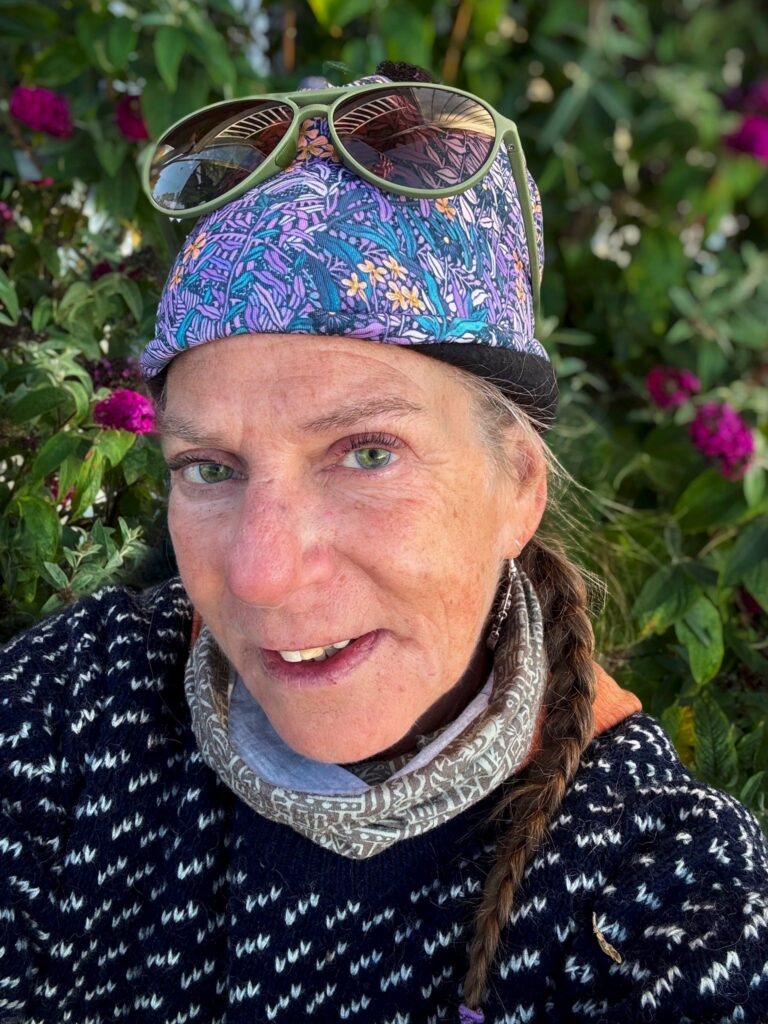
Kelani Cundy
ABOUT
About content goes here.
COURSES
No courses assigned.
EDUCATION
Education content goes here.
HONORS & AWARDS
INTERESTS
Interests content goes here.
ADVOCACY
Advocacy content goes here.

Dan Daigle

Kara Daul ’96

Anna Davis

Dan DenDanto ’91
Director of the Fin Whale Catalogue
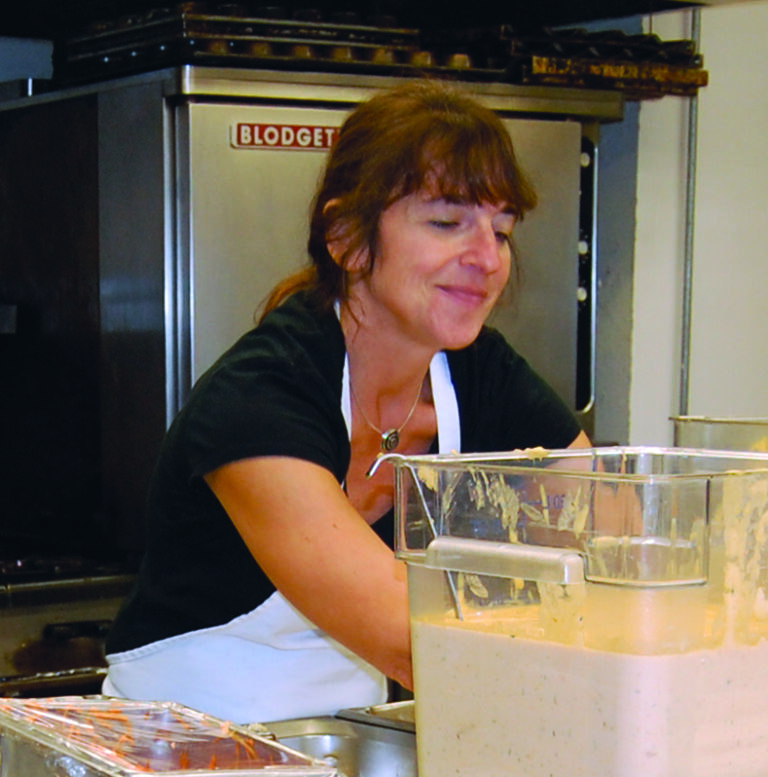
Lise Desrochers
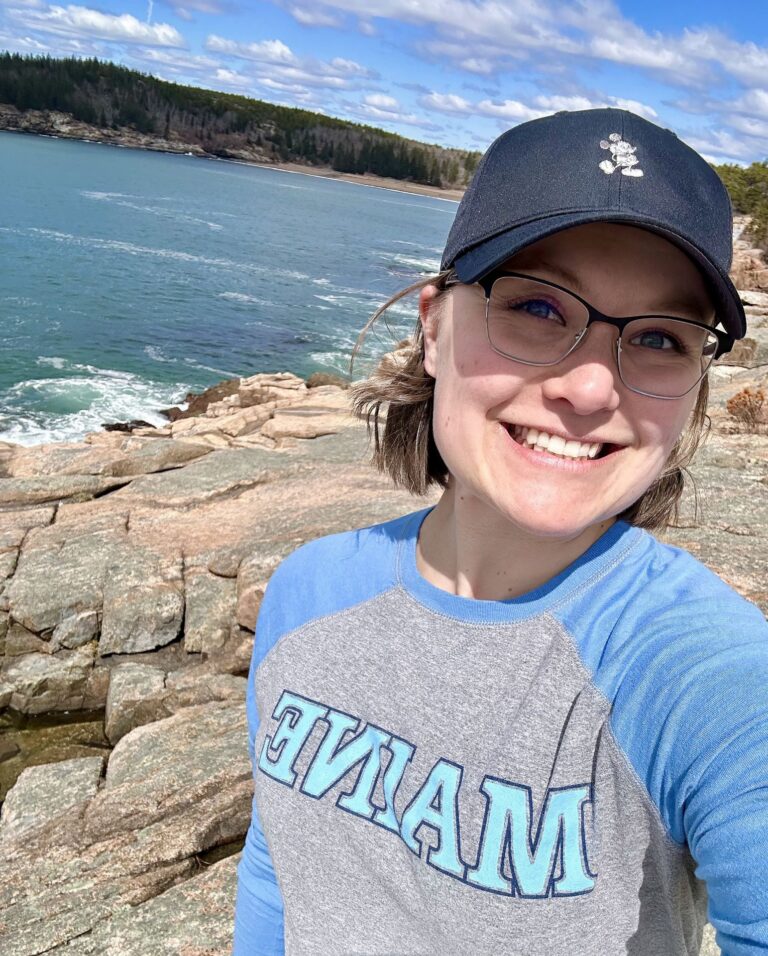
Jordan Diemler
Counselor for US first-year students
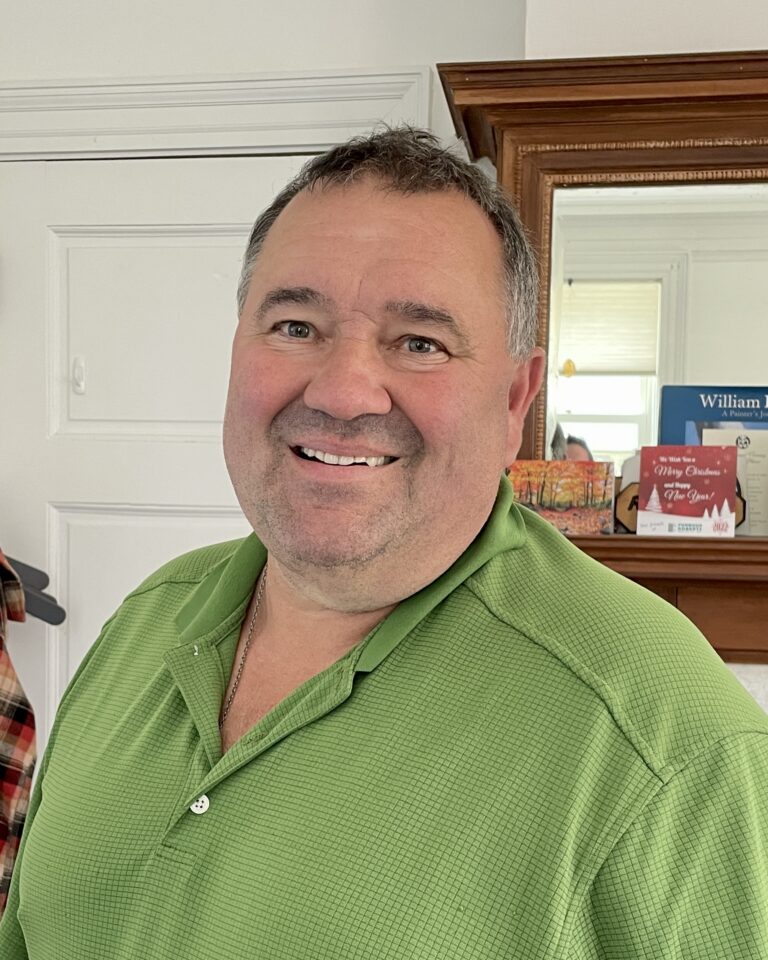
Richard Dow
ABOUT
About content goes here.
COURSES
No courses assigned.
EDUCATION
Education content goes here.
HONORS & AWARDS
INTERESTS
Interests content goes here.
ADVOCACY
Advocacy content goes here.

Rowan Fraley
Cat Fuller
Linda Fuller
Teacher Certification Officer
ABOUT
Before COA
Linda served Maine’s public schools for 28 years, including teaching middle school students in one of Maine’s last three room schools and teaching government and English at the high school level. She also enjoyed twelve years as a secondary school counselor.
Course Areas
education
COURSES
EDUCATION
- Ed.M. Counselor Education, University of Maine, 1999
- B.S. Education (elementary, secondary social studies), University of Maine, 1983
INTERESTS
Linda Fuller serves as the Associate Director of Educational Studies, working closely with certification candidates through advising, teaching, and supervising student interns. Linda is currently working on her doctoral dissertation exploring teacher-learner relationships in virtual high schools. She is very interested in policy changes and developments in educator preparation.

Willow Gibson
Work-Study Coordinator

David Gibson
Teaching staff
ABOUT
David has transitioned two homes entirely off of fossil fuels, including a post and beam farmhouse built in 1828. David has received a Permaculture Design Certificate and is working with his wife, Willow, to implement a permaculture plan at their homestead in Morrill. They have planted a nut grove with chestnuts, heartnuts, pecans, and hickories, a fruit orchard with apples, pears, peaches, plums, cherries and a variety of berry bushes.
David enjoys hiking, mountain biking, alpine and cross country skiing, snowshoeing, paddling, and other outdoor activities.
Before COA
- Feb 2020-present. Executive Committee Member, Sierra Club Maine Chapter
- Sept 2017-June 2021. System Design Specialist, ReVision Energy, Liberty, ME
- Jun 2018-Dec 2019. Board Member, Belfast Co-op, Belfast, ME
- Mar 2016-Aug 2017. Founder, Powered by Sunshine, Reno, NV
- Jun 2014-Mar 2016. Energy Efficiency Specialist, Nevada Governor’s Office of Energy, Carson City, NV
- Dec 2015-May 2017 Board Member, US Green Building Council, Nevada Chapter
- Oct 2015-Nov 2016 Board Member, Envirolution, Reno, NV
- Jan 2014-May 2017 Executive Committee Member, Sierra Club, Toiyabe (Nevada) Chapter
- Aug 2013-Jun 2014 Energy Technologies Instructor, Truckee Meadows Community College, Reno, NV
- Feb 2011-Jun 2014 Community Services Director, Envirolution, Reno, NV
- Aug 2009-Feb 2011 AmeriCorps VISTA, Envirolution, Reno, NV
- Jun 2006-Jul 2009 Senior Field Engineer and Safety Manager, Whiting-Turner Contracting
- Company, East Rutherford, NJ; New Haven, CT
Course Areas
Energy Systems, Building Science
COURSES
EDUCATION
- BS, Civil Engineering, Worcester Polytechnic Institute
- LEED AP BD+C, Green Building Certification Institute, US Green Building Council, Accredited Professional for Building Design and Construction
- CEM, Association of Energy Engineers, Certified Energy Manager
- Permaculture Design Certificate
INTERESTS
As Vice Chair of Sierra Club Maine, David led successful efforts to pass two bills in the 2021 Maine legislature:
LD 1659: An Act to Create the Maine Clean Energy and Sustainability Accelerator http://legislature.maine.gov/legis/bills/display_ps.asp?LD=1659&snum=130 This bill requires Efficiency Maine to set up a new lending program in partnership with local banks, credit unions, and CDFIs, to increase the availability and decrease the costs to borrow funds for efficiency and clean energy projects. This bill requires that 40% of funding go toward ‘vulnerable communities’ including low-income communities and communities of color. David worked closely with Representative Stanley ‘Paige’ Zeigler to draft, revise and build a coalition in support of this legislation.
LD 99: An Act To Require the State To Divest Itself of Assets Invested in the Fossil Fuel Industry http://legislature.maine.gov/legis/bills/display_ps.asp?PID=1456&snum=130&paper=&paperld=l&ld=99 This legislation requires the Maine State Treasurer and Maine Public Employee Retirement System to fully divest from fossil fuels by 2026. David worked with bill sponsor Rep. Maggie O’Neil to expand the bill to include private equity funds and all aspects of the fossil fuel industry. MainePERS will have to divest ~$1.3 billion that they currently have invested in fossil fuel companies.
ADVOCACY
David serves as the Vice Chair of Sierra Club Maine. In this role, he has led advocacy for efficiency, clean energy, and climate solutions
Carrie Graham
Teaching Staff
ABOUT
Before COA
I’m from Ann Arbor, Michigan. I earned a B.S. in natural resources from the University of Michigan in 2004 and a M. S. in entomology from the University of Maine in 2007. For my masters thesis I explored the pathogen inhibiting behaviors of the European fire ant, Myrmica rubra, which is invasive along the Maine coast. I have also done freelance illustration and exhibit fabrication work for a variety of clients.
Course Areas
Entomology, Zoological Field Sketching
COURSES
EDUCATION
- BS, Natural Resources, University of Michigan, 2004
- MS, Entomology, University of Maine, 2007
Regan Greer ’22
Mason Gurtler
Custodian
Ingrid Hill
Ken Hill
Faculty, Education and Psychology
ABOUT
Before COA
Prior to entering a career in the academic realm, Ken was the program director of an out-patient psychiatric drop-in center that serviced 60-80 clients per day.
From there, he went on to join the faculty at Northwest Missouri State University in the Department of Psychology, Sociology, and Counseling. While at Northwest Ken won ten different teaching awards including the universities most prestigious “Tower Service Award” for teaching excellence. While at Northwest, Ken served as a core psychology faculty member, directed the graduate program in school guidance, supervised the Therapeutic Community programs for regional prison systems, and eventually became Chairman of the department.
In his free time Ken enjoys weight lifting, canoe tripping, knife making, and serving on the board of the YMCA.
Course Areas
psychology, education
COURSES
More Information about my Courses
In 1999 Ken came to the College of the Atlantic as the Director of the Educational Studies Program. In 2005 he was named Academic Dean, in 2019 named Provost.
EDUCATION
- B.A. University of Michigan, 1987
- Ed.M. Counseling Processes, Harvard University 1990
- M.S. Educational Psychology and Measurement, Cornell University 1993
- PhD. Educational Psychology and Measurement, Cornell University 1995
Kellie Hoffart

Russell Holway
ABOUT
About content goes here.
COURSES
No courses assigned.
EDUCATION
Education content goes here.
HONORS & AWARDS
INTERESTS
Interests content goes here.
ADVOCACY
Advocacy content goes here.

Jenna Horton
Jen Hughes
ABOUT
About content goes here.
COURSES
No courses assigned.
EDUCATION
Education content goes here.
HONORS & AWARDS
INTERESTS
Interests content goes here.
ADVOCACY
Advocacy content goes here.
Nick Jenei ’09
Puranjot Kaur ’05
Human Resources Support

Shawn Keeley ’00
Ro Kelly

Stephen Lambert

Rob Levin
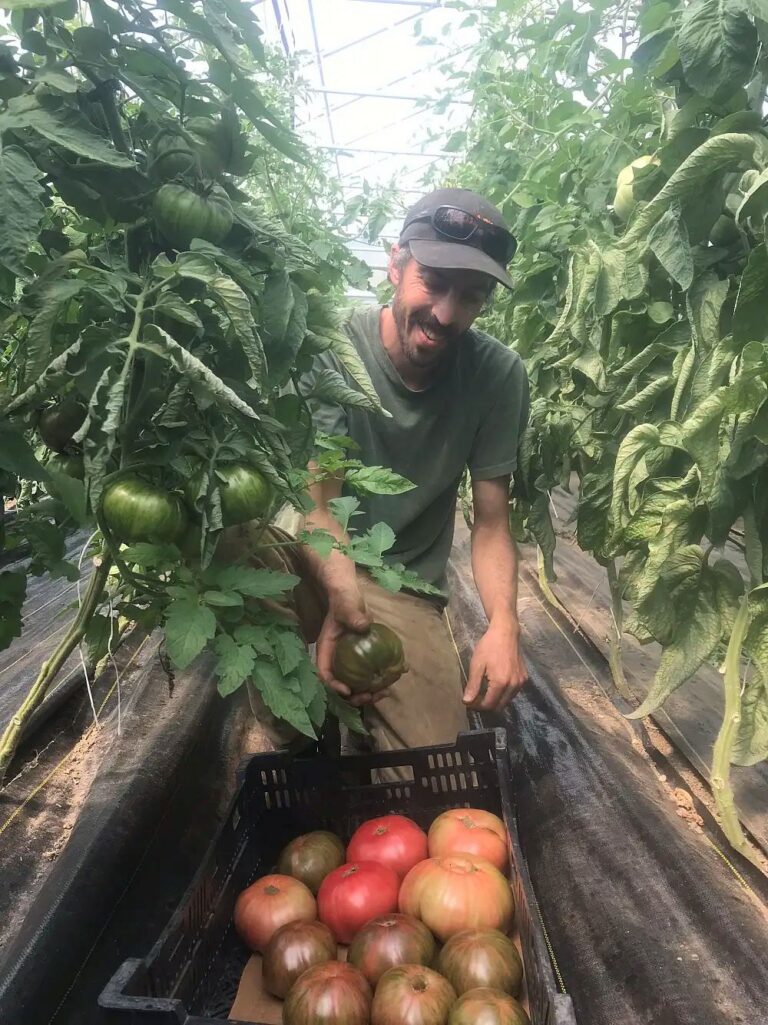
David Levinson
Gordon Longsworth
Teaching Staff
ABOUT
Gordon earned his Master’s in Regional Planning under environmental planning pioneer Ian McHarg, at the University of Pennsylvania. Ian McHarg wrote the 1969 landmark classic ‘Design with Nature’, and was very influential in the startup of the College of the Atlantic and why COA is about Human Ecology.
Before COA
Mr. Longsworth has 35 years of experience developing and teaching Geographic Information Systems. He has held the position of GIS Laboratory Director since 1993. Mr. Longsworth was introduced to GIS as an undergraduate at College of the Atlantic and was a lead student in the establishment of the GIS Laboratory in 1988. He considers his most notable achievement the number of students he has trained and the development of the GIS program at COA.
Personal Website
https://coagis.maps.arcgis.com/home/index.html
Course Areas
geography, GIS, mapping, planning, ecology
COURSES
More Information about my Courses
Gordon’s strengths are in teaching COA students applied ways of using GIS to suit their particular needs and interests. His passion lies in sending his students off into the world with the best tools and education possible to tackle the many challenges that face them in their respective vocations.
EDUCATION
- B.A. College of the Atlantic, 1990
- M.R.P. Planning, University of Pennsylvania, 1992
HONORS & AWARDS
INTERESTS
Since then, he has supervised and collaborated on numerous projects for federal, state and local governments, non-governmental organizations, universities, companies, and individuals. His primary duties are teaching GIS classes and workshops, and assisting other classes with the application of GIS. He enjoys the challenge of tackling projects from all academic disciplines.
PUBLICATIONS
He has had maps selected for publication in the prestigious annual ESRI Map Book. His students have gone on to earn advanced degrees, win awards, hold key positions, become teachers and start businesses.

Tanya Lubansky
Joshua Luce

Amy McIntire
Advisor for Service Members

ABOUT
About content goes here.
COURSES
No courses assigned.
EDUCATION
Education content goes here.
HONORS & AWARDS
INTERESTS
Interests content goes here.
ADVOCACY
Advocacy content goes here.

Krystal Meservey

Todd Miner
Counselor for International Students
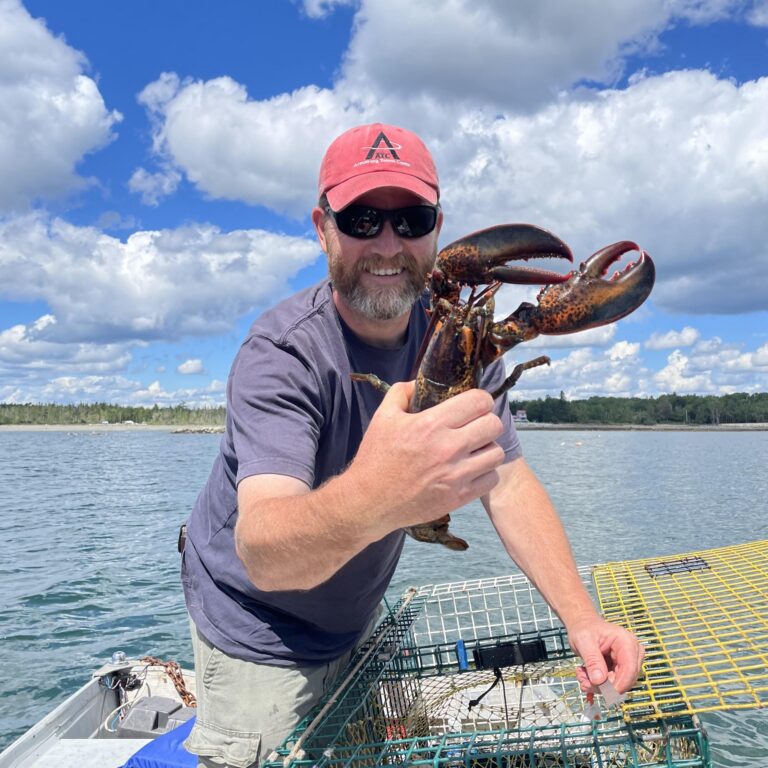

Amy Morley

Kelly Dickson MPhil ’97

Sean Murphy ’14

Jeffry Neuhouser
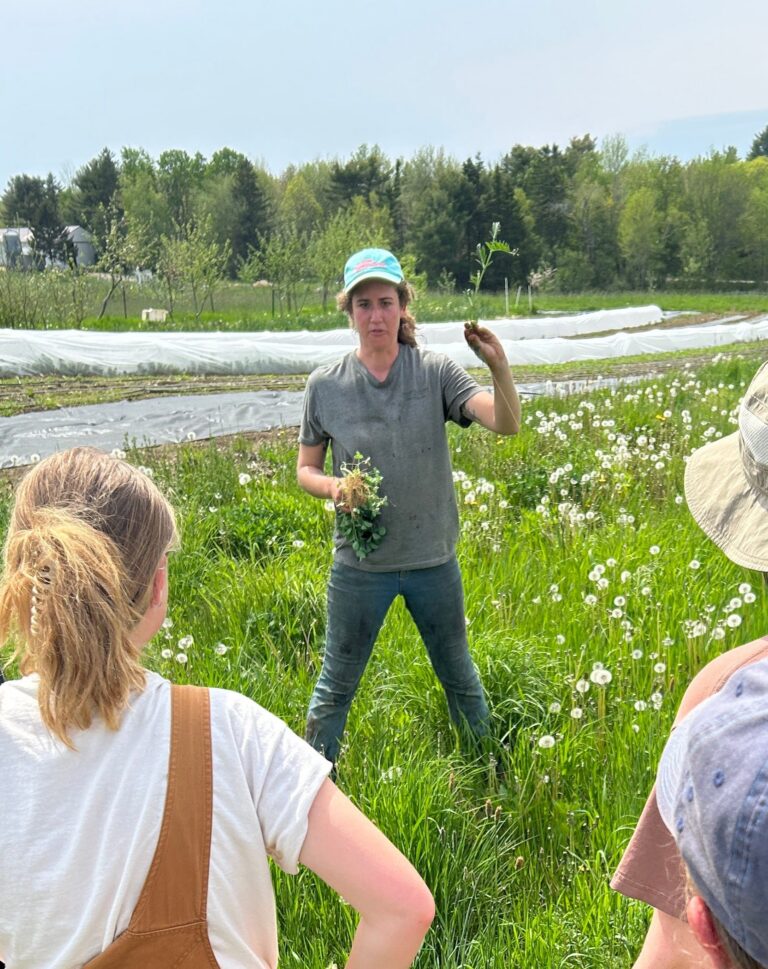
April Nugent

Natasha Pastor ’20
Permit Data Collector
Bear Paul
Chief Financial Officer
Catherine Preston-Schreck
Rachel Rice ’23
Heddie Samuelson

Kerri Sands ’02
Elliot Santavicca ’20
Librarian

Casey Schuller-Jordan
Counselor for Transfers and US First-Year Students

Ken Sebelin ’94
Rosemary Seton
Cora Carvalho e Silva ’23
Pamela Gagnon da Silva
Caroline J Smith
Zach Soares ’00
Deputy Title IX Coordinator
Teaching Staff
ABOUT
Course Areas
Audio Production and Engineering
Natalie Springuel ’91
Teaching Staff
ABOUT
Course Areas
Fisheries and Fishing Communities
EDUCATION
- MS, Environmental Sciences, Antioch New England Graduate School, 1997
- BA, Human Ecology, College of the Atlantic 1991

Toby Stephenson ’98
Director of Marine Operations
ABOUT
About content goes here.
COURSES
No courses assigned.
EDUCATION
Education content goes here.
HONORS & AWARDS
INTERESTS
Interests content goes here.
ADVOCACY
Advocacy content goes here.
Hannah Stevens ’09

Jenel Thurlow

Valeria Tsygankova
Teaching Staff
ABOUT
I love the outdoors–especially hiking, running, and rock climbing. My biggest adventures to date include a 400-mile solo trek in the Sierra Nevada and a 200-mile solo trek in the North Cascades. Now that I’ve moved to Maine, I’m excited to get more experience with kayaking, canoeing, and skiing.
Before COA
I taught First-Year Writing, worked in the Writing Center, and served as Program Coordinator for Columbia University’s Undergraduate Writing Program.
Course Areas
writing, rhetoric
EDUCATION
- MFA, Creative Writing, New York University (2024)
- PhD, English & Comparative Literature, Columbia University (2019)
- MA, History of the Book, University of London (2012)
- BA, English, University of Pennsylvania (2011)
HONORS & AWARDS
INTERESTS
I have research interests in two disciplines: modern writing pedagogy and nineteenth-century American literature. As a researcher in both fields, I am especially interested in how genre operates. I study how best to support student writers navigating new genres, in college and beyond, and how writers across periods make genre choices, blending, adapting, and transforming genres to serve their creative and intellectual ends. I also have creative nonfiction projects, which focus on human relationships with the natural world and representations of the environment in contemporary culture.
PUBLICATIONS
Publications
V. Tsygankova and V. Guida Messina. (2024). Teaching textual analysis through collaborative online annotation. In A. Cicchino and T. Hicks (Eds.), Better practices: Exploring the teaching of writing in online and hybrid spaces. The WAC Clearinghouse/University Press of Colorado.
Presentations
“Collaborating with Creative Writing: Sampling Across Genres in First-Year Writing.” Conference on College Composition and Communication (CCCC) annual conference. Baltimore, April 2025.
“Crossing Creative-Critical Lines in the Writing Center.” International Writing Centers Association (IWCA) annual conference. Baltimore, October 2023.
“Uttering like the Earth: Frederick Douglass’s Terrestrial Reform Theory.” C19: Nineteenth-Century Americanists Biennial Conference. October 2020.
“David Drake: On Time and Clay.” C19: Nineteenth-Century Americanists Biennial Conference. Albuquerque, March 2018.
“From Thing to Person: Frederick Douglass Dilates Freedom’s Timeline.” British Association of Nineteenth-Century Americanists Conference. Exeter, November 2017.
“‘Jamaicas of Prospective, Jamaicas of Remembrance’: Emily Dickinson and Reconstruction.” Dickinson Critical Institute at the Emily Dickinson International Society Conference. Amherst, August 2017.
Jen Vanegas
Business Office Assistant
Mindy Viechnicki

Frederick Wenzel

Shana Willey
Scott Woolsey
