
Mathematics & Physical Sciences
College of the Atlantic
Physical science and mathematics are simultaneously useful and beautiful
They tell us how to build solar cells to make clean electricity and explain why the sun shines and the sky is blue. Students choose to pursue math and physical science classes at COA both to build a base for study in the natural and social sciences and also because they are interested in these areas in their own right. We offer a mix of classes: some cover standard sets of topics, while other courses are more interdisciplinary, exploring connections across the sciences and to other areas of study.
Geology and earth science

There are two introductory geology classes every year. The Geology of MDI is a strongly field-based survey of the techniques and principles of geology. Natural Resources is a topical introduction to geology and earth science. Intermediate and advanced geology courses include Climate and Weather, Critical Zone, and Rocks and Minerals. In all geology classes students learn observational analytical skills, applicable across the sciences. And all geology classes have a field component. Yes, even during the winter term.
Mathematics

We offer a range of classes in math and related areas. A two-term sequence in single-variable calculus is taught every other year. Advanced math classes include Multivariable Calculus, Differential Equations and Linear Algebra. Many math courses incorporate computer programming. Introductory statistics is a yearly offering; we offer an intermediate statistics class most years as well.

Physics
We offer Physics I and II every other year. Advanced classes, such as Thermodynamics, are offered once every few years. The interdisciplinary class Physics and Mathematics of Sustainable Energy happens each fall, giving students a background they can draw on to pursue advanced classes and projects in renewable energy.
Chemistry
COA has a yearly, two-term sequence in Introductory Chemistry. Organic Chemistry, also a two-term sequence, happens every other year. Other chemistry classes include the Chemistry and Biology of Food and Drink and Environmental Chemistry.
Reminder: Areas of study at COA aren’t majors or formal concentrations. All COA students design their own major in human ecology and are free to chart their own path. Your major is defined by you, not us.
Faculty
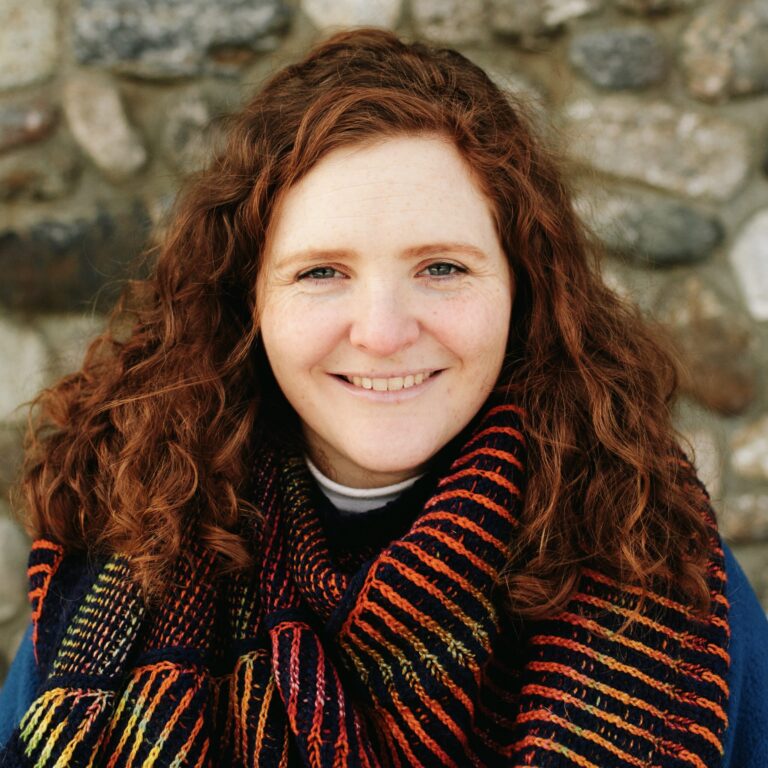
Victoria Edwards
ABOUT
When Victoria is not working with robots, you can find her knitting, hiking by the ocean, or baking new sweet treats.
Before COA
From 2020-2025 Victoria was a PhD student at the University of Pennsylvania working on coordinating multi robot teams to perform tasks in dynamic environments. As a graduate student Victoria was the co-recipient of the John A Goff prize for outstanding research in mechanical engineering, along with different teaching and service awards. Victoria was funded by the National Defense Science and Engineering Graduate Fellowship (NDSEG). Victoria has worked with a wide range of robots including ground vehicles, aerial vehicles, robot arms, and unmanned surface vehicles.
Personal Website
Course Areas
Robotics, computer science
EDUCATION
- PhD, Mechanical Engineering and Applied Mathematics, University of Pennsylvania (2025)
- MS, Robotics, University of Michigan Rackham Graduate School, Robotics Institute (2017)
- BA, Computer Science and Mathematics, Colby College (2016)
INTERESTS
Victoria is an experimental roboticist working at the intersection of Robotics, Complex Systems Theory and Dynamical Systems Theory. She has interests in the full range of multi robot systems, including robot teams with sophisticated capabilities and coordinated task strategies, as well as large scale collectives demonstrating emergent behavior.
Her research objective is to combine environment models with models from Complex Systems theory to control robot teams monitoring dynamic environments. Throughout her dissertation, she made contributions to solving the multi robot task allocation problem for robot teams deployed in dynamic environments. Her results demonstrate the power of complex systems theory for analyzing robotic systems to enable increased scalability and flexibility for operating in uncertain and dynamic environments. Overall, two themes emerge in her research.
1) How do we design and coordinate multi robot systems to perform missions in uncertain and dynamic environments? and
2) How do we use robot teams to help understand natural phenomena, e.g., changing water temperatures.
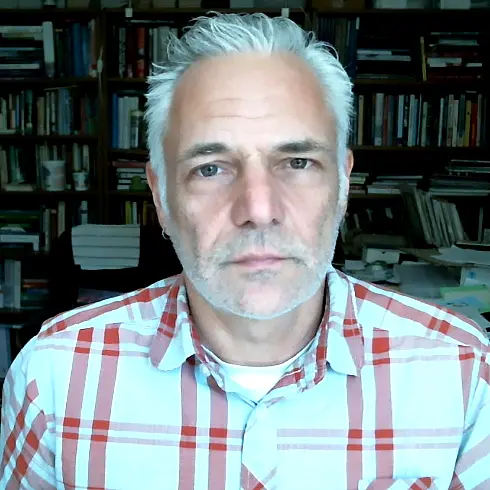
David Feldman
Dean, Academic Affairs
ABOUT
Before COA
From 1991-1993, Dave was a teacher of 9th and 10th grade physics and mathematics at The McCallie School in Chattanooga, TN. As a graduate student at UC Davis, Dave received several awards in recognition of both teaching and scholarship: The Dissertation Year Fellowship; The Chancellor’s Teaching Fellowship; and he was nominated for the Outstanding Graduate Student Teaching Award.
His other interests include ultimate frisbee, hockey, cooking, travel, and gardening. He is married to Doreen Stabinsky; they have three excellent cats.
Personal Website
Course Areas
Physics, mathematics, networks and groups
COURSES
More Information about my Courses
At COA Dave has taught over twenty different courses in physics, mathematics, and computer science.
Together with several other colleagues, in 2016 Dave launched the Thoreau Environmental Leaders Initiative, a project that supports participatory learning in food systems, renewable energy, and climate change politics, and helps give students skills in community organizing and activism. The project has been supported by several grants from the Henry David Thoreau Foundation totaling $155,000.
EDUCATION
- B.A, Physics, Carleton College, 1991
- Ph.D., Physics, University of California, Davis, 1998
HONORS & AWARDS
INTERESTS
Dave’s research interests lie in the fields of statistical mechanics and nonlinear dynamics. In particular, his research has examined how one might measure “complexity” or pattern in a mathematical system, and how such complexity is related to disorder. Dave has authored research papers in journals including Physical Review E, Chaos, and Advances in Complex Systems. Two of his papers have been cited over 400 times. In his research, Dave uses both analytic and computational techniques.
Dave is also interested in the teaching and learning of chaos and dynamical systems. He has authored two books on these topics: Chaos and Fractals: An Elementary Introduction (Oxford University Press, 2012), a textbook for non-math/science majors; and Chaos and Dynamical Systems (Princeton University Press, 2019), a contribution to the Primers in Complex Systems series. Dave has developed two MOOCs, one on Chaos and Dynamical Systems and one on Fractals and Scaling. These free, online classes are part of the Santa Fe Institute’s Complexity Explorer project and have been taken by thousands of students.
Dave has recently become interested in teaching about renewable energy and energy conservation. With Anna E. Demeo, then a lecturer at COA in engineering, he developed an introductory course on the physics and mathematics of sustainable energy. Anna and Dave received a $95,000 grant from the Maine Space Grant Consortium Research and Higher Education Program to support the development of the class. He is currently working on a textbook based on this class. Anna and Dave also received an $18,000 grant from the Environmental Education Program of the Environmental Protection Agency to develop and teach a workshop on sustainable energy for area elementary school teachers.
From 2004-2008, Dave gave a week-long series of lectures at the China Complex Systems Summer School (CSSS), co-sponsored by the Santa Fe Institute and the Institute of Theoretical Physics at the Chinese Academy of Sciences in Beijing. His lectures provided students with a broad introduction to complex systems, including dynamical systems, information theory, and computation theory. From 2006-2008 he was co-director of the China CSSS. He was PI on a $116,000 grant from the U.S. National Science Foundation that partially supported the CSSS. Since 2017 he has served as director of the annual CSSS in Santa Fe. From December 2018 to August 2019 he served as the Santa Fe Institute’s Interim Vice-President for Education.
ADVOCACY
Dave is on the steering committee of Indivisible Mount Desert Island. He spoke at the 2017 Climate Change March, the 2018 Waves of Love rally on the one-year anniversary of the events in Charlottesville, a rally in 2019 on the eve of President Trump’s impeachment, and an event in 2022 shortly after Russia’s invasion of Ukraine.
Dave is also a founding member of the MDI Racial Equity Working Group and the MDI Racial Equity Collective. He is a member of the Title IX team at College of the Atlantic and has completed an ATIXA level two Civil Rights Investigator training.
PUBLICATIONS
- D.P. Feldman and J.P. Crutchfield, Discovering Noncritical Organization: Statistical Mechanical, Information Theoretic, and Computational Views of Patterns in One-Dimensional Spin Systems, Entropy, 24(9), 1282- 1354. 2022.
- A.E. Demeo, D.P. Feldman, and M.L. Peterson. A Human Ecological Approach to Energy Literacy through Hands-on Projects: An Essential Component of Effectively Addressing Climate Change. Journal of Sustainability Education. Vol. 4, January 2013.
- M.D. Robinson, D.P. Feldman, and S.R. McKay. Local Entropy and Structure in a Two-Dimensional Frustrated System. Chaos. 21(3). 037114. 2011.
- D.P. Feldman, C.S. McTague, and J.P. Crutchfield. The Organization of Intrinsic
- Computation: Complexity-Entropy Diagrams and the Diversity of Natural Information Processing. Chaos. 18:043106. 2008.
- D.P. Feldman and J.P. Crutchfield, Synchronizing to Periodicity: The Transient Information and Synchronization Time of Periodic Sequences. Advances in Complex Systems. 7(3-4): 329-355, 2004.
- D.P. Feldman and J.P. Crutchfield, Structural Information in Two-Dimensional Pat-
- terns: Entropy Convergence and Excess Entropy. Physical Review E. 67:051104. 2003.
- J.P. Crutchfield and D.P. Feldman. Regularities Unseen, Randomness Observed: The
- Entropy Convergence Hierarchy. Chaos. 15: 25-54, 2003.
- J.P. Crutchfield and D.P. Feldman, Synchronizing to the Environment: Information Theoretic Constraints on Agent Learning. Advances in Complex Systems. 4: 251-264,
- 2001.
- J P. Crutchfield, D.P. Feldman, and C. R. Shalizi. Comment I on “Simple Measure for Complexity.” Physical Review E. 62:2996-7, 2000.
- D. P. Feldman and J.P. Crutchfield. Statistical Measures of Complexity: Why? Physics Letters A, 238:244-52, 1998
- J.P. Crutchfield and D.P. Feldman, Statistical Complexity of Simple 1D Spin Systems. Physical Review E. 55:R1239-42, 1997.
Invited Book Reviews
- D.P. Feldman. Review of Introduction to Modern Dynamics: Chaos, Networks, Space and Time. Physics Today, 68(12):56, 2015.
- D.P. Feldman. Review of Complex and Adaptive Dynamical Systems. Physics Today, 62(7):58-9, 2009.
- D.P. Feldman. Review of Monte Carlo Methods in Statistical Physics. Computing in Science & Engineering, 2:73-4, 2000.
Essays
- D.P. Feldman. Field Theory. Bateau. 7.1. Fall 2018.
Presentations
- A Crash Course on Fractals and Scaling. Complex Systems Summer School. Santa Fe, NM. June 13, 2019.
- A Crash Course on Information Theory. Complex Systems Summer School. Santa Fe, NM. June 18, 2019.
- A Crash Course on Fractals and Scaling. Complex Systems Summer School. Santa Fe, NM. June 13, 2018.
- A Crash Course on Information Theory. Complex Systems Summer School. Santa Fe, NM. June 18, 2018.
- Panel on Gerrymandering. A panel sponsored by the Maine League of Women Voters. Augusta, ME. February 15, 2018.
- D.P. Feldman. Gerrymandering in the US: History, Law, Math, and Politics. Human Ecology Forum. College of the Atlantic. October 24, 2017.
- Field Theory. A joint reading with Dan Mahoney. Human Ecology Forum. College of the Atlantic. Bar Harbor, ME. May 23, 2017.
- Predictable Unpredictability: Strange Attractors and the Buterfly Effect. Eagle Hill Institute. Steuben, ME. August 8, 2013.
- Local Complexity for Heterogeneous Spatial Systems. Information in Dynamical Systems and Complex Systems Workshop. Burlington, VT. July 18–19, 2013.
- Complexity, Unpredictability, and Synchronization: Information Theoretic Measures of Structure and Randomness. IDyOM Workshop on Information and Neural Dynamics in the Perception of Musical Structure. Goldsmiths College, London, UK. March 17, 2013.
- Strange Attractors and the The Butterfly Effect: The Mathematics of Chaos. Science
- Café sponsored by the Mount Desert Island Biological Laboratory and McKay’s Public
- House, Bar Harbor, ME. Feb. 6, 2013.
- Chaos and Complex Systems: In the Classroom and Beyond. Smith Institute for
- Applied Research, Invitational Symposium. Johnson C. Smith University, Charlotte,
- NC. Oct. 26, 2012.
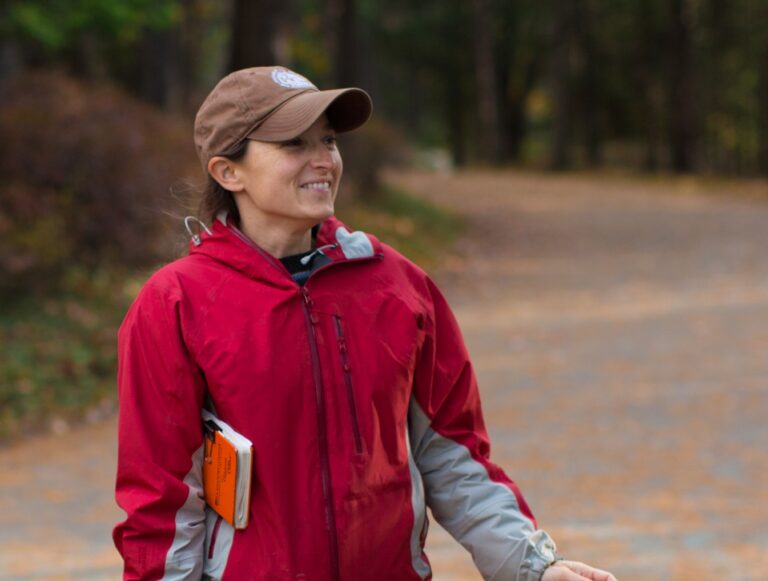
Sarah R. Hall
Anne T. and Robert M. Bass Chair in Earth Systems and GeoSciences
ABOUT
Before COA
Sarah joined the faculty of COA in the Fall of 2012 and teaches courses in the Earth Sciences. Before coming to COA Sarah was an Assistant Professor at McGill University in Montreal following her graduate work at the University of California, Santa Cruz and undergraduate degree at Hamilton College. She grew up in upstate NY and after college spent a few years in Atlanta, GA working as a Geologist at an environmental consulting firm and as an ECOWATCH AmeriCorps team member.
Course Areas
Earth science, geology, geomorphology, weather, climate, water, landscape, climate change
Personal Website
COURSES
More Information about my Courses
Sarah regularly offer courses on topics exploring landscape shaping processes, climate, geologic principles, interactions between human and Earth systems, as well as place-based studies of Mt Desert Island (MDI) and Maine.
Most of her courses have some field component where COA students may be learning field methods (e.g. mapping, water sampling, measuring the orientation of geologic features, or describing soils), while visiting parts of Acadia National Park, MDI, or Maine to understand the overall geologic history of the region. In some classes, students design and complete self-guided field work as in the Climate and Weather class where students produce a field guide to various meteorological phenomena. Occasionally, Sarah offers intensive field courses to regions with very different geology from Maine such as Eastern California and the Peruvian Andes.
Sarah regularly advises students on independent research projects. Some are related to her ongoing research and some are inspired by student interest. See some examples of student research here. Explore student created Story Maps of select National Parks here.
Opportunistically Sarah co-teaches courses with other faculty, such as The Anthropocene, Demons from the Depths, and Topics in Research: Geoscience and Geochemistry offering students an inter- multi- or transdisciplinary learning experience.
For the 2023-2024 academic year, geoscience courses were taught by glacial geomorphologist, Scott Braddock while Sarah pursued an AAAS Science and Technology Policy Fellowship in Washington D.C. Sarah is currently positioned in the Landslide Hazards Program Office, Natural Hazards Mission Area of the U.S. Geological Survey.
EDUCATION
- Ph.D. Earth and Planetary Sciences, University of California, Santa Cruz, 2009
- B.A. Geology, Hamilton College, 2001
INTERESTS
Sarah is trained as a geomorphologist studying the processes shaping the surface of the earth. Her research interests are quite broad including mountain building, past glaciations, active faulting, watershed monitoring, and the erosion of landscapes. One of Sarah’s current research projects involves completing a chronology of past glaciations in a portion of the Peruvian Andes. Two local water quality projects are focused on watershed monitoring in and around Acadia National Park and a study concerning private well water characteristics. Through her teaching of field-based courses, Sarah has begun to explore ways to connect professional development opportunities directly to curricular content. With collaborators and COA students, she developed and implemented the Environmental-STEM field-based professional development program, a curriculum that is freely available online for use by other educators.
ADVOCACY
Member of the Executive Council of the Geological Society of Maine.
Cooperating curator of the Hudson Museum at the University of Maine.
Affiliated faculty researcher at the Climate Change Institute.
Steering committee member of the Coastal Maine Geopark.
PUBLICATIONS
Publications
Select publications are listed below. A star (*) indicates student co-author. For a full list, visit this website.
Benavente, C., Palomino, A., Wimpenny, S., García B., Rosell, L., Aguirre, E., Macharé, J., Rodriguez Padilla, A.M.*, and Hall, S.R., 2022. Paleoseismic Evidence of the 1715 C.E Earthquake on the Purgatorio Fault in Southern Peru: Implications for Seismic Hazard in Subduction Zones, Tectonophysics, doi:10.1016/j.tecto.2022.229355
Walker, B., Hall, S.R., and Schmidt, C. 2020. Environmental STEM (E-STEM) Field Course and Professional Development Modules, Reviewed Teaching Activity Collection of the Teach The Earth Program (some “Exemplary” modules), Science Education Resource Center (SERC), Teaching Resources website
Farrell, A., Buckman, K., Hall, S.R., Muñoz, I.*, Bieluch, K., Zoellich, B., and Disney, J., 2021. Adaptations to a secondary school-based citizen science project to engage students in monitoring well water for arsenic during the Covid-19 pandemic. Journal of STEM Outreach 4(2), doi: 10.15695/jstem/v4i2.05.
Saillard, M., Audin, L., Rousset, B., Avouac, J.-P., Chlieh, M., Hall S.R., Husson L., Farber, D.L., 2017. From the seismic cycle to long-term deformation: linking seismic coupling and Quaternary coastal geomorphology along the Andean Megathrust, Tectonics, 36(2), p. 241-256. doi: 10.1002/2016TC004156.
Michalak, M.K., Hall, S.R., Farber, D.L., Audin, L., and Hourigan, J.K., 2015. (U-Th)/He Thermochronology records late Miocene accelerated cooling in the north-central Peruvian Andes, Lithosphere, 8(2), p.103–115, doi: 10.1130/L485.1.
Margirier, A., Robert X., Audin, L., Gautheron, C., Bernet, M., Hall, S.R., and Simon-Labric, T., 2015. Slab flattening, magmatism, and surface uplift in the Cordillera Occidental (northern Peru), Geology, 43(11), p. 1031-1034, 10.1130/G37061.1.
Hall, S.R., Farber, D. L., Audin, L., Finkel, R.C., 2012. Recent contractile deformation in the forearc of southern Peru, Earth and Planetary Science Letters, 337-338, 85-90, doi: 10.1016/j.epsl.2012.04.007.
Hall, S.R., Farber, D.L., Ramage, J.M., Rodbell, D.T., Finkel, R.C., Smith, J.A., Mark, B.G.,Kassel, C., 2009. Geochronology of LLGM through Holocene glaciations from the tropical Cordillera Huayhuash, Peru, 2009. Quaternary Science Reviews, 28, 2991-3009, doi:10.1016/j.quascirev.2009.08.004.
Saillard, M., Hall S.R., Audin, L., Hérail, G., Farber D.L., Finkel, R.C., Martinod, J., Bondoux, F., and Regard,V., 2008. Pleistocene marine terrace development and non-steady long-term uplift rates along the Andean margin of Chile (31°S). Earth and Planetary Science Letters, 277(1-2), 50-63, doi:10.1016/j.epsl.2008.09.039.
Hall, S.R., Farber, D.L., Audin, L., Finkel, R.C., Meriaux, A-S., 2008. Geochronology of pediment surfaces in southern Peru: Implications for Quaternary deformation of the Andean forearc. Tectonophysics, 459,186-205, doi: 10.1016/j.tecto.2007.11.073.
Presentations
Abstracts (*student author) of select presentations featuring student research. A full list of presentation abstracts are available here and find out more about student presentations.
Capuano, B., Adams, M., Hall, S.R., Disney, J., 2022. Precipitation-mediated fluctuations in well water arsenic in Hancock County, ME, Maine Sustainability and Water Conference, Augusta, Maine, March 31, 2022.
Feher, A.*, Hall, S.R, Disney, J.E., and Jackson, B.P., 2022. Arsenic abundance in arugula and kale, Maine Sustainability and Water Conference, Augusta, Maine, March 31, 2022.
Slamova, L., Hall, S.R., Feher, A., Disney, J.E., and Jackson, B.P., 2022. Do the orchard soils of Mount Desert Island region harbor residuals of historical arsenical pesticide use? Maine Sustainability and Water Conference, Augusta, Maine, March 31, 2022. Won honorable mention for poster presentation.
Moran, L.*, Hall, S.R., Farrell, A., and Disney, J., 2022. Influence of different water treatment systems on arsenic concentrations in private well groundwater: A view from MDI, ME.
Muñoz, I.L., Cahueque, S., Farrell, A., Moroz, G., Hall, S.R., Buckman, K., and Disney, J. 2021. Pathways of arsenic ingestion in Maine: Data to Action, Geological Society of Maine Spring Meeting, virtual meeting poster presentation, April 9, 2021, published in GSM Newsletter July 2021
Moroz, G.*, Hall, S.R., Disney, J., Farrell, A., and Stanton, B., 2021. Spatial, temporal, and well-specific influences on well water quality, northern Mount Desert Island, Maine, Maine Sustainability and Water Conference, virtual meeting poster presentation, April 1, 2021; Won honorable mention for poster presentation.
Hall, S.R., Moroz, G.*, Farrell, A., Disney, J., and Stanton, B., 2021. Spatial and Temporal Patterns of Private Well Water Quality: A View from Mt. Desert Island, Maine, Maine Sustainability and Water Conference, virtual meeting talk, March 31, 2021.
Hall, S.R., Walker, B., Schmidt, C.M., and Paul, J.R., 2019. Use of a field and career preparation program as a tool for recruitment and retention in the Environmental STEM workforce: A report from the ESTEM Program for 2-year and 4-year college undergrads. Geological Society of America Abstracts with Programs. Vol. 51, No. 5, Presented at GSA Oct. 2019 by Walker, B.
Aragon Oreggo, M.F., Moroz, G., Gibson, S., Kumagai, A., Löwgren, S.*, Hall, S.R., Schmidt, C.M., Walker, B., and Paul, J.R., 2019. Matching skill to need: A multi-institution approval to field-based Environmental-STEM (ESTEM) studies and professional development skills, Geological Society of America, Abstracts with Programs, Vol 51, No. 1, 328351. (Also presented at Acadia National Park Science Symposium, 2018)
Farrell, A., Poland, R., Hall, S.R., Disney, J., and Stanton, B., 2019. Monitoring well water for arsenic on Mt. Desert Island: Engaging high school and college students in interdisciplinary and societally relevant work, Geological Society of America, Abstracts with Programs, Vol 51, No. 1, 328363.
Gallardo Garcia Freire, P.*, Henkel, B. and Hall, S.R., 2019. Past, present and future of the College of the Atlantic stream: A small coastal watershed assessment, Geological Society of America, Abstracts with Programs, Vol 51, No. 1, 328441. (Also presented at ANPSS, 2018 and GSM, 2019)
Gibson, S., Lowgren, S., Hall, S. R., and Smith, S. M. C., 2019. Geomorphic map of Kebo Brook Watershed: Identifying characteristic channel geometry and channel head locations for a small post-glacial coastal New England watershed, Geological Society of America, Abstracts with Programs, Vol 51, No. 1, 328398. (Also presented at Geological Society of Maine, 2019 – Best Student Poster Presentation)
Hall, S.R., McKenzie, J.M., Hall, B.L., Meriaux, A.-S., Fortin, M.-A.*, 2019. Glacial geochronology transecting a tropical mountain range, the Cordillera Blanca of northern Peru, Geological Society of America, Abstracts with Programs, Vol 51, No. 1, 328472.
Henkel, B., Hall, S.R., Gallardo Garcia Freire, P., and Löwgren, S., 2019. Watershed monitoring in Acadia National Park: Preliminary results based on three years of data collected across multiple watersheds, Geological Society of America, Abstracts with Programs, Vol 51, No. 1, 328382.
Van Vliet, N. and Hall, S.R., 2019. An anthropologist and a geologist go into a classroom and…, Geological Society of America, Abstracts with Programs, Vol 51, No. 1, 328331.
Rodriguez Padilla, A.M.*, Hall, S.R., Benavente Escobar, C., Venuti, G.L., Fernandez Baca, B.G, Roselle, L.N., and Audin, L., Evolution of a Paradoxical Landscape: New Constraints for Tectonic and Climatic Processes in the Forearc of Southern Peru, 2018. American Geophysical Union Fall Meeting, Washington, D.C., EP53A-06.
Venuti, G.L.*, Hall, S.R., and Nurse, A., The Paleoecology of Great Duck Island, Acadia National Park Science Symposium, College of the Atlantic (Nov, 2017); Geological Society of Maine Meeting, Unity College (April, 2018); Borns Symposium, Climate Change Institute (May 2018).
Taylor, V., Crowley, C., Lowgren S., Gallardo, Garcia, Freire, P., Hall, S.R., and Henkel. B., 2018. Insights into stream water quality: Bacteria sampling at the Cromwell-Kebo Watershed through summer storm events., Acadia National Park Science Symposium, College of the Atlantic, Oct. 20, 2018.
Gray, S.E. III*, Hall, S.R., Michalak, M.J., and Bailey, D.G., A new look at the geologic history of Great Duck Island and Mount Desert Rock through high resolution aerial imagery, geologic mapping, geochemistry, and geochronology, 2017. Society of America Abstracts with Programs. Vol. 49, No. 2, doi: 10.1130/abs/2017NE-291262.
Hall, S.R., Schmidt, C.E., and Walker, R., 2017. Challenges and opportunities in the development of a multiinstitution field-based professional development program for Environmental-STEM (ESTEM) undergraduates, Geological Society of America Abstracts with Programs. Vol. 49, No. 2, doi: 10.1130/abs/2017NE-290986.
Minogue, W.*, Hall, S.R., Henkel, B., Stream discharge moitoring in seven watersheds on Mt. Desert Island, ME, Acadia National Park Science Syposium, Schoodic Educational & Research Center, September 2016.
Hall, S.R., Hodson, K.R., Michalak, M.J., Farber, D.L., Hourigan, J.K., 2016. Pliocene to present denudation in the Cordillera Blanca, Peru: Interactions of climate and tectonics in a tectonically active glaciated mountain range, Geological Society of America Abstracts with Programs. Vol. 48, No. 2, paper no. 15-7
Prest, T., Strader, J., Galey, M.*, Hall, S.R., Assembling a teaching collection at COA: outcrop, hand-sample, and thin-section analysis of rocks from Mt. Desert Island and Mt. Desert Rock. Acadia National Park Science Symposium, Schoodic Educational & Research Center, 2014.
Davis, M.W.*, Hall, S.R., Farber, D.L., Audin, L., Finkel, R.C., 2007. Quaternary geologic history of the Rio Tambo, southern Peru: repeated mass-wasting events in Western Cordillera drainages, Eos Trans. AGU, 88(52), Fall Meet. Suppl., Abstract T31A-0283.
Ready to build your own path?
Apply Now
Join a close-knit community built for curiosity, collaboration, and purpose.

connect with admissions
Talk with an admission counselor about your interests, questions, and goals.

Plan a Visit
Attend a class, meet students, and experience learning rooted in place.
Student voices
COA Might be Right for You if…
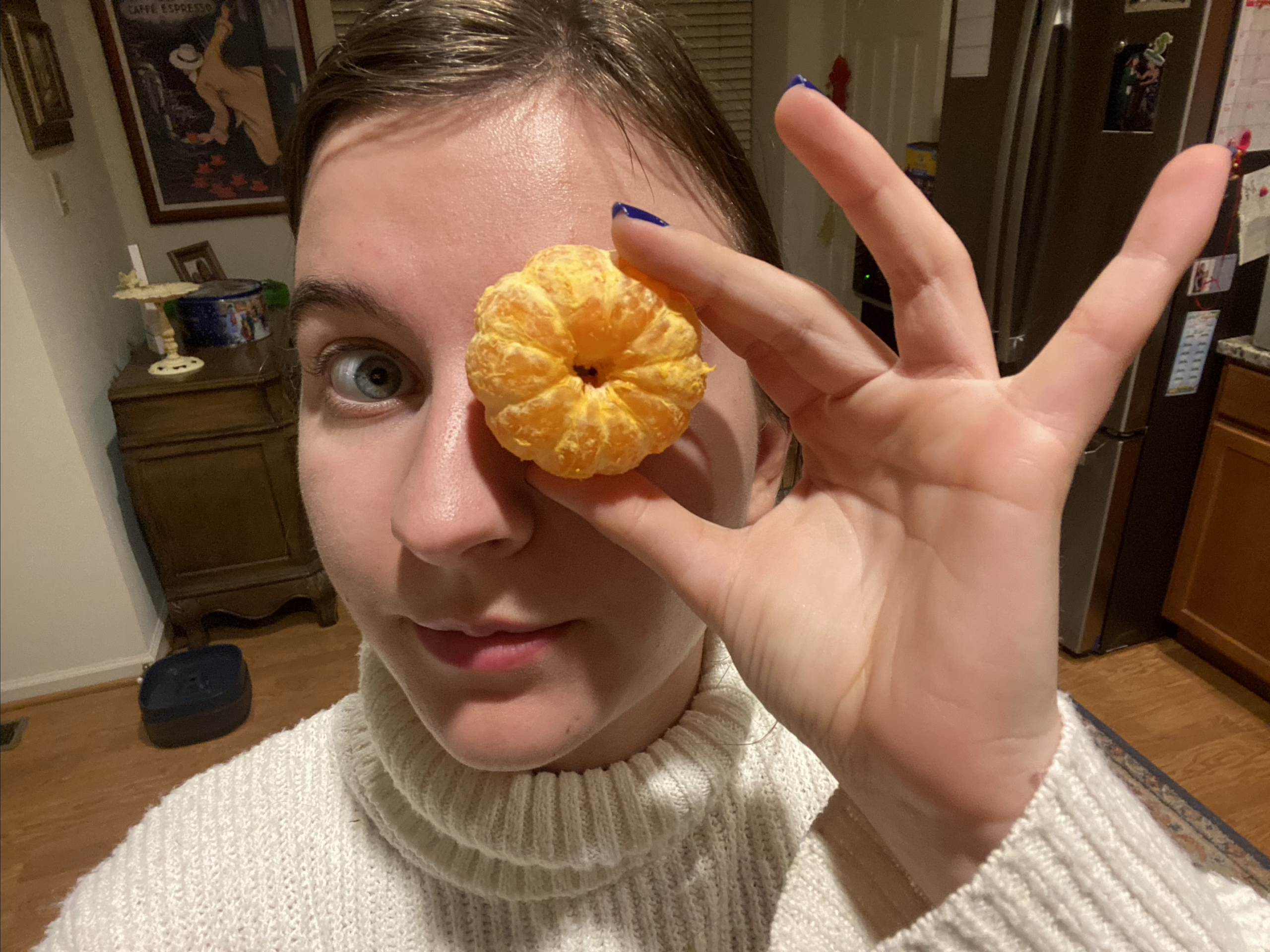
…you are ready to have your life and identity flipped on its head and dunked in the ocean repeatedly.
Jonna Lynn Nielsen ’27
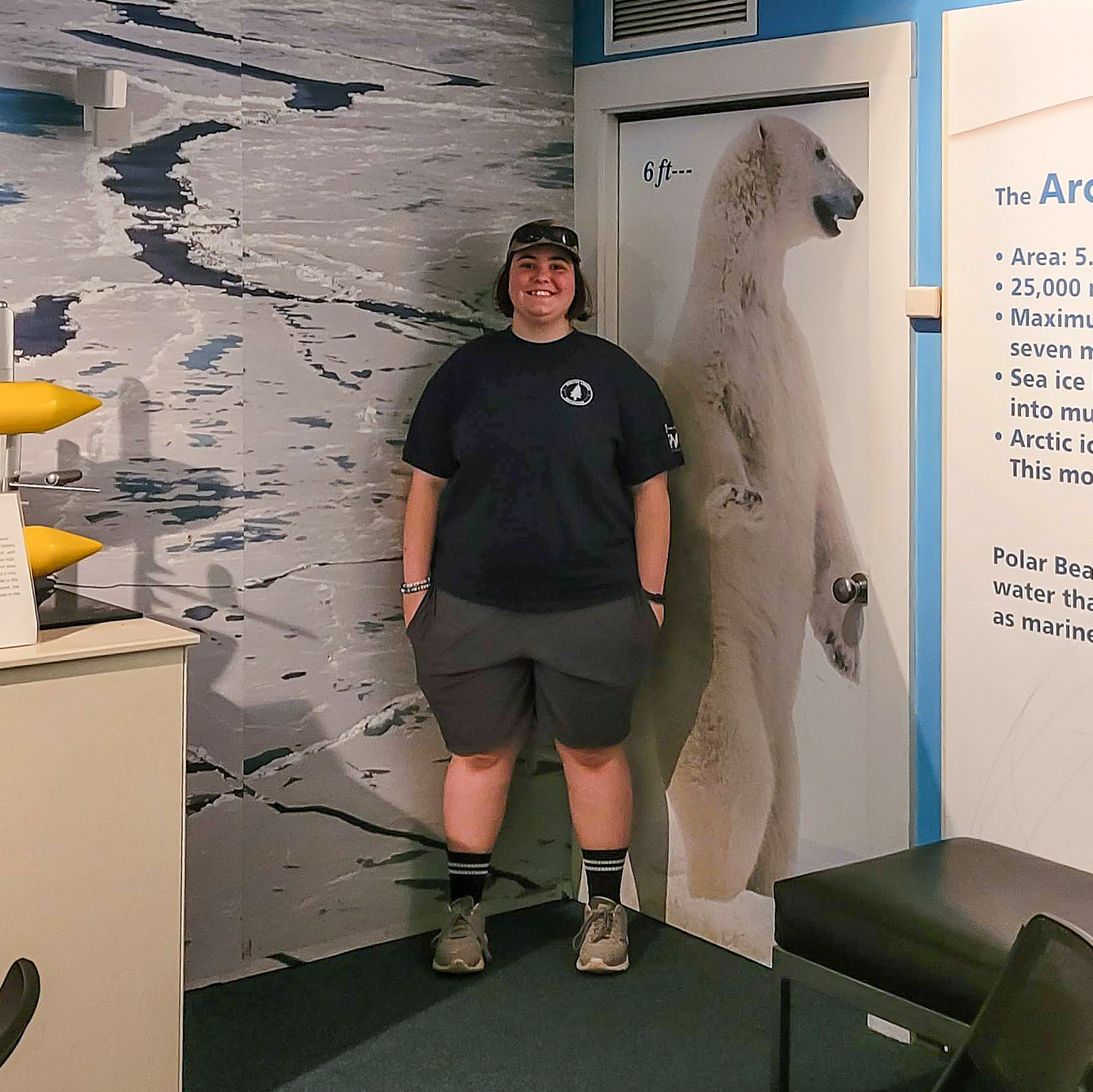
…you don’t know what you want to study because you have far too many interests to just focus in on one of them.
Wilson Korneev ’28
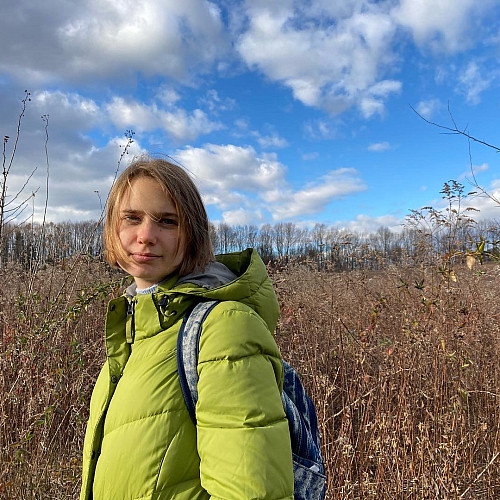
…you want to be in a small community where people will remember your name.
Alya Kiiashko ’25
…you have an open mind, enjoy small communities, and want a well-rounded (however unconventional) education experience.
Seth Sears ’28
…you want to meet politically, emotionally, and academically engaged people.
Alder Ame ’27
…you think being sent to the oceanside to improve your mental health actually sounds awesome (it totally is).
Carolina de Oliveira Castro ’26
…you are passionate about the natural world and want to study it and love spending time outside.
Conrad Kortemeier ’26
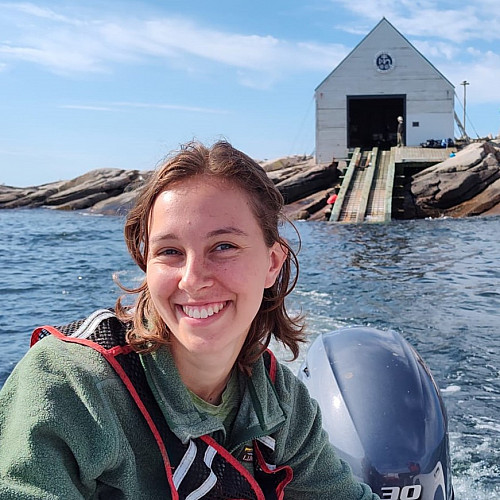
…you want to be surrounded and inspired by people who are excited about niche subjects, and by people who are still figuring out what they’re doing.
Marina Schnell ’25
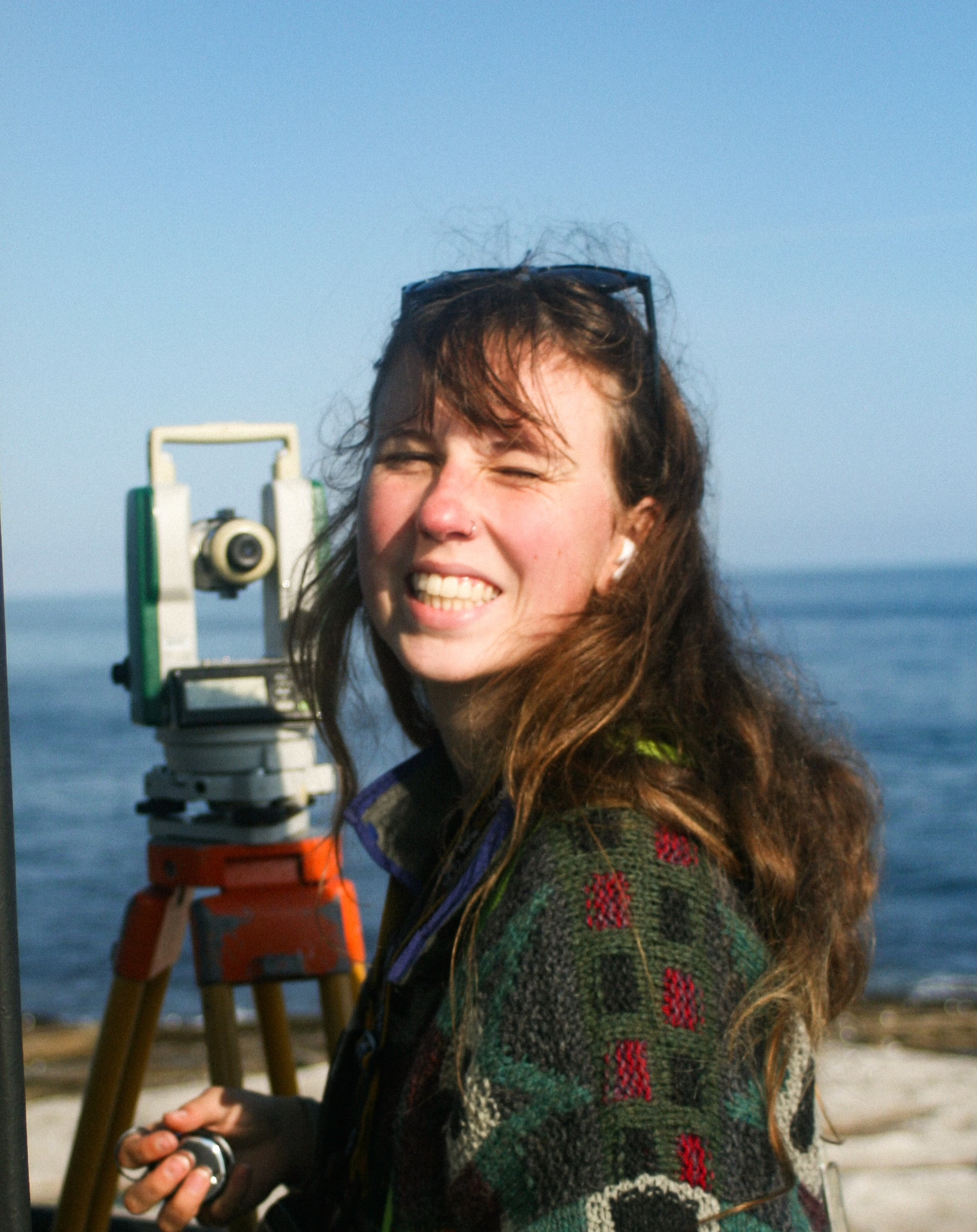
…you can’t choose between the mountains and the sea.
Megan Maloney ’26
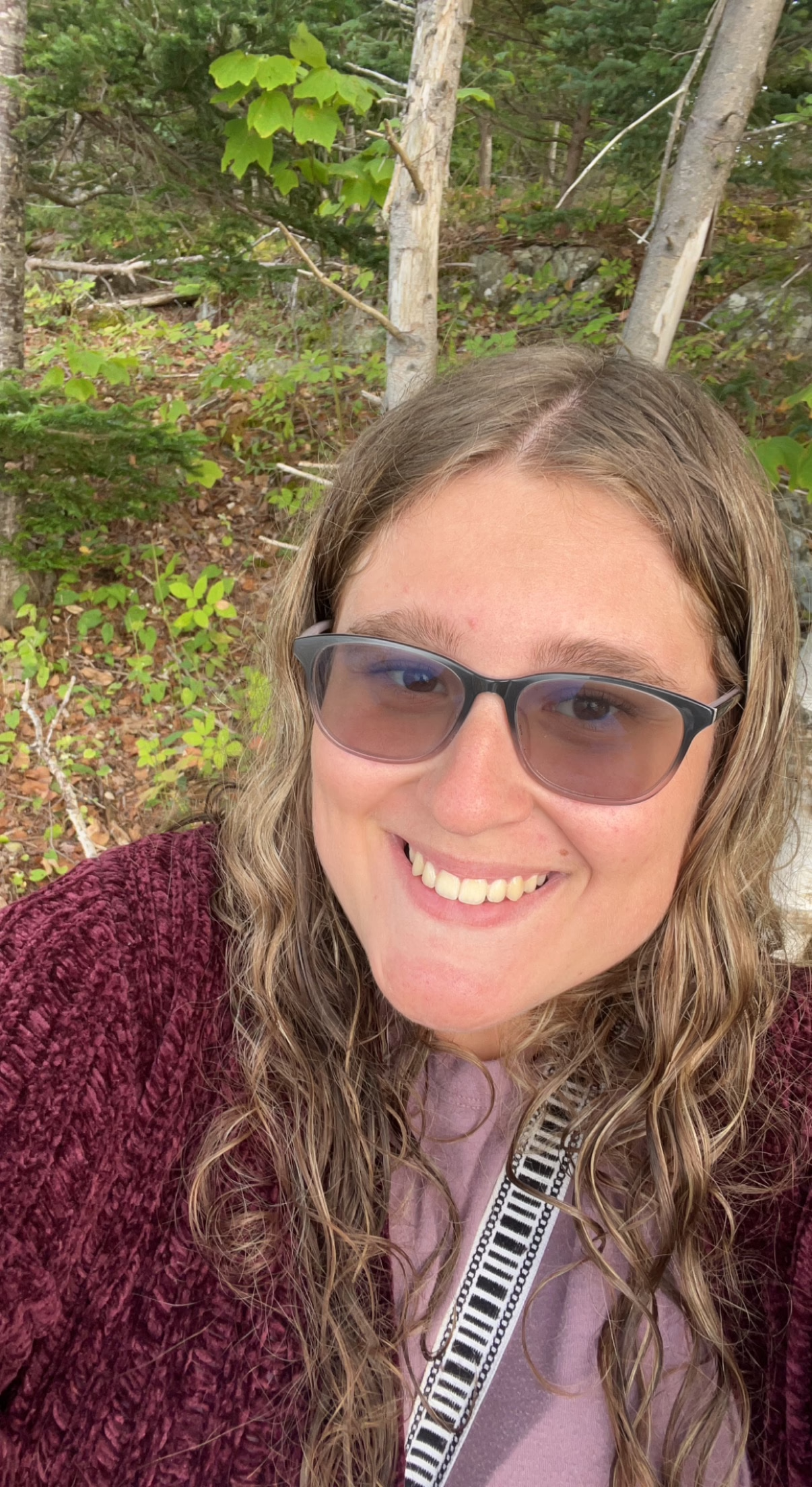
…you want freedom in your class structure.
Andie Piliouras ’26
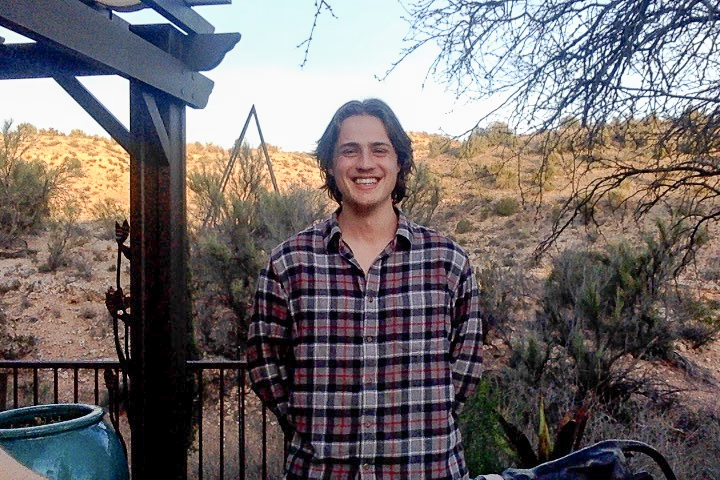
…you want small, intentional community.
Conlan Lamb ’28
…you want to expand your perspective and knowledge of the world around you, and gain valuable connections from all around the world!
Trinket Lester ’28
…you question the answers to your questions, challenge the status quo, and seek tranquility in the heart of the spruce-fir forests.
Greta Bernier ’27

…you have the desire to choose your own path to a degree.
Béatrice St-Louis ’28