Educational Studies
College of the Atlantic
Learning, teaching, and educational change rooted in experience
How is it that so many people in the world experience education as conformity and rigidity—when in essence learning is the freeing of our minds from constrained views of ourselves and the world?
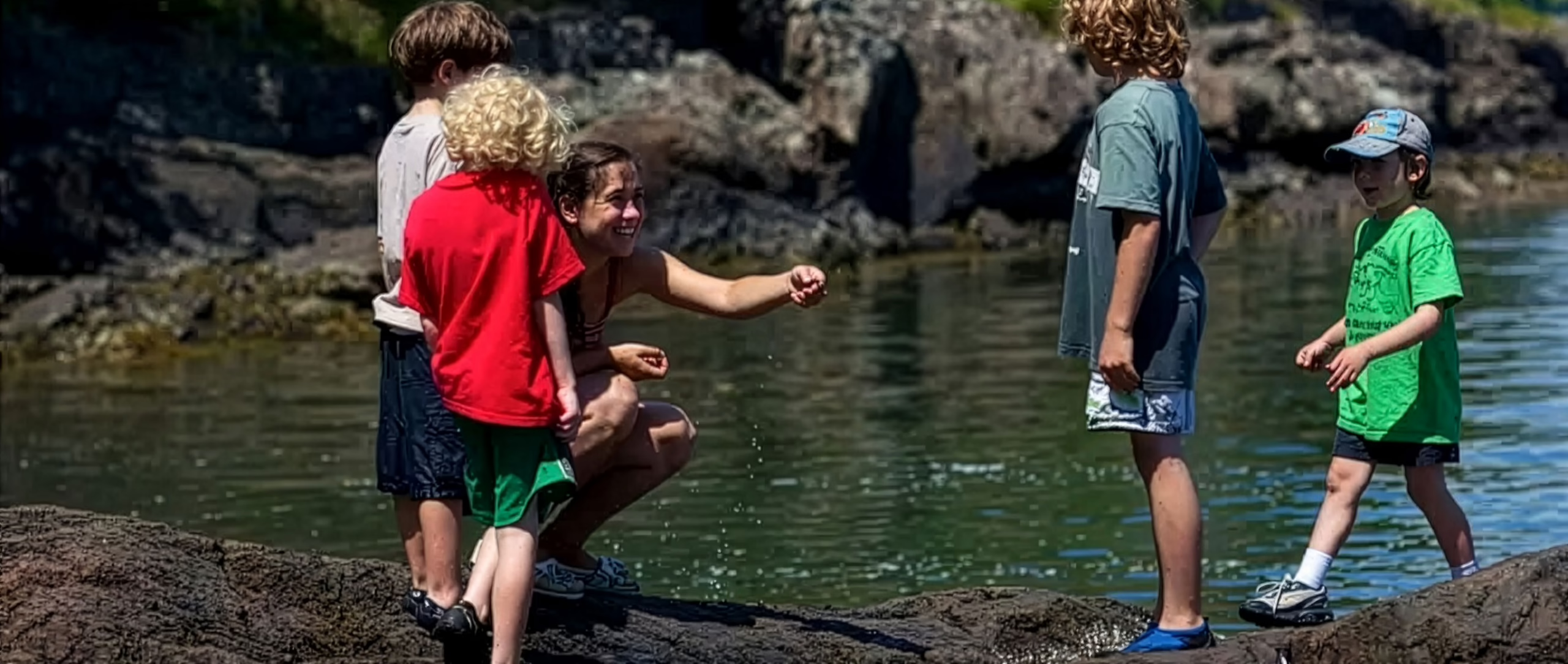
Educational Studies at COA serves students with various interests, from classroom teaching, to outdoor or arts education, to educational innovation or policy. For example, Abby Plummer, MPhil ’16, integrated her experience and interest in sustainable food systems, health, and elementary education, co-coordinating COA’s farm-to-school program in collaboration with teachers at our local K-8 school and undergrads at COA interested in education and/or food systems. She continues to integrate garden-based education while teaching middle school in mid-coast Maine.
Sarah Short Heller ’09 studied botany and education, designing a native North Cascades garden and curriculum for her senior project and co-founding a forest preschool. Hiyasmin Saturay ’15, combined studies in literature and writing, education, and filmmaking, which culminated in a documentary film about environmental justice in the Philippines. She is currently working on a documentary about the Filipino people’s movement. After exploring social and educational innovation at COA, Clement Moliner-Roy ’18 launched the Changemaker Residency, a month-long social innovation incubator. Enrique Eduardo Valencia Lopez ’11 is pursuing a Ph.D. in policy studies after working as a Subdirector for the Instituto Nacional para la Evaluación de la Educación in Mexico. At COA, his senior project explored the survival strategies of refugees in Kampala, Uganda, including their educational access.
For those seeking classroom teaching certification, COA’s Educational Studies Program is approved by the Maine Department of Education (MDOE) to grant Maine Initial Teaching Certification for PK–12 Art Education, Elementary Education (grades PK-6) or Secondary Education (grades 7–12) in Life Science, Social Studies, or English Language Arts. Students interested in teaching in other areas, such as world languages or mathematics, can pursue certification via an MDOE transcript analysis. Maine is part of an inter-state agreement so that certification in Maine extends to almost every US state and territory. Review the classroom teaching certification requirements here.
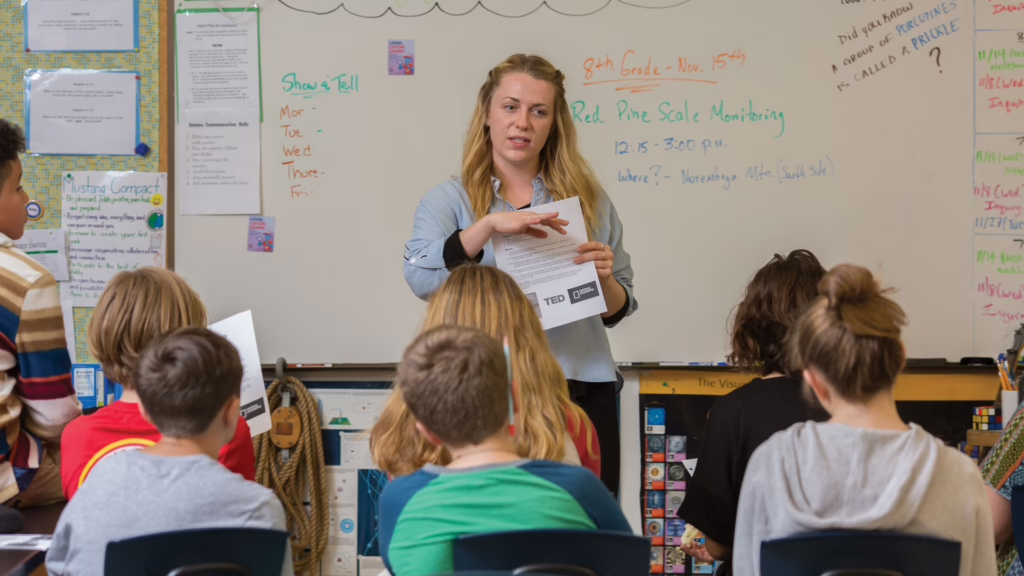
Most students at COA choosing to take education classes do not pursue certification. These students, like most of the above-profiled alumni, are interested in education outside of a formal setting, seeking to work in outdoors, in museums, or other informal learning contexts. Our curriculum includes comparative, intercultural, and international education, preparing students to teach culturally diverse learners in and outside the US. For example, Ela Keegan ’21, chose to study schools’ disaster risk readiness around the world for her Changing Schools final project. If you choose to pursue teaching certification, you will learn alongside your peers interested in farm-based, international, museum, and outdoor education until you enroll in teaching methods courses. All education courses combine substantial time in local classrooms and other learning spaces, allowing you to put into practice what you are learning from introductory to more advanced courses.
Local partners
In order to offer an experiential and placed based education in learning and teaching, COA collaborates with local public and private schools and community organizations like the Abbe Museum, Acadia National Park, The Community School of Mount Desert Island, Healthy Acadia, and Willowind Therapeutic Riding Center. Many of our classes are taught by local teachers, so students learn from expert practitioners. Almost all education classes involve visits to one or more area schools. Fieldwork, practica, service learning, and school observations ensure that classroom learning is grounded in the daily experiences of Pre-K-12 teachers and students. Recent student teachers have taught at local schools as well as in Portland, Maine, and New York City.
Education and society
Many are drawn to education classes because they want to learn about the central role that education plays in forming and informing individuals and communities. Education classes are interdisciplinary and wide-ranging. For example, Changing Schools, Changing Society examines the potential and limits of education as an instrument of enlightened progress and lasting positive social, cultural, and environmental change.
Reminder: Areas of study aren’t the only way to think about courses. Browse and explore here.
Human ecology and educational studies
The conceptual framework that guides the program elaborates the ways that human ecology informs the theory, research, and practices of learning and teaching in education systems that we aspire to realize.
Our mission is to “develop creative, knowledgeable, collaborative, and critically reflective educators who will bring intellectual passion and ecological wisdom into their teaching. To this end, students engage in a self-designed, interdisciplinary curriculum emphasizing early and on-going experiences in both formal and informal educational settings.”
Faculty
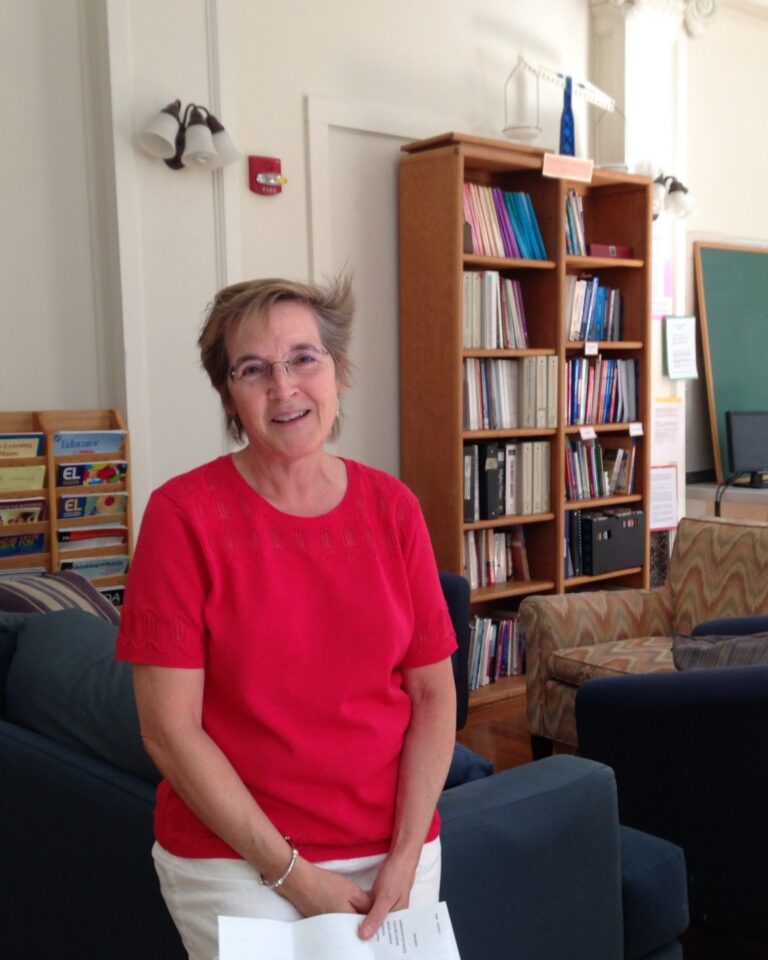
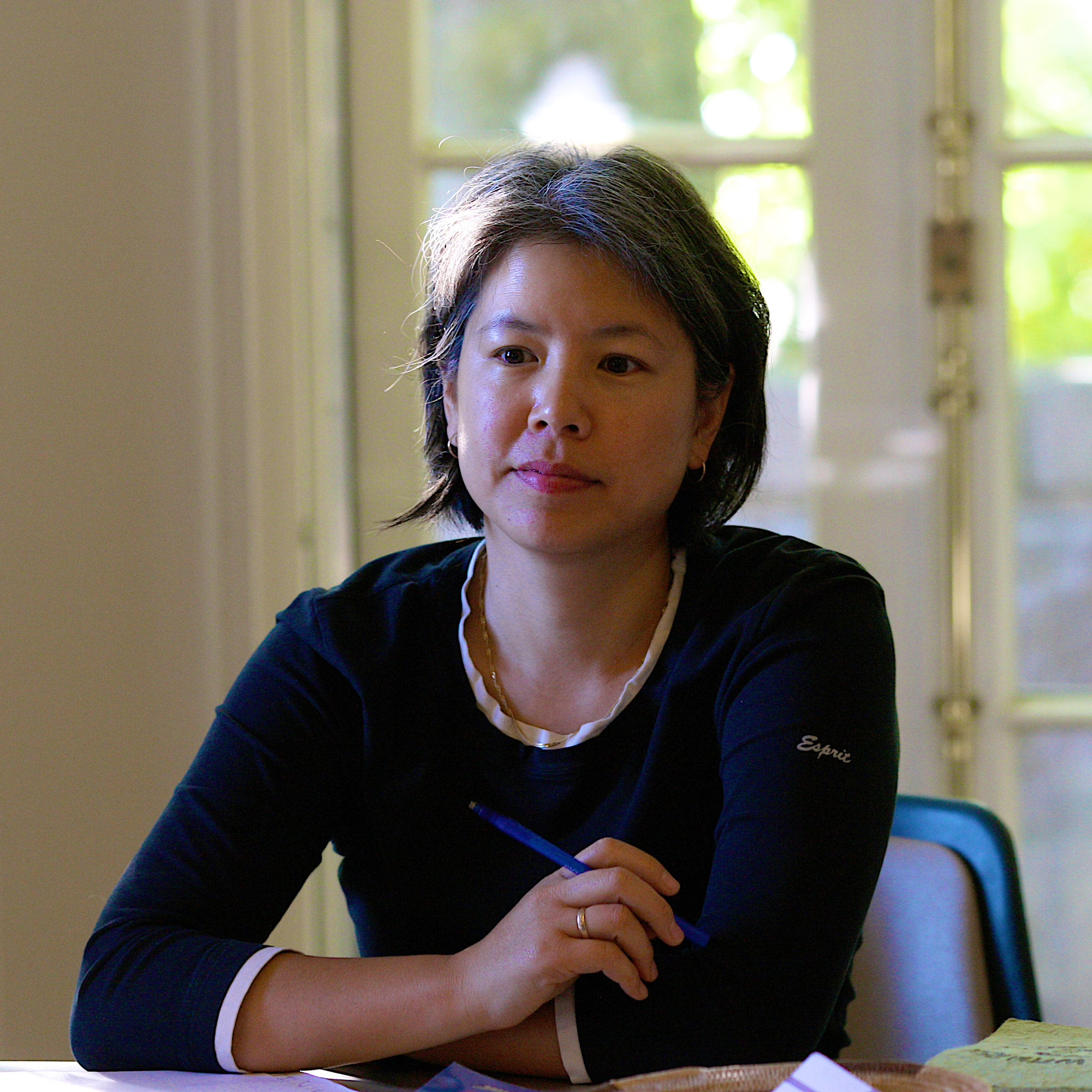
Linda Fuller
Teacher Certification Officer
ABOUT
Before COA
Linda served Maine’s public schools for 28 years, including teaching middle school students in one of Maine’s last three room schools and teaching government and English at the high school level. She also enjoyed twelve years as a secondary school counselor.
Course Areas
education
COURSES
EDUCATION
- Ed.M. Counselor Education, University of Maine, 1999
- B.S. Education (elementary, secondary social studies), University of Maine, 1983
INTERESTS
Linda Fuller serves as the Associate Director of Educational Studies, working closely with certification candidates through advising, teaching, and supervising student interns. Linda is currently working on her doctoral dissertation exploring teacher-learner relationships in virtual high schools. She is very interested in policy changes and developments in educator preparation.

Ken Hill
ABOUT
Before COA
Prior to entering a career in the academic realm, Ken was the program director of an out-patient psychiatric drop-in center that serviced 60-80 clients per day.
From there, he went on to join the faculty at Northwest Missouri State University in the Department of Psychology, Sociology, and Counseling. While at Northwest Ken won ten different teaching awards including the universities most prestigious “Tower Service Award” for teaching excellence. While at Northwest, Ken served as a core psychology faculty member, directed the graduate program in school guidance, supervised the Therapeutic Community programs for regional prison systems, and eventually became Chairman of the department.
In his free time Ken enjoys weight lifting, canoe tripping, knife making, and serving on the board of the YMCA.
Course Areas
Psychology, education, counseling processes
COURSES
More Information about my Courses
In 1999 Ken came to the College of the Atlantic as the Director of the Educational Studies Program. In 2005 he was named Academic Dean, in 2019 named Provost.
EDUCATION
- B.A. University of Michigan, 1987
- Ed.M. Counseling Processes, Harvard University 1990
- M.S. Educational Psychology and Measurement, Cornell University 1993
- PhD. Educational Psychology and Measurement, Cornell University 1995
Adjunct faculty
Many of our classes are taught by adjunct faculty who are experienced educators in the local school system.
- Kelley Sanborn. Special Education Teacher—Students with Unique Needs, MDI Regional School System. Supporting Students with Disabilities.
- Tara McKernan, M.Ed., LCPC. School-Based Mental Health Specialist, Mount Desert Elementary School. Human Growth and Learning.
- Tonya Prentice, M.S., NBC. Middle School (Fifth through Eighth Grade) Science Teacher, Tremont Consolidated School. Integrated Methods II: Math, Science, and Social Studies (team-taught with Fuller).
- Ashley Stanley. Kindergarten Teacher, Tremont Consolidated School. Integrated Methods I: Reading and Writing (team-taught with Linda Fuller).
- Carol Null, M.Ed., Ph.D. Kindergarten Teacher, Pemetic Elementary School. Children’s Literature
Ready to build your own path?
Apply Now
Join a close-knit community built for curiosity, collaboration, and purpose.

connect with admissions
Talk with an admission counselor about your interests, questions, and goals.

Plan a Visit
Attend a class, meet students, and experience learning rooted in place.
Student voices
COA Might be Right for You if…
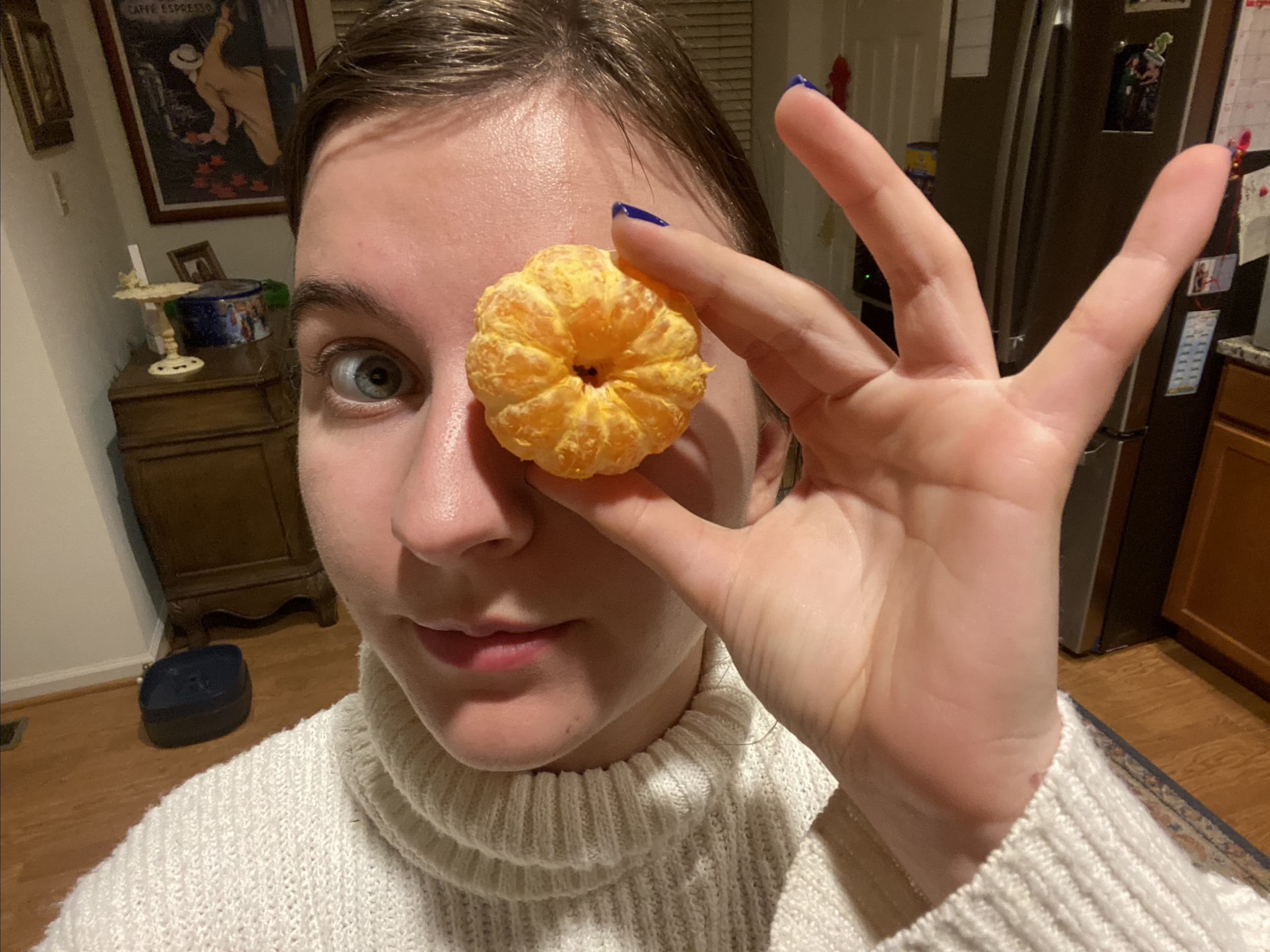
…you are ready to have your life and identity flipped on its head and dunked in the ocean repeatedly.
Jonna Lynn Nielsen ’27
…you don’t know what you want to study because you have far too many interests to just focus in on one of them.
Wilson Korneev ’28
…you want to be in a small community where people will remember your name.
Alya Kiiashko ’25

…you have an open mind, enjoy small communities, and want a well-rounded (however unconventional) education experience.
Seth Sears ’28
…you want to meet politically, emotionally, and academically engaged people.
Alder Ame ’27
…you think being sent to the oceanside to improve your mental health actually sounds awesome (it totally is).
Carolina de Oliveira Castro ’26
…you are passionate about the natural world and want to study it and love spending time outside.
Conrad Kortemeier ’26
…you want to be surrounded and inspired by people who are excited about niche subjects, and by people who are still figuring out what they’re doing.
Marina Schnell ’25
…you can’t choose between the mountains and the sea.
Megan Maloney ’26
…you want freedom in your class structure.
Andie Piliouras ’26
…you want small, intentional community.
Conlan Lamb ’28
…you want to expand your perspective and knowledge of the world around you, and gain valuable connections from all around the world!
Trinket Lester ’28
…you question the answers to your questions, challenge the status quo, and seek tranquility in the heart of the spruce-fir forests.
Greta Bernier ’27

…you have the desire to choose your own path to a degree.
Béatrice St-Louis ’28